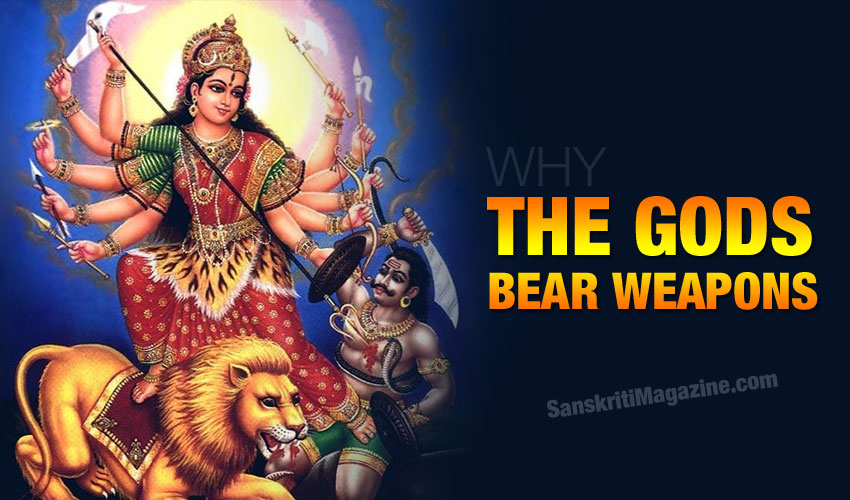
For centuries, Hindus have worshipped gods, who hold weapons in their hands. Shiva holds a trident, Kali a sickle, Vishnu a mace, Ram a bow, Krishna a discus, Parashuram an axe … the list goes on. In Durga pandals, we are shown images of the Goddess impaling a man.
Those who see things literally ask: are gods approving and advocating violence? No, we are told; they are killing ‘only evil’ people. Why is killing only evil people not violence? In response we are told the killing is ‘actually’ metaphorical. So all those gory descriptions of Kauravas killing Pandavas in the Mahabharata and vanars killing rakshasas in the Ramayana are all ‘symbolic’? If you continue to ask more awkward questions, most likely, you are going to be stared down and silenced.
The fact is most who extol virtues of non-violence do not understand violence at all. Often people are simply parroting the politically correct thing to say.
Violence is an essential component of nature to ensure survival of species. Violence is critical to create food – unless the goat tears the grass, it will not be able to eat; unless the lion tears the flesh of the deer, it will not be able to eat. Trees fight over sunlight and water. Animals fight over mates. The predator hunts in order to eat. Both the food chain and the pecking order, that prop up the natural order, are based on violence. The Veda acknowledges this reality in its many hymns in praise of food.
People who live in urban landscapes usually are shielded from the raw reality of nature. They do not see how bulls, pigs and dogs are neutered to control breeding. They do not grow up seeing how birds eat snakes and how snakes eat rats. Therefore they do not draw the connection between the snake around Ganesha’s belly and the rat on which he rides. Cultures outsource violence related to food. We leave that to the farmers, the fishermen, animal herders and the butchers. We just buy the food off shelves. But indirect violence is still violence.
In humans, a new world opens up – the mental world. Understanding of this world is poor. We tend to equate violence with physical violence but ignore mental violence. Only now have courts recognized mental violence as domestic abuse that people are constantly subjected to in families. We love controlling people, forcing them to do our bidding through rules, reward and punishment. This control is also violence. But we do not classify it, so as we cannot see the bruises and the blood as desires are crushed and opinions sliced out.
Often people who are non-violent are control freaks who use emotional blackmail to get their way. We call this passive aggression in modern parlance. Non-violent advocacy follows the same tactic. This mental violence is allowed, even celebrated. It is used for the very same purpose that physical violence is used – to change the world, compel people to behave in accordance to a particular code of conduct. In the mental world, there is domination, territoriality, aggression, often more intense than what we can measure in the physical world. This mental violence is the seed of frustration, rage and ultimately physical violence.
Somehow, physical violence is deemed uncivilized by modern society, but mental violence is not. The gods observe this and smile benignly as they brandish their tridents, swords and arrows.