IndianSanskriti

Raksha Bandhan – Today’s Scenario

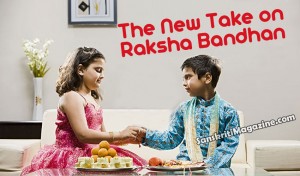
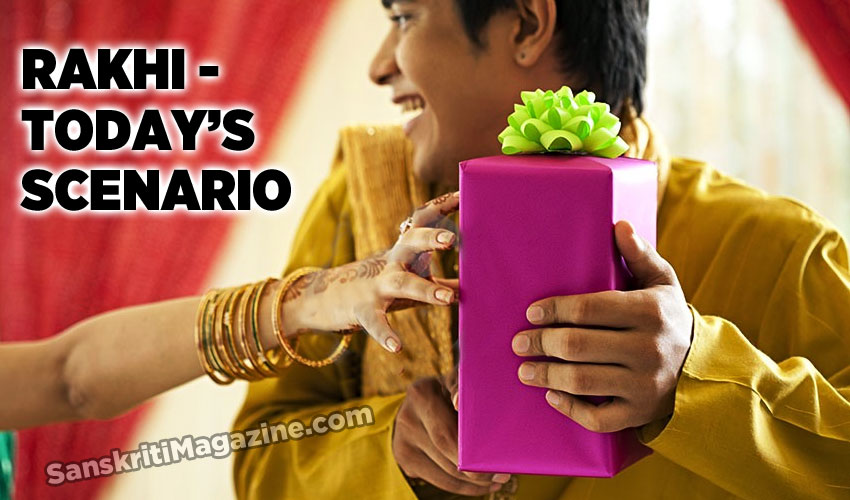
Rakhi festival is celebrated with great enthusiasm every year. The preparations for celebration of Rakhi, which is one of the most awaited festival in India, starts much earlier than the day it falls. The markets are flooded with Rakhis in myriad colours, designs and shapes complimented with Rakhi special gifts, sweets and other items. Girls start preparations and shopping quite early. They shop for new clothes and buy rakhis, specially the ones that have to be sent to the brothers staying far. For those brothers and sisters who for distances are not able to meet, it is a day for remembering the bygone time. Sisters unable to meet their brothers send Rakhi by post along with greeting cards or through e-mails, e-cards, and mobile SMSes. Nothing on this day can stop the overflowing emotions of sisterly and brotherly love.

Though now Rakhi is considered as a sister and brother festival, it was not always so. There have been examples in history where in rakhi has just been a raksha or protection. It could be tied by wife, a daughter or mother. The priests tied rakhi to the people who came seeking their blessings. The sages tied the sacred thread to themselves to safeguard themselves from the evil power. Rakhi is not only a symbol of fond relationship between sisters and brothers but nowadays is also a sign of warmth and compassion shared between the communities. This brings love, unity and brotherhood within communities of various faith and traditions. It evokes the feeling of humanity and concern for others with whom we share our lives in the society.


In today’s scenario, the day has a different perspective. The occasion involves a pledge of life-time practice of moral, cultural and spiritual values. The values and the sentiments attached to the rituals of this festival are worth inculcating by the whole human race, the sentiments of harmony and peaceful co-existence. The festival of Raksha Bandhan assumes all forms of protection, righteousness, friendship, well being and destroyer of all sin. The rakhi tying ritual has become so much a part of the families that come what may, brothers and sisters try to reach out to each other on this particular day bringing back the memories of togetherness and emotional bonding of the family. Rakhi festival not only strengthens the bond of love and affection between brothers and sisters but also brings friends and strangers closer. When a rakhi is tied on the wrists of anyone it acts as a way to connect individuals on a new platform and brings them closer.

Thus, while celebrating Raksha Bandhan one should not forget the love aspect which unites the two souls in deep sacred relationship via a simple thread. It strengthens the bond of giving oneself for the sake of other not only in the times of difficulties and sorrows, but also in moments of joy and happiness. Having had understood the deeper nuances of this feast let us not make this festival a mere custom or modern trend for the civilization of today instead may it become an eternal promise of protection and love in the ages to come. ~Sumit Dhanraj

You may also Like:
rakhi-1rakhi-4rakhi-2

You may also like

Search the website

Like us on Facebook

Get daily updates via Email

Enter your email address:

Recent Posts

Yogini Ekadashi 2026 — The Yaksha Who Missed the Morning Flowers, and the Ekadashi That Undid His Curse

On Friday, July 10, 2026, the rare Krishna Paksha Ekadashi of Nija Ashadha arrives. The Padma Purana tells the story of Hemamali — the Yaksha gardener of Bhagavan Kubera in Alaka, whose single morning of distraction with his wife Vishalakshi cost him his form, his wife, and his celestial city. Cursed to wander the earth of Bharata as a leper for a long time, he was at last shown the way back by Sage Markandeya — a single sincere keeping of Yogini Ekadashi.

Jamai Shashthi 2026 — The Story of Maa Shashthi, the Cat, and the Wife Who Was Forgiven

Jamai Shashthi 2026 — The Story of Maa Shashthi, the Cat, and the Wife Who Was Forgiven

On Saturday, June 20, 2026, Bengali households across Bharata will welcome their married daughters and sons-in-law home for the legendary jamai-aador feast and perform the Shashthi Vrata. But behind the warmth lies a story most Bengalis know by heart and most non-Bengalis have never heard — the wife who stole the hilsa, blamed the cat, lost six sons to Maa Shashthi’s wrath, and was finally forgiven. The Vrat Katha, the vidhi, the mantras, and the deeper teaching.

Vat Purnima 2026 — The Wife Who Argued Yama Into Returning Her Husband’s Life

On Monday, June 29, 2026, women across Maharashtra, Gujarat, and southern Bharata will tie red thread around banyan trees and hear the story of Savitri — the wife who walked behind Yamaraja Himself when He came for her husband, and out-argued the Lord of Dharma into returning Satyavan’s life. The Mahabharata’s Pativrata Mahatmya Parva, the vrat vidhi, and why the banyan witnessed everything.

Nija Jyeshtha 2026 — The Real Jyeshtha Begins, and the Calendar Resumes

Nija Jyeshtha 2026 — The Real Jyeshtha Begins, and the Calendar Resumes

With Adhik Maas now closed on the Somvati Amavasya of June 15, the long-postponed festivals of Jyeshtha return — Vat Purnima (June 29, the Savitri-Yamaraja katha), Jamai Shashthi (June 20, the Bengali festival of Maa Shashthi), Sankashti Chaturthi (June 28), Yogini Ekadashi (July 10), and Devshayani Ekadashi (July 16, opening the four-month Chaturmas of Bhagavan Vishnu’s yoga-nidra). A guide to what the next four weeks hold and what the household that kept Purushottam Maas now carries forward.

The Closing of Purushottam Maas 2026 — Adhik Amavasya and the Sealing of the Month-Long Vrat

On Monday, June 15, 2026 — a rare Somvati Amavasya — the intercalary month that bears Bhagavan Vishnu’s own name comes to its close. The Acharyas teach that a vrat is not measured by its duration but by its closing. Here are the Padma Purana’s instructions for sealing the month-long Purushottam Maas vrat: the morning snan, the closing puja with the Vishnu Sahasranama, the day of dana, the Somvati Amavasya gift, and the final sarva-arpana — the offering of all merit at the feet of the Lord.

css.php