Why do we go to temples?
What is there in those structures that benefits us?
Why, then, do we have to visit temples every week?
If you ask anybody these questions, the answers often will be very subjective. “I get a lot of peace in a temple”, “My parents have asked me to go there”, “It’s supposed to be good” – these are the common answers you are likely to receive.
That’s because the correct answers have not been passed over from generation to generation. Information has been lost; as a result, we do things simply because they have been told to us, and without understanding why we do them.
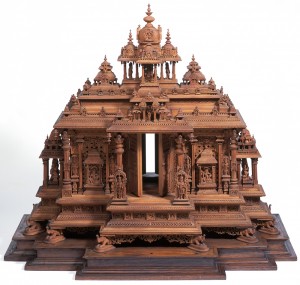 A temple is the focus for all aspects of everyday life in the community – religious, cultural, educational and social. It is also the place where one can transcend the world of man. Our lives are merely stages in the progression to ultimate enlightenment. The temple is a place where it is believed that God may be approached and where divine knowledge can be discovered. All aspects of the temple – the principles of design and construction, the forms of its architecture and decoration, and the rituals performed – focus on the goal of enlightenment and liberation. And all of these are determined by ancient texts or shastras.
The temple is also an embodiment of the concept of energy which I have been mentioning. When we pray – it could be in the form of reciting mantras, or singing bhajans, or meditating – a surge of energy is created. In a temple, the intention of all devotees is common – to be united with God. When so many people think of a common goal and then take steps to create positivity, there is a lot of positive energy generated.
Positive energy is light and tends to rise. The purpose of a temple is to store this energy and hence the dome or vimana of the temple is constructed to do precisely that. Also, notice that the entrance to the garba griha or the sanctum sanctorum is low. All this is an effort to prevent the energy so generated, from escaping. The aarti is again a ritual which whips up energy. The camphor and ghee have particular properties which expedite the process.
The temple bell, which does the function of a doorbell – you are supposed to be ringing the bell before entering the abode of God – actually is a device which when rung creates vibrations to prevent the energy in the temple from remaining static. Even in our houses, it is advised to clap at the corners or in unfrequented areas like the attic. This is to keep the energy moving. Cobwebs trap energy. That’s the reason we are advised to clean them up. Incense does the same function, or increasing and activating energy. The dhoop available in the market, is also used for this job.
These same principles apply to other religious institutions as well. The effort is to increase positivity and retain it in order for the devotees to gain benefit from it. When you go to an energy-charged temple, the energy washes you and you come out cleaned.
Generally, the temples are located in a place where earth’s magnetic wave path densely passes through. It can be either in the out skirt of the town/village or city or even in middle of the dwelling place, or on a hilltop. The essence of visiting a temple is considered as the most auspicious act, one must pay twice a day visit on daily basis to the Temples located nearby places. In simple terms, these temples are located strategic to a place where the positive energy is abundantly available from the magnetic wave distributions of north/south pole thrust. Because of its location where high magnetic values are available, the Main Idol is placed in the core center, and also because they place a copper plate written with some Vedic scripts, which is buried, beneath the Main Idol’s placement known as “Garbhagriha” or Moolasthan (Sanctum Santorum), the copper absorbs the earth’s magnetic waves and radiates to the surroundings.
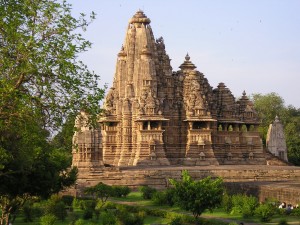 Thus, a person who regularly visit temple and circumambulates the Main Idol automatically receive the beamed magnetic values absorbed in their body. This is very slow and a regular visit will make them absorb more and more energy, which is scientifically known as positive energy. In addition, the Sanctum sanctorum is completely enclosed on three sides, thereby the effect of all energies will be very high. The lamp that is lit radiates the heat and light energy. The ringing of the bells and the chanting of prayers gives the sound energy.
The fragrance from the flowers, the burning of camphor gives out the chemical energy. The effect of all these energies is activated by the positive energy that comes out of the idol. This is in addition to the north/south pole magnetic energy that is absorbed by the copper plate and utensils that are kept in the Moolasthan known as grabagraham. The water is used for the Pooja is mixed with Cardamom, Benzoine, Holy Basil (Tulsi), Clove, etc. are mixed that is known as “Theertham”. This water becomes more energized because it receives the positiveness of all these energies combined. When persons go to the temple for the Deepaaraadhana, when the doors open up, the positive energy gushes out onto the persons. The water that is sprinkled onto the people passes on the energy to all.
That is the reason why in South India the men are not allowed to wear shirts inside the temple and ladies have to wear more ornaments while their visit to temple, it is through these jewels (metal) the positive energy passes through to their body . It is also proved that Theertham is a very good blood purifier, as it is highly energized. Hence it is given as Prasadam to the devotees.The energy which we have lost in a day’s work can be regained in this way and one gets being refreshed slightly. The positive energy that is spread out in the entire temple and especially around where the main idol is placed, are simply absorbed in one’s body and mind, for those who circumambulate. In addition to it, at the temples they offer holy water as theertha in spoons. This water is the main a source of magneto therapy kind because usually they place the copper water vessel at the Garbhagriha. It also contains the values of cardamom, clove, saffron, etc to add taste and Tulsi (holy Basil) leaves are put into the water to increase its medicinal value!
The clove essence protects one from tooth decay, the saffron & Tulsi leave essence protects one from common cold and cough, cardamom and benzoine known as Pachha Karpuram, acts as a mouth refreshing agents. This way, one’s health is also protected, by regularly visiting the Temples. The entire thing just become more energized locally, that the visit and consuming the holy water and the other offerings are worth for the visitor’s health and longevity.
~ R. Sridhar