IndianSanskriti
What is the Significance of Mauli/Kalava

What is the Significance of Mauli/Kalava

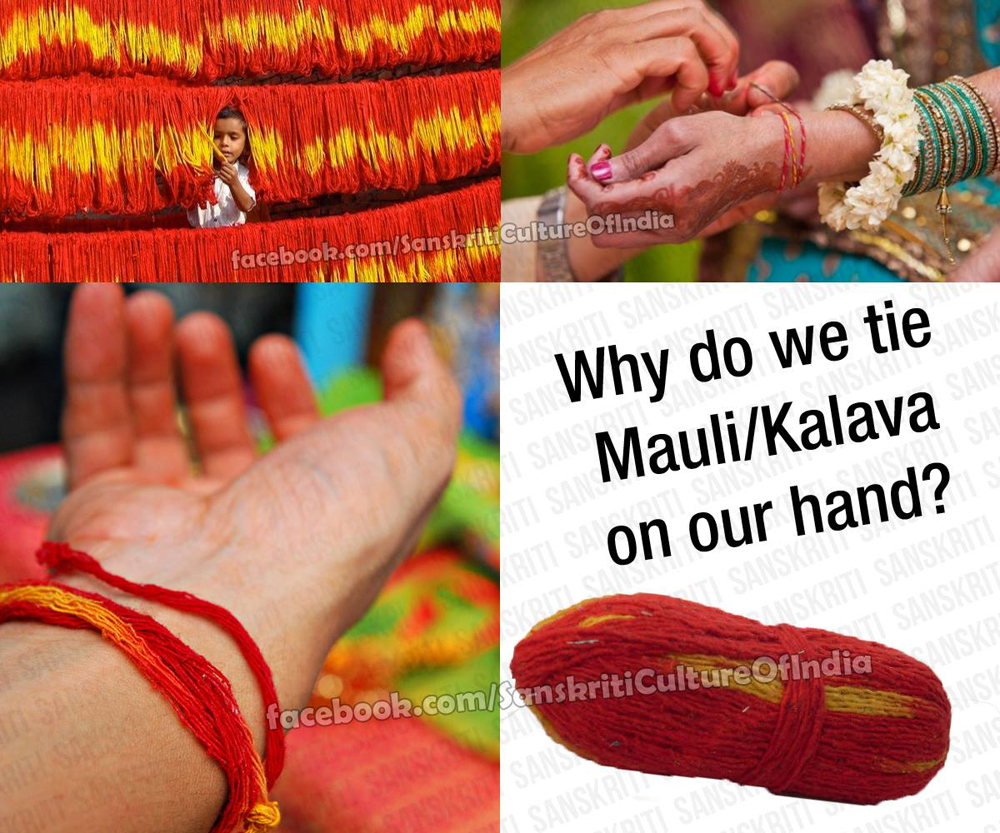
A red thread known as Mauli or Kalava or Charadu is tied on wrist by Hindus before the beginning of a religious ceremony. The thread is tied on the right hand by males and on the left hand by females. The thread is tied to invoke the blessings of the Hindu deities especially of the particular deity to whom the puja is dedicated.

There is also a popular belief that the sanctified red thread with blessing of the deity protects a person from diseases, enemies and other dangers.

By tying ‘Mauli/Kalava’ it is said that blessings of Trideva – Brahma, Vishnu and Mahesh and Tridevis – Saraswati, Lakshmi and Durga are received. From the blessings of Brahma we get fame, from the blessings of Vishnu we get defending power from evil and by the blessings of Shiva we get the power to destroy our own bad and negative qualities. By the blessings of Saraswati we get knowledge, by the blessings of Lakshmi we get wealth and from Durga we get power.

In ancient times it is said that God Vaman tied ‘Raksha Sootra’ (defending thread) in the form of ‘Mauli’, for the immortality of great chertiest demon king Bali. Since then custom of tying ‘Mauli’ is continued. It is also said in ‘Shastras’ that :

Yen baddho bali raja danvedro mahabalah|
Ten tvamanubadhnaami rakshe maachala maachala||

The literal meaning of mauli is ‘above all’. Here the reference is to the head that stands high. With the moon perched on top of Shiva’s head he is referred to as Chandramauli.

The thread can also be called a raksha or rakhi, and is put on the brother by the sister to show the sister’s familial love. The knots in the thread are said to hold the love of the sister when she tied the knot. Thus, the brother wears the rakhi as a sign of his sister’s love and wishes for protection. In other arrangements, the knots tied in the rakhi as the red strings are given to guests or tied around their wrists before a special ceremony or reception is also considered to hold the goodwill of those who offer it.
You may also like

Search the website

Like us on Facebook

Get daily updates via Email

Enter your email address:

Recent Posts

Adi Shankaracharya Jayanti 2026 — Advaita Vedanta, Om symbol, and four Amnaya Peethas

Adi Shankaracharya — The Monk Who Reunited Bharata

Shankaracharya Jayanti 2026 — the 1238th birth anniversary of Adi Shankaracharya. His extraordinary life, the Digvijaya, the debate with Mandana Mishra, Advaita Vedanta, the four Amnaya Peethas, and his timeless literary legacy.

Akshaya Tritiya 2026 — royal purple hero banner with Akshaya Patra vessel and Devanagari text

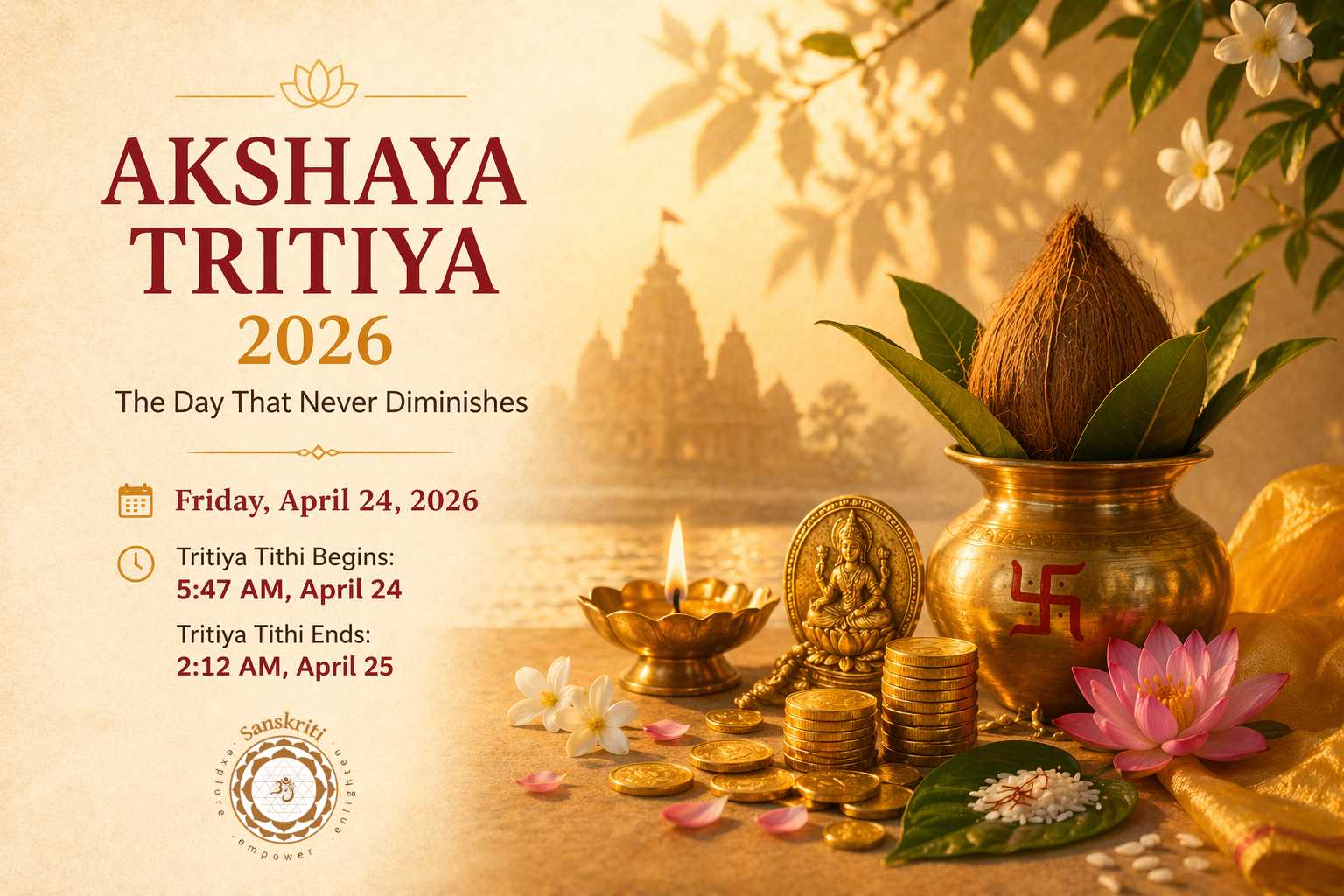
Akshaya Tritiya 2026 — The Day That Never Diminishes

Akshaya Tritiya (April 19, 2026) is one of the most auspicious days in the Vedic calendar — when any act of dharma, dana, or japa yields imperishable merit. Discover the five sacred Puranic events, complete puja vidhi, timings, mantras, and the deeper spiritual teaching beyond gold-buying.

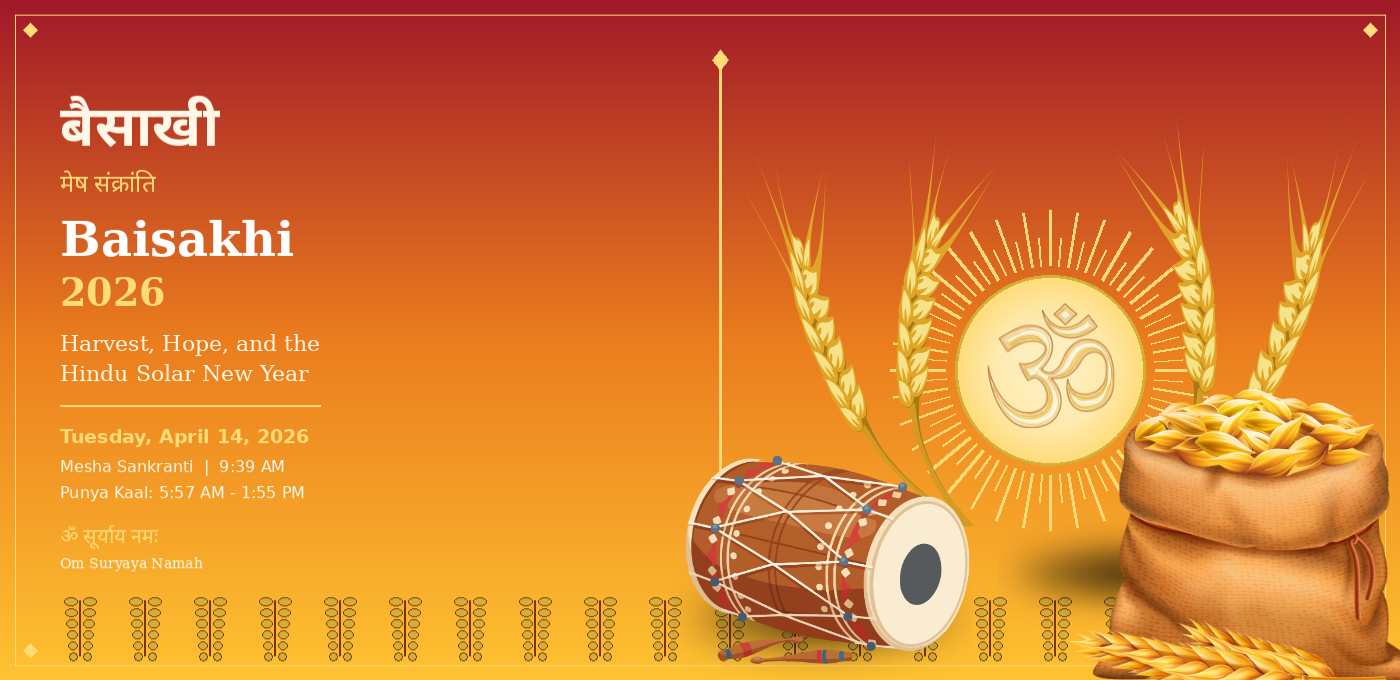
Baisakhi 2026 — Mesha Sankranti Hindu Solar New Year hero banner with rising sun, Om symbol and wheat harvest

Baisakhi 2026 — Harvest, Hope, and the Hindu Solar New Year

Baisakhi 2026 falls on Tuesday, April 14 — the day Bhagavan Surya enters Mesha Rashi at 9:39 AM, marking the Hindu Solar New Year. Discover the sacred science of Mesha Sankranti, the Punya Kaal rituals, and how this one cosmic moment is celebrated across Bharata as Vishu, Puthandu, Pohela Boishakh, Bohag Bihu, and Pana Sankranti.

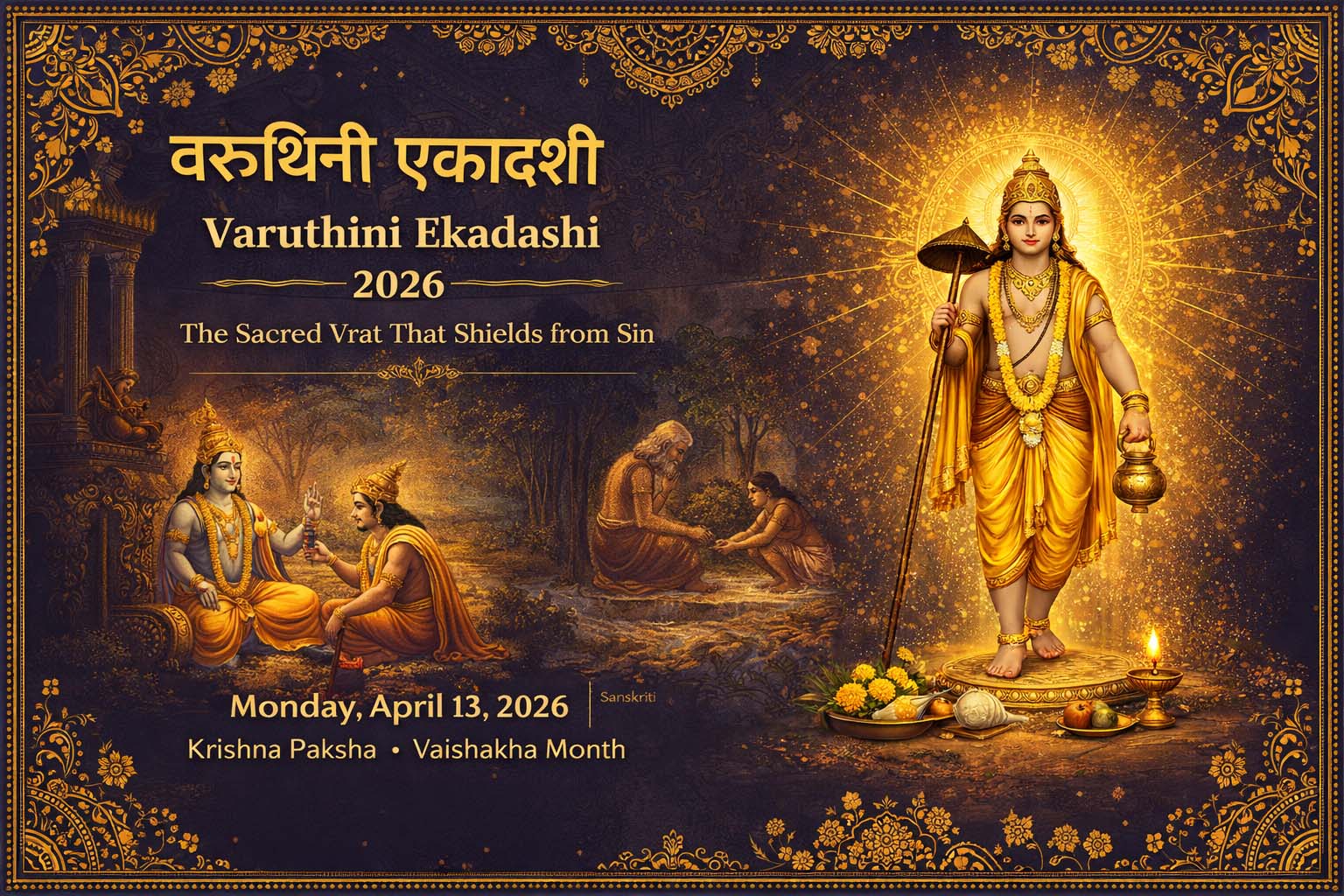
Varuthini Ekadashi 2026 — sacred vrat guide hero banner with Vishnu Chakra mandala

Varuthini Ekadashi 2026 — The Sacred Vrat That Shields from Sin

Varuthini Ekadashi (April 13, 2026) is one of the most powerful Ekadashi vrats — dedicated to Lord Vamana, it dissolves lifetimes of karmic burden and shields the devoted soul with Bhagavan Vishnu’s protective grace. Complete vrat vidhi, timings, mantra, and the sacred Vrat Katha from the Bhavishya Purana.

css.php