IndianSanskriti
prana

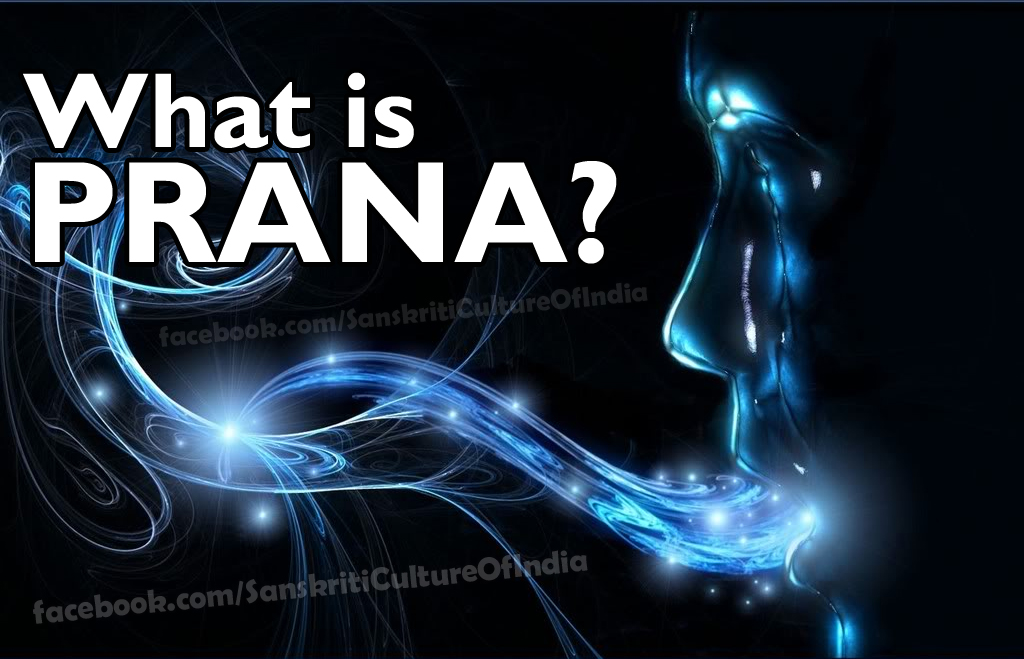
What is Prana?

Prana is a subtle aspect of the body. Its has a visible aspect which is the air we breath and an invisible aspect, which is the energy that flows in the body through various channels and sustains it. It is responsible for our vitality and dynamism (chaitanyam). Without prana beings cannot be alive. Prana also connects the gross body (annamaya kosa) with the mental body (manomaya kosa). Hence, classical yoga recommends controlled breathing (pranayama) to restrain the senses, purify the mind and body and arrest the modifications of the mind. Prana is the support for the body. Hence the Upanishads describe it often as the soul of the gross body and equate it with Atman or the essence of Brahman.

Prana means life breath. We usually consider only the air that we breath through our lungs as the life breath. In Hinduism we consider it only one form of breath. There are others, which we let out through the openings in the body or through the subtle channels. Our scriptures therefore identify mainly five types of prana. The air that we breath in through the nostrils is prana.

What we breath out or exhale through the nostrils is known as apana. In some descriptions, the air that travels downwards in the body and exits through the anus is also called apana. The air, which travels upwards in the body from the digestive system and exits through the throat (usually as a burp), is the digestive breath known as samana. Apart from these there are two other types of breath, which are more subtle and are not experienced like the other ones. They are the breath that is diffused uniformly through out the body called vyana and the one that begins in the throat and goes up into the head called udana.

The last one plays an important role in speech and in chanting prayers and mantras. Since thought and speech are related, udana usually travels towards the head region where the mind is located. Through speech and the chanting of Vedic mantras, it connects us to Brahman and opens our hearts and minds to divine blessings. Without udana, we will not be able to activate the sixth chakra which is located in the head and achieve liberation. Prana is also used as an adjective in the sense of dearer or beloved as in case of prana-sakhi (life partner) or prana-nadha (husband) or pranesvar (God).
~ J.V.

You may also like

Search the website

Like us on Facebook

Get daily updates via Email

Enter your email address:

Recent Posts

Yogini Ekadashi 2026 — The Yaksha Who Missed the Morning Flowers, and the Ekadashi That Undid His Curse

On Friday, July 10, 2026, the rare Krishna Paksha Ekadashi of Nija Ashadha arrives. The Padma Purana tells the story of Hemamali — the Yaksha gardener of Bhagavan Kubera in Alaka, whose single morning of distraction with his wife Vishalakshi cost him his form, his wife, and his celestial city. Cursed to wander the earth of Bharata as a leper for a long time, he was at last shown the way back by Sage Markandeya — a single sincere keeping of Yogini Ekadashi.

Jamai Shashthi 2026 — The Story of Maa Shashthi, the Cat, and the Wife Who Was Forgiven

Jamai Shashthi 2026 — The Story of Maa Shashthi, the Cat, and the Wife Who Was Forgiven

On Saturday, June 20, 2026, Bengali households across Bharata will welcome their married daughters and sons-in-law home for the legendary jamai-aador feast and perform the Shashthi Vrata. But behind the warmth lies a story most Bengalis know by heart and most non-Bengalis have never heard — the wife who stole the hilsa, blamed the cat, lost six sons to Maa Shashthi’s wrath, and was finally forgiven. The Vrat Katha, the vidhi, the mantras, and the deeper teaching.

Vat Purnima 2026 — The Wife Who Argued Yama Into Returning Her Husband’s Life

On Monday, June 29, 2026, women across Maharashtra, Gujarat, and southern Bharata will tie red thread around banyan trees and hear the story of Savitri — the wife who walked behind Yamaraja Himself when He came for her husband, and out-argued the Lord of Dharma into returning Satyavan’s life. The Mahabharata’s Pativrata Mahatmya Parva, the vrat vidhi, and why the banyan witnessed everything.

Nija Jyeshtha 2026 — The Real Jyeshtha Begins, and the Calendar Resumes

Nija Jyeshtha 2026 — The Real Jyeshtha Begins, and the Calendar Resumes

With Adhik Maas now closed on the Somvati Amavasya of June 15, the long-postponed festivals of Jyeshtha return — Vat Purnima (June 29, the Savitri-Yamaraja katha), Jamai Shashthi (June 20, the Bengali festival of Maa Shashthi), Sankashti Chaturthi (June 28), Yogini Ekadashi (July 10), and Devshayani Ekadashi (July 16, opening the four-month Chaturmas of Bhagavan Vishnu’s yoga-nidra). A guide to what the next four weeks hold and what the household that kept Purushottam Maas now carries forward.

css.php