IndianSanskriti
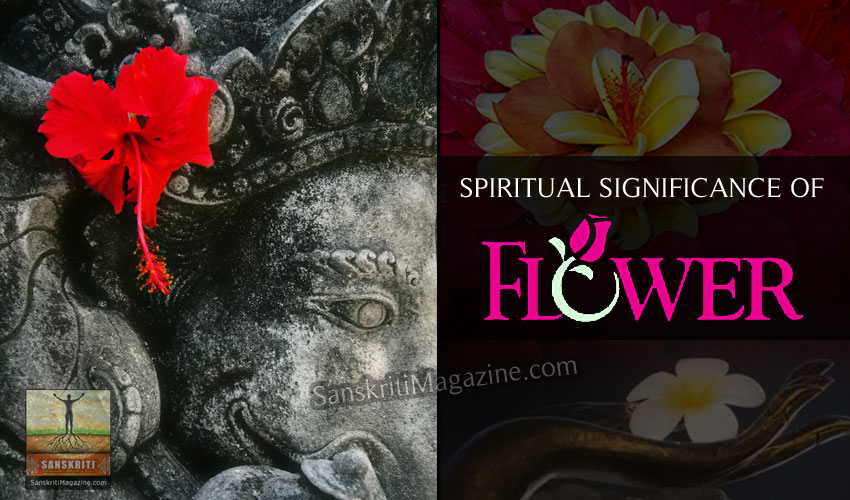
Spiritual Significance of Flowers

Spiritual Significance of Flowers

Flowers teach us the charm of silence and thus the self-giving which demands nothing in return Puja is an integral part of a Hindu household, either on a daily basis or during some important religious function or ceremony. The process can be either a simple ritual or a complicated one, depending on the occasion and according to the Vedas, it is equally important to perform rituals a certain way to derive full benefits from them.

One of the offerings given in puja is flowers, as they vibrate a certain state of consciousness that represents purity. They are rich with abundant qualities of design, color, fragrance, and soft touch and by nature they are a supreme source of joy in this world. Moreover, flowers are substances that are extremely pure, as they can be obtained without engaging in any evil deed. They can be offered without any risk that we may feel miserly or regretful afterwards. So the offering will be made with a pure mind at the beginning, in the middle, and at the end.

These flowers have to be offered in a particular way with a certain understanding at the feet of the deity. Feet represent the foundation on which we stand, which is none other than the supreme reality and flowers represent the desires in man. It is believed there are subtle frequencies of deities active in the atmosphere and these are attracted towards certain flowers. One must offer flowers that are fresh, unused and clear of any infestation.

The flowers are picked with five fingers of the right hand, with the fingers initially facing downwards which are then slowly turned upwards to gently place the flowers at the feet of the deity; this process is continued until the chant or the prayer is complete. The five fingers represent the five senses of sight, touch, taste, sound and smell. When these senses are directed towards the mundane world, they pick up the “desires” (flowers). When the fingers are turned towards the higher self, then the desires are eliminated. In sum, flowers represent renouncing all of one’s desires except enlightenment.

Flowers are also offered by bringing it close to one’s heart. This symbolically suggests that one is offering the soul or atman to the deity.


You may also like

Search the website

Like us on Facebook

Get daily updates via Email

Enter your email address:

Recent Posts

Yogini Ekadashi 2026 — The Yaksha Who Missed the Morning Flowers, and the Ekadashi That Undid His Curse

On Friday, July 10, 2026, the rare Krishna Paksha Ekadashi of Nija Ashadha arrives. The Padma Purana tells the story of Hemamali — the Yaksha gardener of Bhagavan Kubera in Alaka, whose single morning of distraction with his wife Vishalakshi cost him his form, his wife, and his celestial city. Cursed to wander the earth of Bharata as a leper for a long time, he was at last shown the way back by Sage Markandeya — a single sincere keeping of Yogini Ekadashi.

Jamai Shashthi 2026 — The Story of Maa Shashthi, the Cat, and the Wife Who Was Forgiven

Jamai Shashthi 2026 — The Story of Maa Shashthi, the Cat, and the Wife Who Was Forgiven

On Saturday, June 20, 2026, Bengali households across Bharata will welcome their married daughters and sons-in-law home for the legendary jamai-aador feast and perform the Shashthi Vrata. But behind the warmth lies a story most Bengalis know by heart and most non-Bengalis have never heard — the wife who stole the hilsa, blamed the cat, lost six sons to Maa Shashthi’s wrath, and was finally forgiven. The Vrat Katha, the vidhi, the mantras, and the deeper teaching.

Vat Purnima 2026 — The Wife Who Argued Yama Into Returning Her Husband’s Life

On Monday, June 29, 2026, women across Maharashtra, Gujarat, and southern Bharata will tie red thread around banyan trees and hear the story of Savitri — the wife who walked behind Yamaraja Himself when He came for her husband, and out-argued the Lord of Dharma into returning Satyavan’s life. The Mahabharata’s Pativrata Mahatmya Parva, the vrat vidhi, and why the banyan witnessed everything.

Nija Jyeshtha 2026 — The Real Jyeshtha Begins, and the Calendar Resumes

Nija Jyeshtha 2026 — The Real Jyeshtha Begins, and the Calendar Resumes

With Adhik Maas now closed on the Somvati Amavasya of June 15, the long-postponed festivals of Jyeshtha return — Vat Purnima (June 29, the Savitri-Yamaraja katha), Jamai Shashthi (June 20, the Bengali festival of Maa Shashthi), Sankashti Chaturthi (June 28), Yogini Ekadashi (July 10), and Devshayani Ekadashi (July 16, opening the four-month Chaturmas of Bhagavan Vishnu’s yoga-nidra). A guide to what the next four weeks hold and what the household that kept Purushottam Maas now carries forward.

css.php