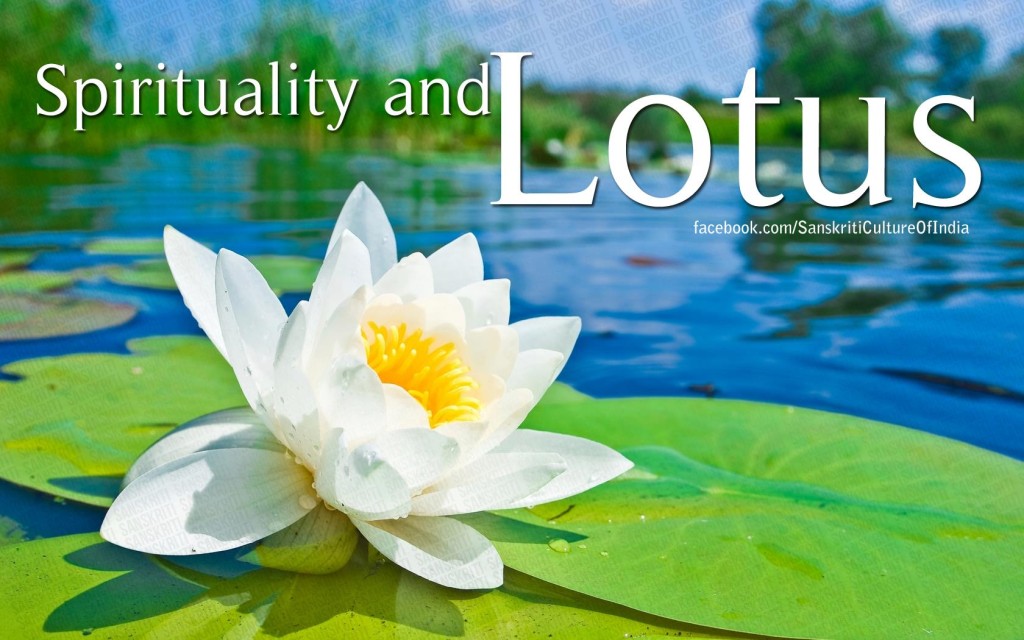
The lotus is one of the world’s most celebrated flowers. From ancient times to the present day, it has featured in folklore, religion and the arts in one form or another. It is a symbol of eternity, plenty and good fortune. The flowers are widely used for ornament and as offerings particularly in Buddhism and Hinduism.
The lotus has great significance in the spiritual life of South Asia. It is a symbol of purity and untarnished enlightenment amid ignorance. Particularly sacred in Hinduism and Buddhism, it represents the concept of primordial birth from the cosmic waters of creation. It is frequently mentioned in the ancient Sanskrit scriptures, where it has many names including padma (pink lotus), kamala (red lotus), pundarika (white lotus) and utpala (blue lotus).
Lotus flowers are also associated with the sun, since they open at dawn and close at dusk. The Rig Veda mentions white and blue lotuses and the Atharva Veda compares the human heart with the flower. Twin youths who are gods of dawn, known as the Ashvins, wear blue lotus garlands.
Vishnu is represented with a lotus in his navel because Hinduism states that a golden lotus emerged from his navel as he lay upon the primordial waters and Brahma sat upon it. A lotus also emerged from Vishnu’s forehead and the lotus-hued goddess Lakshmi sprang from it. She is therefore also called Padma and iconography depicts her seated on a fully blooming pink lotus, holding a lotus and being purified by elephants. Vishnu also always carries a lotus in his hand and almost all the gods of the Hindu pantheon are seated on lotuses or carry the flower.
These lotus seats, also known as a kamalasana, and lotus pedestals symolise purity in both Buddhism and Hinduism. In Buddhist lotus flowers are thought to have sprang up with each step the Buddha took. The Buddhas, Bodhisattvas and Taras are often depicted holding a lotus flower or seated upon one.
The lotus embodies divine birth and is also likened to a divine womb. It is part of sexual symbolism in Vajrayana Buddhism where the union of the vajra (thunderbolt) which is hard and penetrative and the soft and open lotus are conceived as the divine embrace of compassion and wisdom.
In yoga, one of the main postures for meditation is known as the padmasana or lotus position. The head is held high and the body adopts a cross-legged seated position. This symbolizes reaching above towards pure knowledge while being rooted in the material world of experience.