Wednesday, May 27, 2026 · Adhika Jyeshtha, Shukla Paksha Ekadashi · Religion · Festivals
There are twenty-four Ekadashis in an ordinary year — twelve in the bright fortnight of each lunar month, twelve in the dark. Each is sacred. Each carries the name of Bhagavan Vishnu. The devotee who keeps all twenty-four with sincerity walks under His protective gaze for the whole of life.
But once every two and a half to three years — when the calendar opens that quiet thirteenth chamber called Adhika Maas — two extra Ekadashis appear that the world will not see again for another thousand days. The Shukla Paksha one is called Padmini. The Krishna Paksha one is called Parama. They are, in the Vaishnava tradition, the rarest and most fruit-bearing Ekadashis of the entire calendar.
In 2026, Padmini Ekadashi falls on Wednesday, May 27. To fast on this day, the Padma Purana says, is to receive the merit of every Ekadashi the soul has ever observed and every Ekadashi it has ever missed — gathered into a single morning and laid as an offering at the lotus feet of the Lord.
The Ekadashi the Saints Waited For
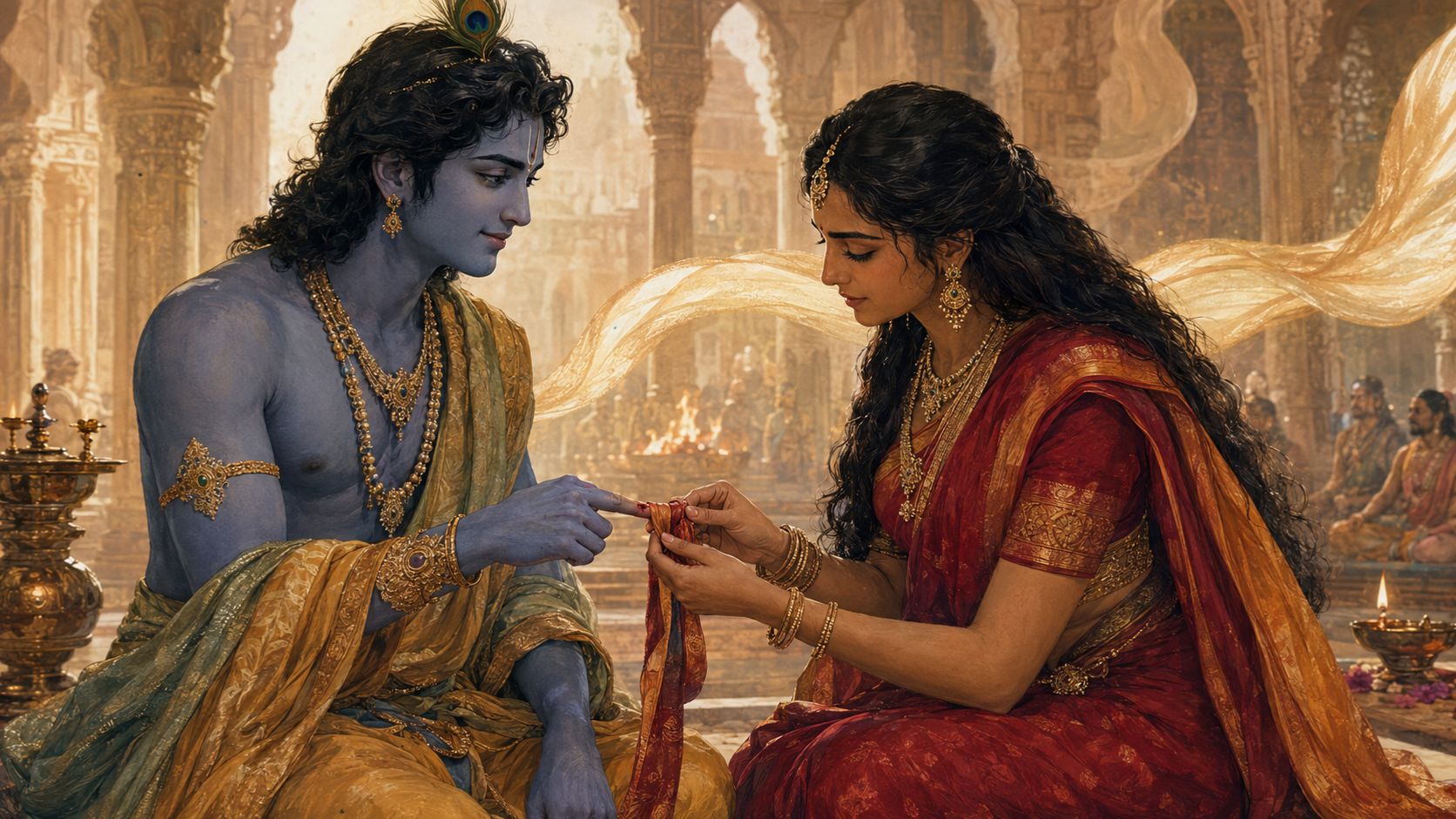
The story of Padmini Ekadashi reaches us through a sacred conversation in the Padma Purana, told by Bhagavan Krishna to Yudhishthira in the closing days of the Pandava court.
“Madhusudana,” Yudhishthira had asked, “the world keeps the twenty-four Ekadashis you have named to us. But what is the soul to do who longs for more — who has tasted the sweetness of the Ekadashi vrat and wishes to drink deeper? Is there an Ekadashi greater than the rest?”
Krishna smiled. He took up the question with the patience He always reserved for Yudhishthira’s questions of dharma.
“There is, Pandava. There is one Ekadashi that even the great Rishis spend their lives waiting for. It does not come every year. It does not come even every second year. It comes only in the month I have taken for My own — Purushottam Maas — and when it comes, the Devas themselves descend in their viman to keep it. It is Padmini Ekadashi. And to teach you its glory, I will tell you the story of King Kritavirya.”
The Vrat Katha — The King Who Could Not Have a Son
In the long ago, on the throne of Mahishmati, sat a king named Kritavirya — a sovereign so just, so dharmic, so beloved of his people that even the Rishis blessed his name without prompting. He had every blessing a king could be given. He had only one absence: he had no son.
His chief queen, Padmini, was as luminous as her name — the Lotus. She bore him devotion, she bore him counsel, she bore him every kind of love a wife may bring to a husband. But she could not bear him a son. The kingdom waited, year after year, for an heir who never came.
At last, when many years had passed and Kritavirya had grown old and his queen had grown still more inward, Padmini went to the great Rishi Anasuya — the wife of Maharishi Atri, mother of Dattatreya, one of the most exalted of all womenfolk who ever walked the earth.
“Devi,” she said, kneeling at her feet, “tell me. Is there any vrat in all the scriptures that may yet bring a son to my husband’s house? Any tapasya that the Lord has not yet refused? I have done what the Acharyas have advised. I have given what the priests have prescribed. The Lord has not opened His hand.”
Anasuya was silent for a long moment. Then she lifted Padmini up.
“There is one vrat, child, that I would not advise to any soul lightly. It is Padmini Ekadashi, observed in the Shukla Paksha of Purushottam Maas. It comes once in every thirty-three months or so. To keep it is to fast through Ekadashi and through the night that follows, to keep jagrana, to recite the Vishnu Sahasranama through the small hours, and to break the fast only at the prescribed parana on Dwadashi morning. It is severe. It is exact. And it is so loved by Bhagavan Vishnu that He has been known to grant the impossible to the soul who keeps it well.”
Padmini did not speak. She simply nodded, took Anasuya’s blessing, and went home.
That year was a Purushottam Maas year.
She kept the vrat.
She fasted through the entire day and the entire night. She kept jagrana with her ladies-in-waiting. She heard the Vrat Katha read aloud at midnight. She broke her fast at dawn with sandalwood-cooled water and a single tulsi leaf. And the Padma Purana tells us that, before the year was out, the queen of Mahishmati was holding a son in her arms — not an ordinary son, but the future Kartavirya Arjuna, the thousand-armed sovereign of the earth, the one who would rule the whole of Bharata and would meet his end one day at the hands of Bhagavan Parashurama Himself.
When Krishna finished telling Yudhishthira this story, He added — as He so often did — the line that turned the katha into a teaching: “Pandava, what was given to Padmini is not held back from any other woman or man who keeps this vrat with sincerity. The Ekadashi remembers every soul who has ever honoured it.”
Padmini Ekadashi 2026 — Key Timings
All timings as per Drik Panchang (IST). Please verify with your local panchang for regional variations.
| Ekadashi Tithi Begins | Late evening, Tuesday, May 26, 2026 |
|---|---|
| Ekadashi Tithi Ends | Late evening, Wednesday, May 27, 2026 |
| Vrat Observance Day | Wednesday, May 27, 2026 |
| Parana (breaking the fast) | After sunrise, Thursday, May 28, 2026 — within the Dwadashi window |
| Hari Vasara avoidance window | First quarter of Dwadashi — do not break the fast during this period |
Vrat Vidhi — How to Observe Padmini Ekadashi
Because Padmini Ekadashi is a Mahaa-Ekadashi — a “great” Ekadashi observed only in Purushottam Maas — the Padma Purana prescribes a stricter vidhi than the ordinary monthly observance.
The day before (Dashami): Take a single sattvic meal before sunset. Avoid grains, lentils, onion, garlic, and all rajasic foods. Sleep on the floor or a simple mat as a gesture of austerity.
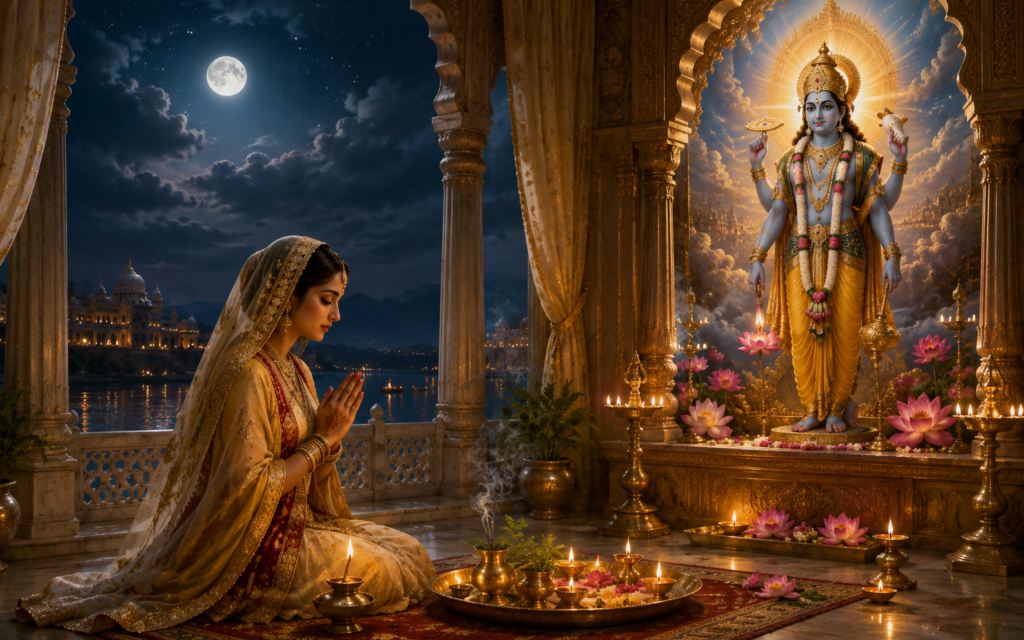
On Ekadashi morning: Rise during Brahma Muhurta. Bathe and wear clean clothes — yellow or white are the preferred colours. Take the sankalpa before an image of Bhagavan Vishnu — a quiet vow to keep the vrat with full sincerity through the day, the night, and into Dwadashi morning.
The puja: Establish a small altar with a murti or image of Bhagavan Vishnu, ideally in His Vaikuntha or Vasudeva form. Offer tulsi leaves, yellow flowers (lotus is ideal — it is the very flower for which Padmini is named), a ghee deepa, sandal paste, fruits, and panchamrita. Recite the Vishnu Sahasranama in full if time permits, and the Madhurashtakam.
Through the day: Keep the fast — nirjala (without water) for those whose health permits, or phalahari for most. Avoid sleep through the day. Engage in japa, scripture reading, and the company of devotees. The Vrat Katha — the story of Padmini and Anasuya — should be heard or read aloud at least once during the daylight hours.
The night — and this is what distinguishes Padmini Ekadashi: Observe jagrana. The Padma Purana is emphatic that the merit of Padmini is sealed by the night-vigil more than by the day-fast. Through the small hours of the night, keep bhajan, kirtan, and recitation of the Vishnu Sahasranama alive in the household. The third yama of the night — between roughly midnight and three in the morning — is held to be the most sacred for japa of the dvadasha-akshara mantra.
The morning of Dwadashi: Bathe, complete the puja, feed and offer dakshina to a Brahmana or to a hungry person, and only then break the fast within the prescribed parana window. Remember: breaking parana late or during Hari Vasara erases much of the vrat’s merit.
Mantras and Stotras for the Day
Om Namo Bhagavate Vasudevaya
Om Namo Narayanaya
Om Shreem Hreem Kleem Padmini Ekadashyai Namah
Recommended recitations: Vishnu Sahasranama, Purushottam Mahatmya (Padma Purana), Madhurashtakam, Achyutashtakam, and any one chapter of the Bhagavata Purana — the Skandha 8 account of the Samudra Manthana is especially recommended for this Ekadashi.
The Deeper Teaching — The Lotus That Bloomed Once in Three Years
The name Padmini is the feminine of padma — the lotus. And of all flowers in the Sanatana imagination, the lotus is the one most associated with what is rare, what is patient, and what is born out of darkness.
A lotus does not bloom in a meadow. It blooms in still, dark water — in the silt of a pond no one would walk into willingly. It rises through a medium that would suffocate any other flower, and it opens, when it opens, into something so fragrant and so radiant that the Lord Himself is described in the Vedas as standing on its petals.
Padmini Ekadashi is named for this. It is the Ekadashi that does not come often. It rises out of the dark, silty water of the calendar — out of the “extra” month that the other twelve once refused — and when it opens, it opens with a fullness that no ordinary Ekadashi can match.
The teaching is one the Puranas keep returning to in different ways: what is rare is not less. What is rare is more. The soul that has waited a long time for an answer should not despair when no answer comes in the ordinary months. The answer may be saving itself for the rare month, the rare day, the rare lotus that blooms once in many years.
When that day comes, the devotee who has kept watch is the one who is given the flower.
May 27 is one such day. The lotus is opening. Let the fast be kept.