Clearly, there has been a long history of maligning dharma that continues worldwide today.
by DR DAVID FRAWLEY @davidfrawleyved
Saying “I am a Hindu” is bound to meet with denigration in the West and even in India – more so if someone born in the West states to have formally become a Hindu.
Yet for someone in the West to say that they have become a Buddhist or a Muslim does not meet with the same negative response. Nor does it occur for someone in India, even from a Hindu background, to say that they have become a Christian or a Muslim.
Like a number of Westerners starting in the 1960s, I became immersed in Hindu based practices of yoga and vedanta, extending to the worship of Hindu deities like Shiva and Devi.
When people asked me what religion I followed, I realised that I was clearly a Hindu in my way of life from puja and pilgrimage, to mantra and meditation. I decided to formally become a Hindu to affirm this, particularly when I saw Hindus in India remaining under extensive conversion assaults.
Students of yoga and vedanta
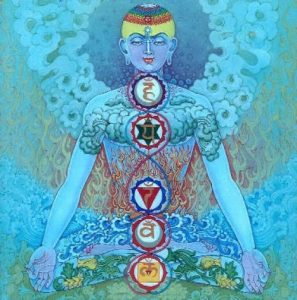 However, most in the West who take up yogic teachings do not formally call themselves Hindus, even if they adopt Sanskrit names relating to Hindu deities. This is owing to deep-seated propaganda against Hinduism as characterised by backward social customs, not enlightened spiritual teachings.
Many yoga students claim to be followers of their particular guru or sect. Others claim to be part of a universal tradition of yoga that includes all religions, of which Hinduism is only one. Yet all follow ideas and practices rooted in the Vedas, Bhagavad Gita and Yoga Sutras – primarily Hindu sources – overlooking the fact that they are benefitting enormously from Hindu teachings.
Some say practising yoga will make a Christian into a better Christian. I had given up my Catholic background because I could not accept the theology, rituals, or conversions efforts behind it. The law of karma, rebirth and the pursuit of liberation in Hinduism made much more sense to me, not the heaven, hell, sin and salvation of Christianity.
If practising yoga and meditation, with statues of Shiva and Devi in my shrine, made me into a better Christian, it was not something any mainstream Christian group would acknowledge or recommend.
There are those in the West who want to become Hindus, but find little support. The most helpful group I discovered was Hinduism Today magazine and some thoughtful, articulate Western Hindu swamis associated with it. In India, most helpful was the Vishva Hindu Parishad (VHP) and authors Ram Swarup and Sitaram Goel, who wrote extensively on modern challenges to Hindu dharma.
The situation for Hindus today
To tell Christians or Muslims today that one has become a Hindu is to invite ridicule and charges of idolatry and superstition. Academicians disparage Hinduism as a strange sensational set of cults, ignoring its profound meditation-based philosophies – a negative approach they would not take relative to any of the other great religions of the world.
The success of the Hindu community in the US and UK has muted these criticisms, but not removed them. Hindu-Americans still have to face both religious and racial prejudices for the images of their deities and the color of their skin.
You will not find a single department of Hindu Studies at any major India universities, even BHU (Banaras Hindu University). You can find a lone Hindu department at Oxford in UK, run largely by non-Hindus, but none elsewhere at any major universities in the West. This is though Hinduism is the third largest religion in the world and has the oldest and most diverse literature of any religion.
Clearly there has been a long history of maligning and suppressing Hindu dharma that continues worldwide today. There has been a deliberate strategy both to discourage people from becoming Hindus and to discourage Hindus from asserting their own identity. The influence of vested interests from missionary, colonial and Marxist groups is easy to discern behind these concerted efforts, often with extensive political and media support.
Today in India when Hindus question this long-standing and well-funded anti-Hindu bias that they continue to face, they find themselves demeaned as “intolerant”.
Fortunately, there is a slow awakening to the value of Hindu dharma and its rishi traditions. To respect Hinduism is to respect our ancient spiritual roots and our potential for higher consciousness.