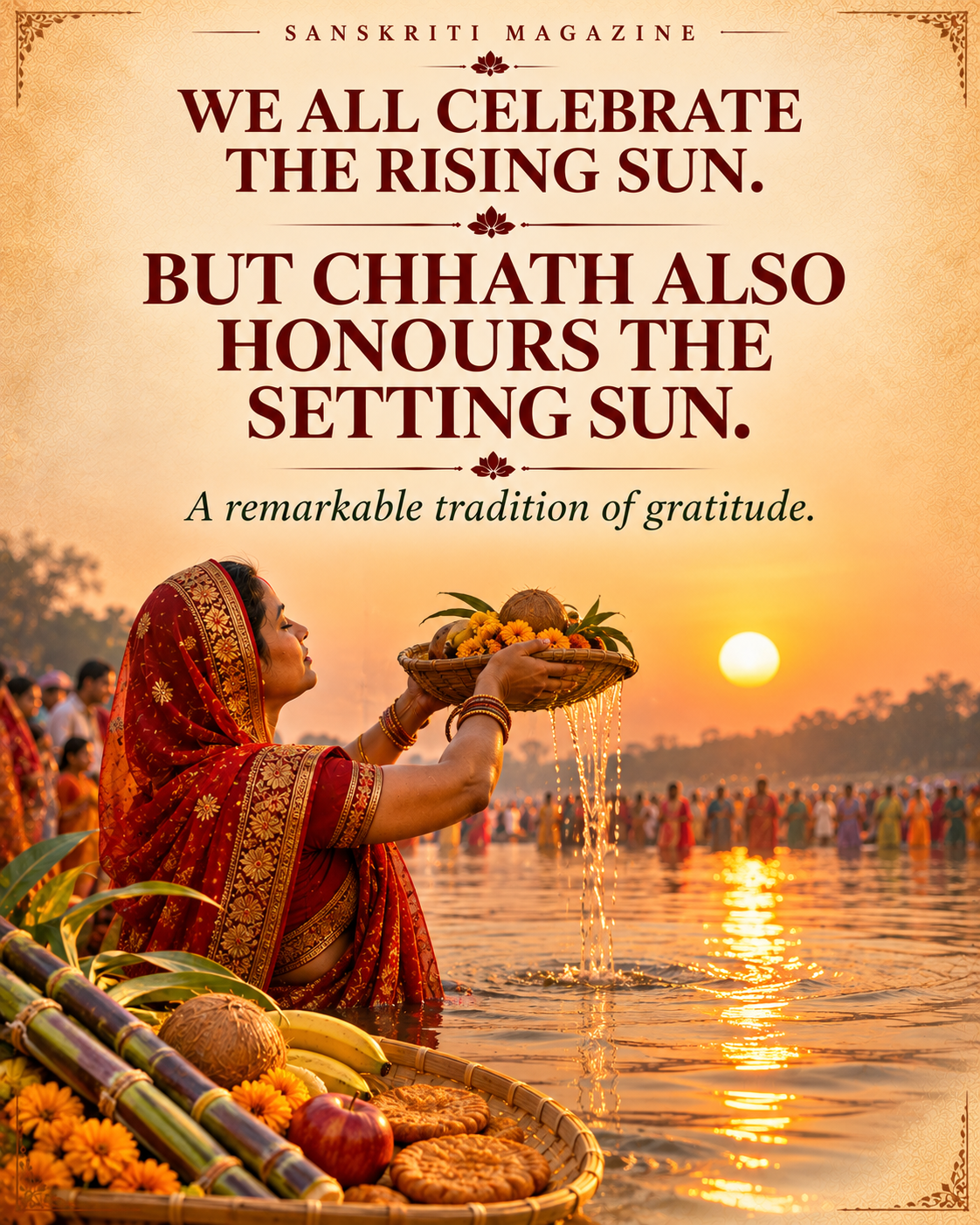
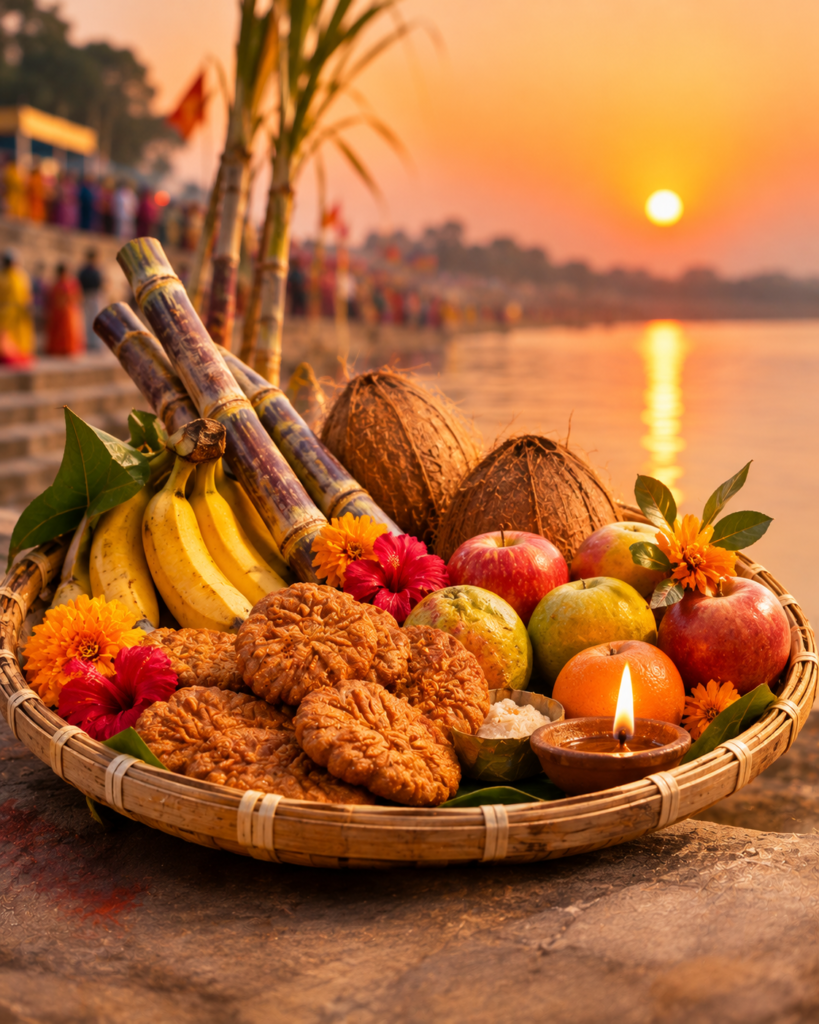
A Chhath soop holds much more than fruit and sweets. It carries the work of a household: ingredients gathered with care, prasad prepared according to family customs, and offerings arranged for Surya Dev and Chhathi Maiya. Look closely at the objects in a Chhath photograph and a history of everyday devotion begins to emerge.
Chhath Puja 2026 runs from 13 to 16 November. The offerings are especially prominent during Sandhya Arghya on 15 November and Usha Arghya on 16 November. Though many items recur across households, there is no single universal tray that must look exactly the same everywhere.
1. Thekua: the sweet that carries a household’s memory
Thekua is a traditional sweet often made from wheat flour, jaggery or sugar and ghee or oil, shaped and cooked according to family practice. In many homes, moulds or patterned surfaces give each piece its distinctive design. Recipes differ from one family to another; some use coconut or other flavourings, while others keep the ingredients simple.
Thekua is valued not only for its taste but also as carefully prepared prasad. Its making is often a shared family activity, and the recipe itself can become something passed from grandparents to children.
2. Soop and daura: woven vessels for sacred offerings
The broad, shallow soop and larger daura are traditional bamboo containers used to carry and present offerings. They show how Chhath draws on everyday materials and local craft practices. Their role is practical and ceremonial: fruits and prasad are grouped carefully and carried to the ghat for worship.
Materials and designs vary by place. What matters most in the observance is the respectful preparation and offering, rather than treating a particular decorative look as compulsory.
3. Sugarcane: a familiar harvest offering
Sugarcane frequently appears in Chhath preparations, sometimes as stalks arranged near a space for worship. The festival comes in the seasonal period when agricultural produce has a strong place in household offerings. In the festival’s Kosi tradition, Bihar Tourism describes a canopy made from sugarcane stalks with lamps and baskets of prasad beneath it.
Associations with sustenance and agricultural abundance are natural interpretations, but family explanations may differ, and it is better to honour that diversity than invent one universal symbolic meaning.
4. Bananas, coconuts and seasonal fruits
Fruit adds colour and abundance to the soop, but its presence is not merely decorative. Bananas, coconuts and locally available seasonal produce are included among offerings in many communities. Exact selections depend on regional availability, household custom and the preparation of the festival.
These are foods of the local environment and season, carried into an act of gratitude and prayer.
5. Kheer during Kharna
The second day of Chhath, Kharna or Lohanda, has its own food tradition. After the day’s observance, devotees prepare prasad, often including rice kheer made with jaggery. It is offered and shared with relatives and friends. The fasting practices that follow may be especially demanding for the vratin, while other family members contribute through preparation and service.
The care used in cooking and distributing prasad is as much a part of the household memory of Chhath as the public arghya at the ghat.
6. Diyas and the Kosi tradition
In communities observing Kosi, sugarcane stalks may form a canopy, with lamps lit inside or around it and baskets of prasad arranged as part of the ceremony. Bihar Tourism describes this practice as part of the third night of Chhath. Not every household performs Kosi in the same way, and that variation deserves respect.
What these offerings teach us
It is easy to focus on the extraordinary visual of devotees standing in water at sunset. Yet much of Chhath happens before anyone reaches the ghat: washing, preparing food, arranging bamboo vessels, sharing responsibilities and teaching younger relatives the songs and sequence of worship.
These objects are reminders that devotion can be expressed through care, discipline, craft and gratitude. Their value cannot be measured by expense or extravagance.
Chhath Puja 2026: when the offerings are made
- 13 November: Nahay Khay, the beginning of the four-day observance.
- 14 November: Kharna, with evening worship and prasad.
- 15 November: Sandhya Arghya, offerings to the setting sun.
- 16 November: Usha Arghya, offerings to the rising sun and the conclusion of the fast.
Read our complete Chhath Puja 2026 calendar and ritual guide and our companion essay on why Chhath honours both the setting and rising sun.
A small question for your family
Which Chhath offering is most closely associated with your home: the way thekua is shaped, the arrangement of a bamboo soop, or a particular seasonal fruit? Ask an elder about it. Often the answer is also a story about the family.
Sources: Bihar Tourism: Chhath Puja; Drik Panchang: Chhath Puja 2026; Sanskriti Magazine’s existing introduction to Chhath.