IndianSanskriti
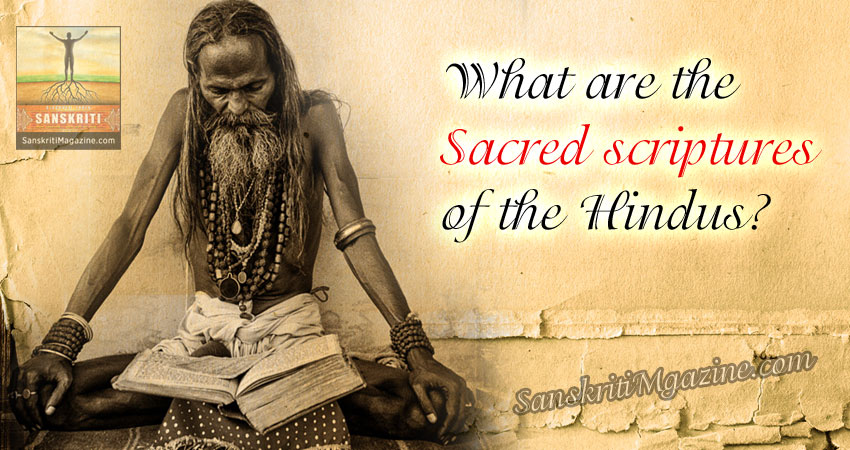
Sacred Texts of the Hindus

Sacred Texts of the Hindus

According to Swami Vivekananda, “the accumulated treasury of spiritual laws discovered by different persons in different times” constitutes the sacred Hindu texts. Collectively referred to as the Shastras, there are two types of sacred writings in the Hindu scriptures: Shruti (heard) and Smriti (memorized).

Sruti literature refers to the habit of ancient Hindu saints who led a solitary life in the woods, where they developed a consciousness that enabled them to ‘hear’ or cognize the truths of the universe. Sruti literatures are of two parts: the Vedas and the Upanishads.

There are four Vedas:

  • The Rig Veda -“Royal Knowledge”
  • The Sama Veda – “Knowledge of Chants”
  • The Yajur Veda – “Knowledge of Sacrificial Rituals”
  • The Atharva Veda – “Knowledge of Incarnations”

There are 108 extant Upanishads, of which 10 are most important: Isa, Kena, Katha, Prashna, Mundaka, Mandukya, Taitiriya, Aitareya, Chandogya, Brihadaranyaka.

Smriti Literature refers to ‘memorized’ or ‘remembered’ poetry and epics. They are more popular with Hindus, because they are easy to understand, explains universal truths through symbolism and contain some of the most beautiful and exciting stories in the history of religion world literature. The three most important of Smriti literature are:

  • The Bhagavad Gita – The most well known of the Hindu scriptures, called the “Song of the Adorable One” forms the sixth part of Mahabharata. It contains some of the most brilliant theological lessons about the nature of God and of life ever written.
  • The Mahabharata – The world’s longest epic poem deals with the power struggle between the Pandava and the Kaurava families, with an intertwining of numerous episodes that make up life.
  • The Ramayana – The most popular of Hindu epics, composed by Valmiki depicts the story of the royal couple of Ayodha – Ram and Sita and a host of other characters and their exploits.

~ Subhamoy Das
You may also like

Search the website

Like us on Facebook

Get daily updates via Email

Enter your email address:

Recent Posts

Padmini Ekadashi 2026 — The Ekadashi Even the Devas Descend to Keep

Padmini Ekadashi 2026 — The Ekadashi Even the Devas Descend to Keep

The rarest Ekadashi of the entire Hindu calendar is three days away. The Padma Purana preserves a conversation between Bhagavan Krishna and Yudhishthira about a single Ekadashi the great Rishis spend lifetimes waiting for — Padmini. The Vrat Katha of Queen Padmini of Mahishmati, the lotus teaching, and why May 27, 2026 is the morning Vaishnavas across Bharata are preparing for.

Varada Chaturthi 2026 — The Rare Ganesha Day of Purushottam Maas

Varada Chaturthi 2026 — The Rare Ganesha Day of Purushottam Maas

Once every 2.5–3 years — when the rare 13th month of Adhika Maas opens — a thirteenth Vinayaka Chaturthi appears. The Mudgala Purana calls it Varada Chaturthi, the “boon-giving” Chaturthi, and holds it as the most fruit-bearing Ganesha day of the entire calendar. Today, Wednesday May 20, 2026, is that day.

Padmini Ekadashi 2026 — The Rare Ekadashi That Comes Only in Purushottam Maas

Padmini Ekadashi 2026 — The Rare Ekadashi That Comes Only in Purushottam Maas

Padmini Ekadashi 2026 falls on Wednesday, May 27 — the Shukla Paksha Ekadashi of Adhika Maas, the rarest Ekadashi in the entire Hindu calendar (it appears only every 2.5–3 years). The Padma Purana conversation between Bhagavan Krishna and Yudhishthira, the Vrat Katha of Queen Padmini, complete vrat vidhi with jagrana, mantras, and the lotus symbolism that gives the Ekadashi its name.

Ganga Dussehra 2026 — The Day Maa Ganga Came Down to Bhagiratha

Ganga Dussehra falls on Monday, May 25, 2026 — commemorating the day Maa Ganga descended from Vaikuntha to the earth through the millennia-long tapasya of King Bhagiratha. The full account from the Valmiki Ramayana, snan vidhi, dana traditions, mantras, and the teaching of sustained sincerity.

Adhik Jyeshtha Maas 2026 — The Hidden Month That Belongs to Lord Vishnu

Once every 2.5–3 years, the Hindu calendar opens a quiet thirteenth chamber — the intercalary month Lord Vishnu took for His own. A Puranic look at Adhik Jyeshtha Maas 2026 (May 2–31), the Padma Purana account of how it became Purushottam Maas, and a complete householder’s guide for its closing days.

css.php