IndianSanskriti

Navratri Day 7: Worship of Goddess Kalaratri

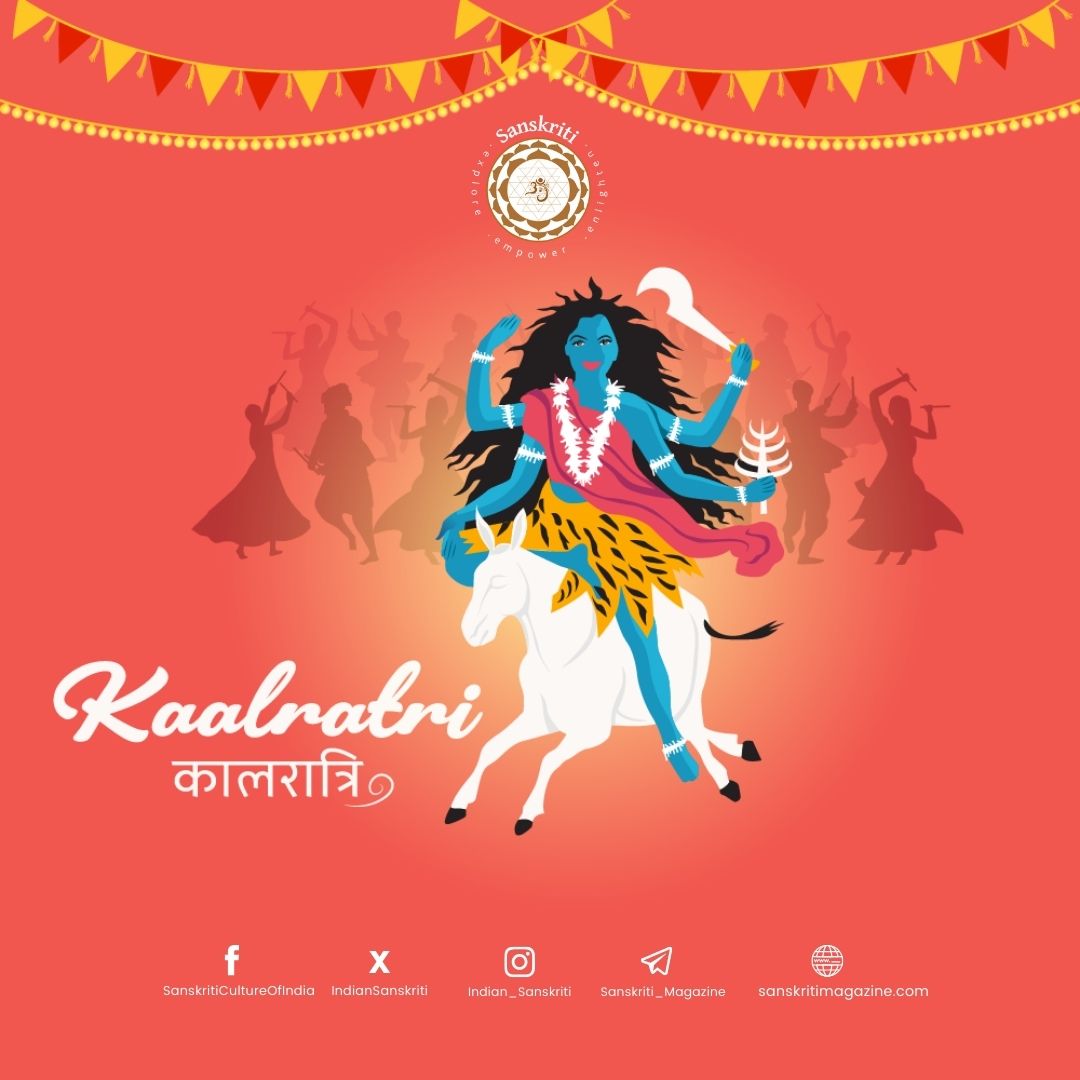
On the seventh day of Navratri, devotees honor Goddess Kalaratri, one of the fiercest forms of Durga. Known as the destroyer of darkness, Kalaratri signifies the triumph of light over ignorance. She is depicted riding a donkey, with dark skin, disheveled hair, and a fearless posture. Her power protects devotees from evil forces and negative energies.

Significance of Day 7: Goddess Kalaratri is revered as a powerful force who eradicates darkness and ignorance from the lives of her devotees. Worshipping her removes fear, eliminates negative influences, and instills courage. She also grants protection and spiritual enlightenment, guiding devotees through the most challenging times.

Spiritual Aspect: Kalaratri is associated with the Sahasrara Chakra (Crown Chakra), which symbolizes spiritual connection and enlightenment. Her worship helps awaken this chakra, leading to inner wisdom and a stronger connection to the divine.

Rituals of the Day:

  • Devotees offer red flowers, jaggery, and sweets to Goddess Kalaratri as part of their prayers.
  • Chanting her mantra invokes her fierce protection and blessings for eliminating obstacles.
  • Fasting is observed, and special prayers are performed to seek strength and courage.

Color of the Day: Green The color for Day 7 is Green, representing growth, tranquility, and renewal. Wearing green on this day symbolizes the renewal of strength and the protection of Goddess Kalaratri.

Mantra to Chant: “Om Devi Kalaratryai Namah”
Chanting this mantra invokes the goddess’s power to protect devotees from negative energies and fear.

Prasad of the Day: Jaggery and sweets made from it are commonly offered as prasad, symbolizing the sweet rewards of overcoming fear and obstacles.

Story of Goddess Kalaratri: Goddess Kalaratri, often called the fiercest form of Durga, emerged to destroy the demons Sumbha and Nishumbha. Her form embodies the destruction of ignorance, darkness, and all negative energies. Although fierce in appearance, she is benevolent and compassionate toward her devotees, ensuring their safety and peace.

Devotees’ Practices: On the seventh day, devotees focus on overcoming inner fears and seek Goddess Kalaratri’s protection against any negative forces. Temples and homes are filled with prayers, and stories of her bravery are recited.

Day 7 of Navratri is about destroying darkness and rising above ignorance and fear. Goddess Kalaratri’s power encourages us to face challenges head-on and emerge victorious. Let us invoke her blessings to guide us toward the light and help us overcome the obstacles in life.

Share this with your family and friends to spread the divine protection of Maa Kalaratri. #MaaKalaratri #NavratriPower #SanskritiCulture

You may also like

Search the website

Like us on Facebook

Get daily updates via Email

Enter your email address:

Recent Posts

Jamai Shashthi 2026 — The Story of Maa Shashthi, the Cat, and the Wife Who Was Forgiven

Jamai Shashthi 2026 — The Story of Maa Shashthi, the Cat, and the Wife Who Was Forgiven

On Saturday, June 20, 2026, Bengali households across Bharata will welcome their married daughters and sons-in-law home for the legendary jamai-aador feast and perform the Shashthi Vrata. But behind the warmth lies a story most Bengalis know by heart and most non-Bengalis have never heard — the wife who stole the hilsa, blamed the cat, lost six sons to Maa Shashthi’s wrath, and was finally forgiven. The Vrat Katha, the vidhi, the mantras, and the deeper teaching.

Vat Purnima 2026 — The Wife Who Argued Yama Into Returning Her Husband’s Life

On Monday, June 29, 2026, women across Maharashtra, Gujarat, and southern Bharata will tie red thread around banyan trees and hear the story of Savitri — the wife who walked behind Yamaraja Himself when He came for her husband, and out-argued the Lord of Dharma into returning Satyavan’s life. The Mahabharata’s Pativrata Mahatmya Parva, the vrat vidhi, and why the banyan witnessed everything.

Purushottam Maas — The Month No Deity Would Claim, and the Lord Who Made It Supreme

Every month of the Hindu calendar has a lord — except the rare thirteenth, the Adhika Maas, born an orphan and shunned as the “impure month.” The Puranas tell how this rejected month went in grief to Bhagavan Vishnu, who claimed it, gave it His own name — Purushottam — and made it the most fruitful month of all. The origin story, the teaching, and what it means for Purushottam Maas 2026 (May 17 – June 14).

Padmini Ekadashi 2026 — The Ekadashi Even the Devas Descend to Keep

Padmini Ekadashi 2026 — The Ekadashi Even the Devas Descend to Keep

The rarest Ekadashi of the entire Hindu calendar is three days away. The Padma Purana preserves a conversation between Bhagavan Krishna and Yudhishthira about a single Ekadashi the great Rishis spend lifetimes waiting for — Padmini. The Vrat Katha of Queen Padmini of Mahishmati, the lotus teaching, and why May 27, 2026 is the morning Vaishnavas across Bharata are preparing for.

Varada Chaturthi 2026 — The Rare Ganesha Day of Purushottam Maas

Varada Chaturthi 2026 — The Rare Ganesha Day of Purushottam Maas

Once every 2.5–3 years — when the rare 13th month of Adhika Maas opens — a thirteenth Vinayaka Chaturthi appears. The Mudgala Purana calls it Varada Chaturthi, the “boon-giving” Chaturthi, and holds it as the most fruit-bearing Ganesha day of the entire calendar. Today, Wednesday May 20, 2026, is that day.

css.php