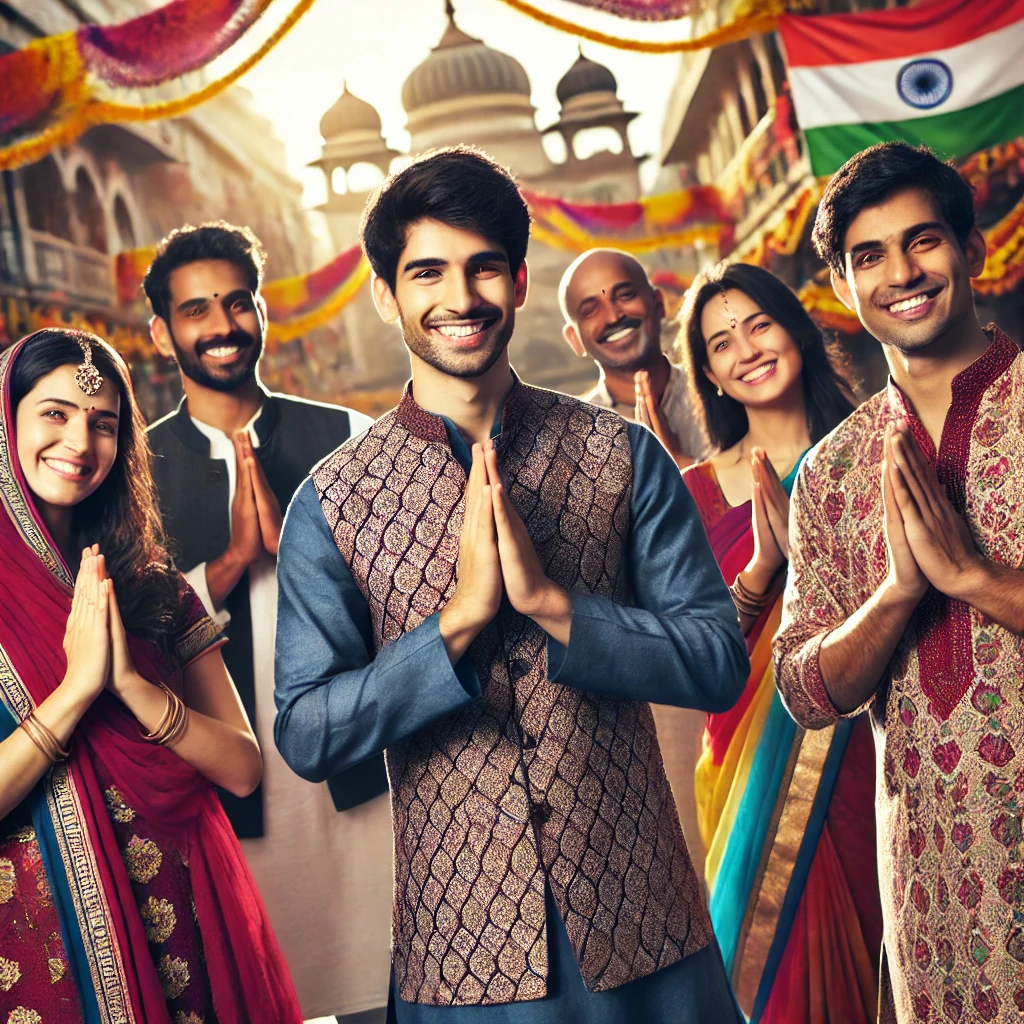
The meaning of Namaste has a beautiful and powerful psycho-spiritual origin. “Namaste” is India’s most well known export to the western civilization. Namaste is a spiritual greeting of respect when you meet any spiritual teacher, fellow student or when greeting someone you honor. One translation is that it means, “I bow down to the divinity within you”.When you honor the divine within another person at the same time you are honoring it within yourself. Namaste expresses the very essence of respect for all of the Presence of God within all of us. In truth, each of us is part of one big family.
We come from the same source of life and return once we pass away from the physical body. Namaste helps to remind us of our common heritage while bringing to life the important need for respecting each other.The other important feature of reciting Namaste when you greet someone is the holding of the hands together over the heart as though in the jesture of praying.
This brings together the two positive and negative polarity energy fields in the body balancing them over the heart. The heart is the strongest source of electrical energy in the physical-etheric body. By balancing your energy there is a union of masculine and feminine polarity in the entire auric field of energy.The psycho-spiritual aspect is engaged because as you bring your hands together at your heart center, literally connecting the right and left hemispheres of the brain. This is a yogic process of unification, the yoking of our active and receptive natures.
Thus, you are connecting the heart centers and heart centers in one loop of energy.Try this on your family and spiritual friends when you see them. It creates a mood of peace, serentiy and respect which is far greater than a hand shake or simple hello.In India when we meet somebody, we join hands for namaste, sort of diffusing ourselves before the meeting. during the meeting, our mood may elevate, aggravate and when we see the same person off again we join hands to bid goodbye, sort of diffusing ourselves after the meeting.- Christopher Lee May
Sadly, the practice of namaste has become less commonly used and is being replaced by the western greeting of just saying “hello”.
A Yogic/scientific reason of why we fold our hands when praying.
Watch Video
A Yogic/scientific reason of why we fold our hands when praying. One of the best, short and easy to understand explanation I have come across so far. This is great for people who don’t want to go in greater details, for greater details you can check the following link: https://www.sanskritimagazine.com/indian-religions/hinduism/meaning-of-namaste/Please watch this video and share your thoughts… 🙂
Posted by Sanskriti on Thursday, June 13, 2013