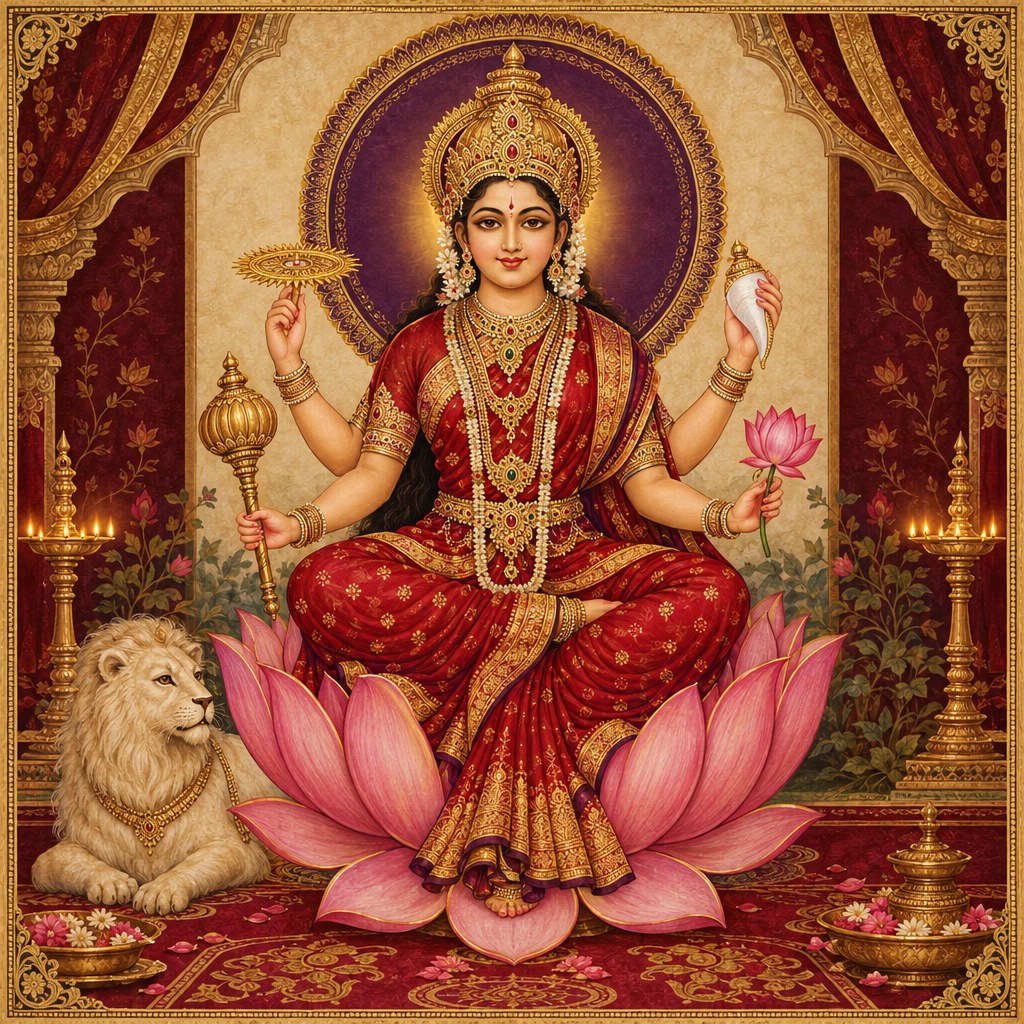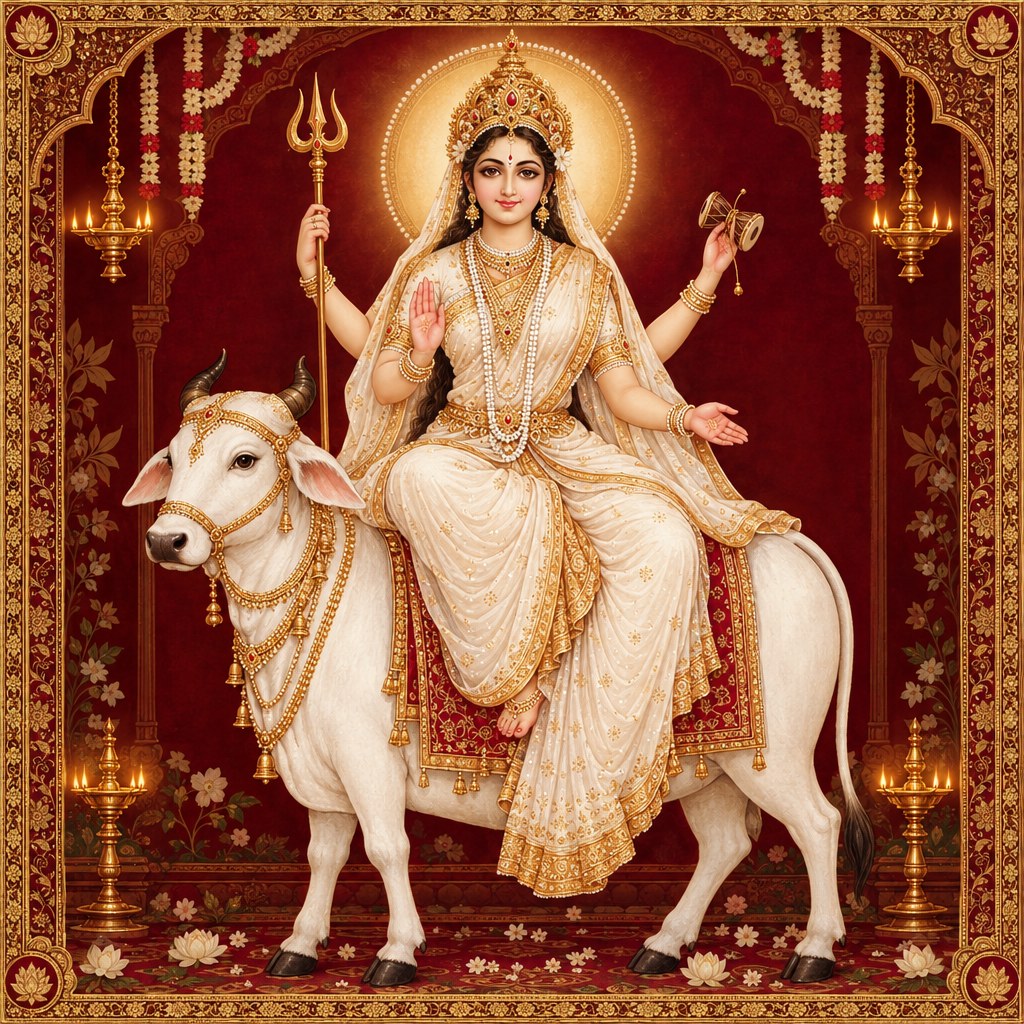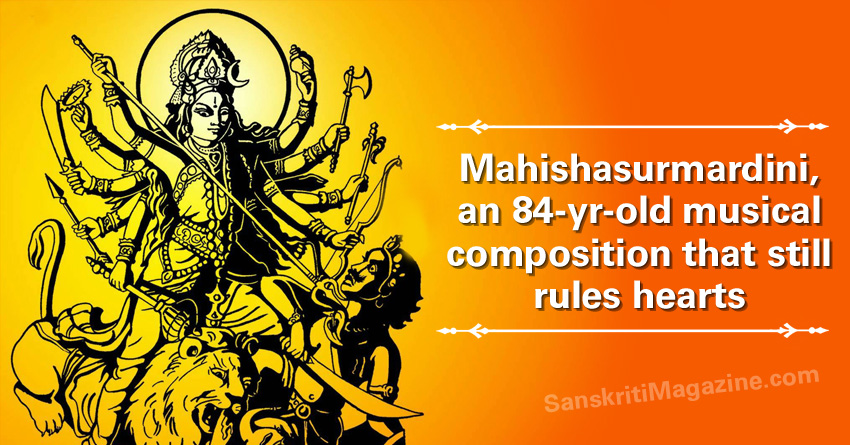
Bengalis all over the world wake up at daybreak on Mahalaya to listen to the musical invocation of Goddess Durga, complete with a recital of Chandipaath by Birendra Krishna Bhadra and hymns and devotional songs rendered by legendary artistes.
It’s that time of the year again. She has almost arrived. Millions woke up at the crack of dawn today to welcome Her annual “homecoming” with a musical invocation. For the last 84 years, Bengalis all over the world have been following this ritual on Mahalaya. The Mahishasurmardini composition has till date retained its charm, being popular with all generations, people from all walks of life, irrespective of their beliefs and political leanings.
Composed in 1931, originally for radio, the 90-minute musical piece combines a narration, hymns and Bengali devotional songs describing the creation of Goddess Durga to kill Mahishasur, the evil. While the actual Debipaksha begins only the next day, for the common Bengali it’s the narration of this tale from Hindu mythology, beginning with blowing of the conch at daybreak, that marks the commencement of the 10-day celebrations.
Aired by All Indian Radio for the first time, Mahishasurmardini features a narrator and a battery of well-known singers. The rich narration and Chandipaath by Birendra Krishna Bhadra in his booming and magical voice has made him irreplaceable even after eight decades. The All India Radio made a few attempts for a remake of the composition, but failed to get a favourable response each time. Even ‘Mahanayak’ Uttam Kumar, the all-time favourite Bengali actor, was said to be no match, with the audience rejecting the 1976 remake bid featuring him as the narrator.
Bhadra has been synonymous with Mahalaya. He, listeners will agree, lives the lyrics, injecting real emotions into the mythological tale. The narrative reaches a crescendo when Bhadra describes the demon’s dominance, with the despair over the hopelessness evident in his voice that cracks as he chants on, and if you listen carefully, you can hear his sobs.
The music was composed by the legendary Pankaj Mullick, while the singers giving Bhadra company were all top performers of the time. Scripted by Bani Kumar, the composition had Dwijen Mukhopadhyay, Pratima Banerjee, Shyamal Mitra, Sandhya Mukhopadhyay, Manabendra Mukhopadhyay, Arati Mukhopadhya, Supriti Ghosh, Bimal Bhushan, Utpala Sen, Tarun Banerjee, Krishna Dasgupta, Sumitra Sen, Ashima Bhattacharya, Shipra Bose and Pankaj Mallik himself lending their melodious voices. While it used to be a live performance initially, the AIR started playing the recorded version much later. Prasar Bharati CEO Jawhar Sircar recently wrote in a Bengali daily that the version broadcast at present was created in 1966.
Ahead of the live performance, old-timers say, Pankaj Mullick used to ensure all the artistes rehearse together for one full month without break. Mullick was so strict that he reportedly kept his favourite Hemanta Mukhopadhyay (Hemant Kumar) out of it because the busy singer could not give time for the rehearsals. The discipline shows in the work that has successfully remained a chartbuster for decades.
The timeless composition has endured all kinds of influence on music in Bengal, with people continuing to play the tracks on Mahalaya year after year with similar enthusiasm. It is as integral to the Bengali psyche as the Durga Puja itself. So much so, that despite so many options available to play it any time, they get up before dawn each year to listen to the masterpiece.
For those who can’t tune in to radio, the recording is available on YouTube. There is even an app called Mahalaya for Android and iOS users. The recordings are also available in audio CDs.
Set to similar orchestration, a Hindi version is broadcast at the same time for a pan-Indian audience.