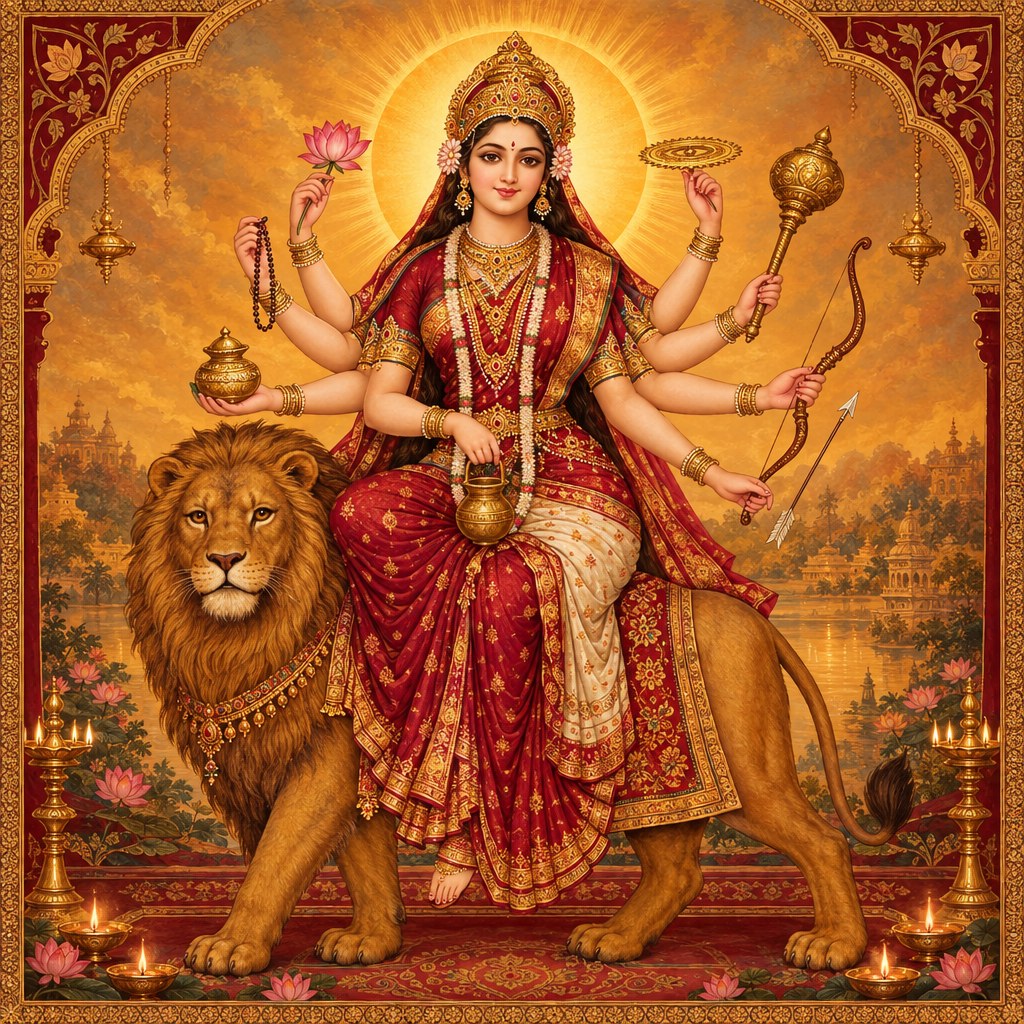
Sanskriti Magazine · Navadurga · Part 5 of 9
Care often happens outside the spotlight. A meal arrives. Someone waits. A child feels safe enough to try again.
This Sharad Navratri, we are looking closely at the nine forms of Maa Durga. Each post pairs devotional history with a question for your daily life. Navadurga worship and regional Durga Puja celebrations share devotion to Maa, while their calendars and customs can differ.
Who is Maa Skandamata?
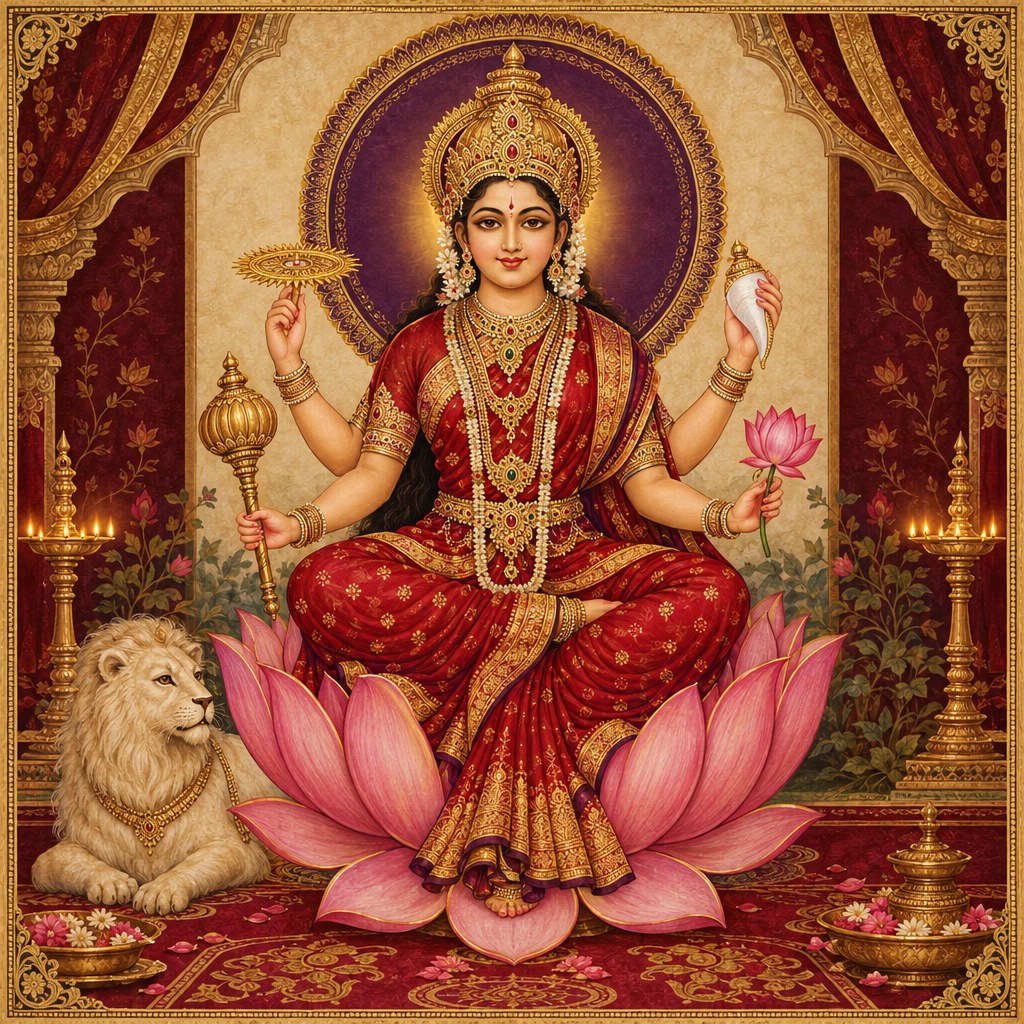
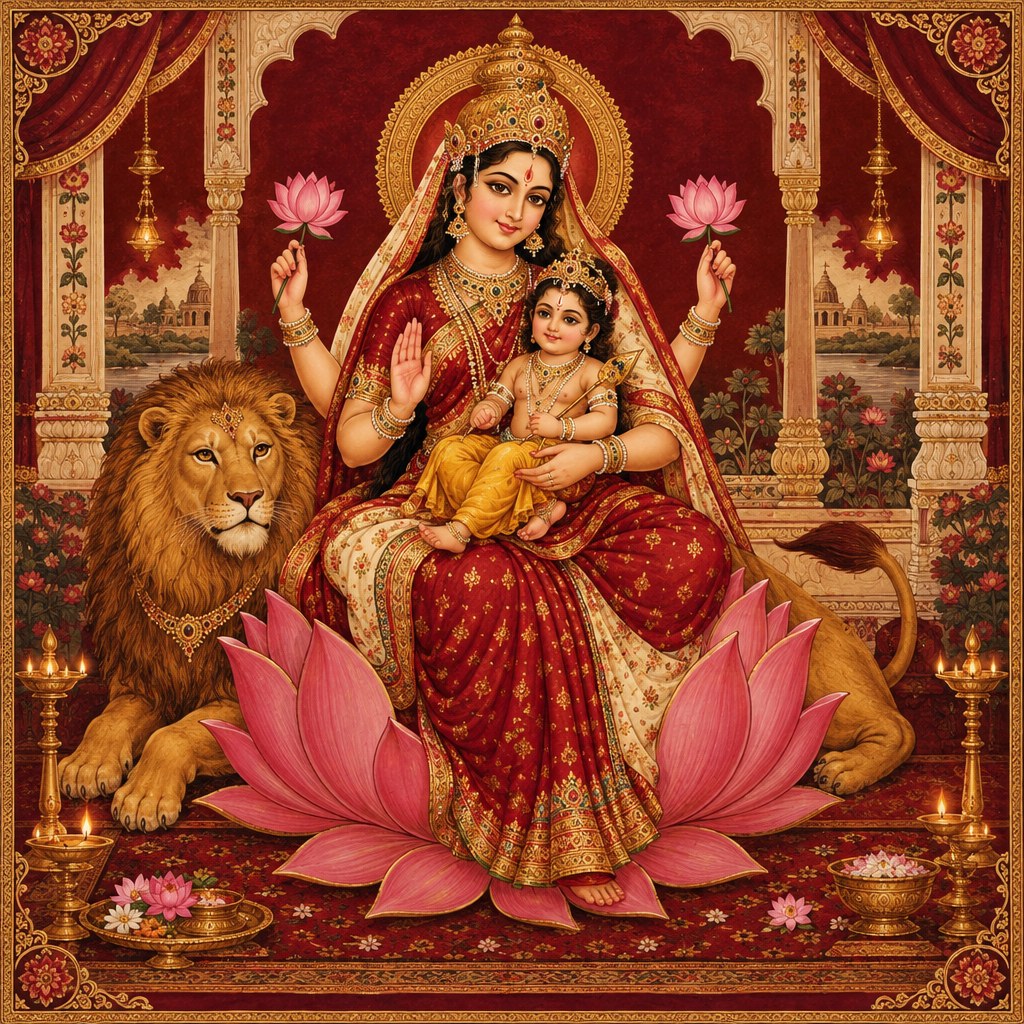
Skandamata is the fifth form of Navadurga. Her name identifies her as the mother of Skanda, also known as Kartikeya or Murugan. In her imagery, the Divine Mother holds the child while remaining a figure of strength. Read the traditional account and iconography.
How to recognise her form
Four arms, lotus flowers, the child Skanda and a lion distinguish this form. She is also depicted seated on a lotus.
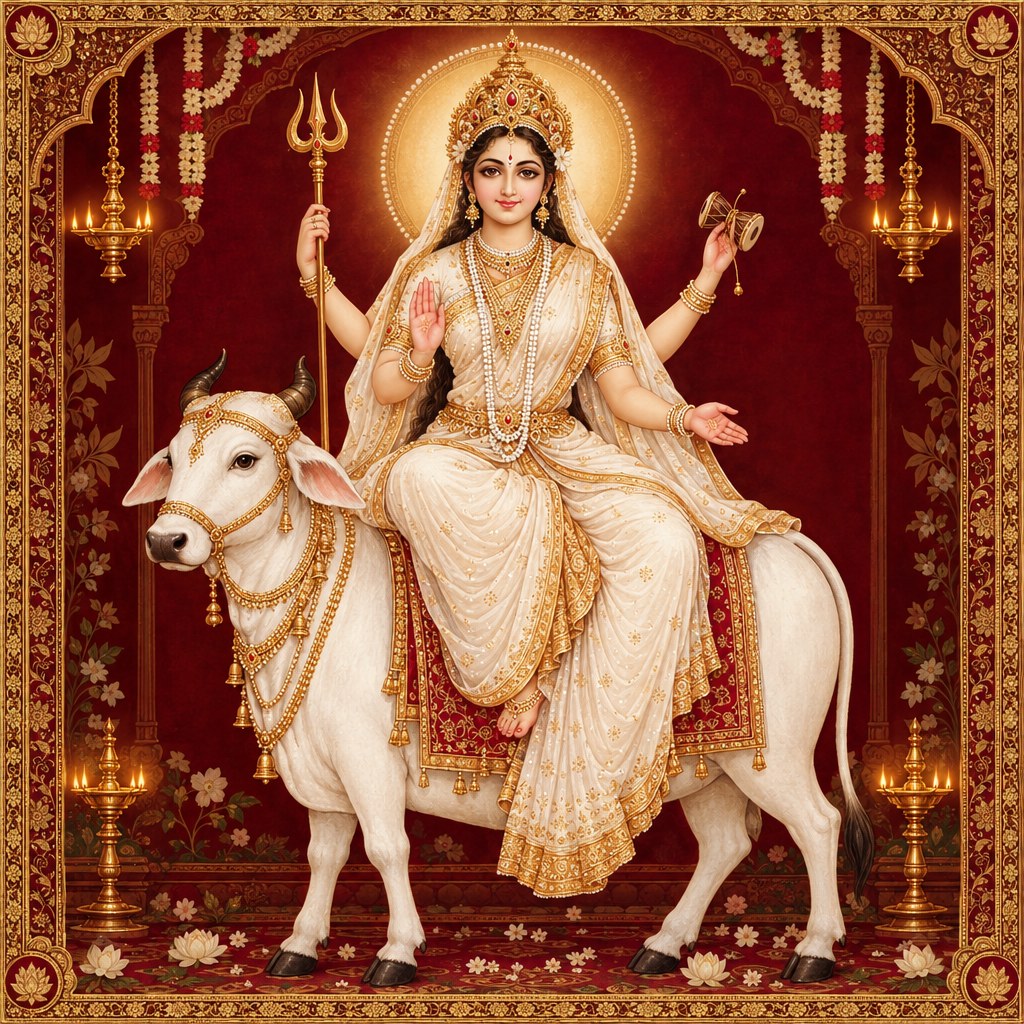
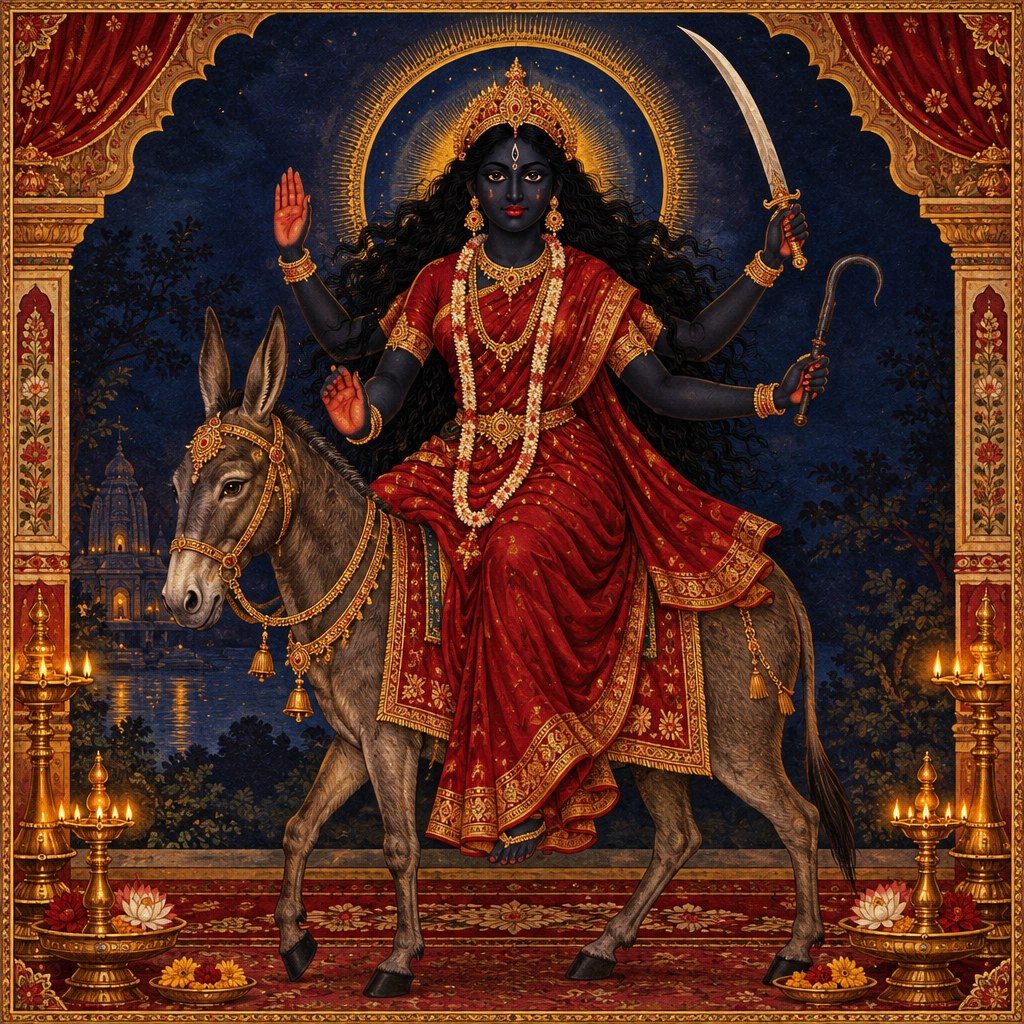
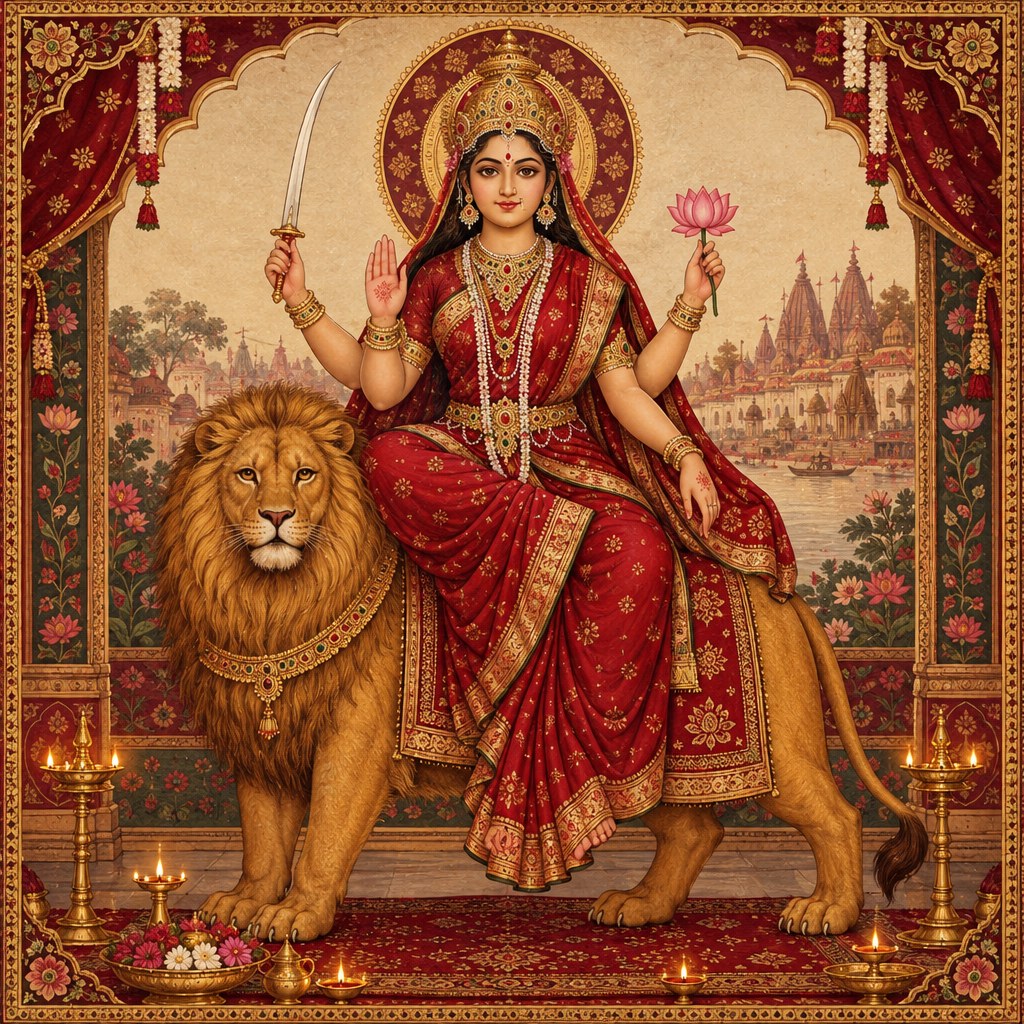
Look for these details when you see an image in a home, temple or festival display. Artists and regional traditions may vary. The form is more than a decorative portrait: its identifying details help you follow the devotional account.
A reflection for this Navratri
The child in her lap changes the way we look at power. Protection includes making space for another person to grow. Care may come from a parent, grandparent, teacher, sibling or friend. It can be patient without being limitless. This festival, notice the people whose work makes your everyday life possible. Gratitude becomes more useful when you turn it into a specific act of support.
One practice to carry into your day
- Name a person whose care you often overlook.
- Thank them for one precise thing they do.
- Offer help with a task instead of asking them to arrange your help.
You can use this as a personal reflection alongside your family’s way of observing the festival. It is not a prescribed ritual or a promise of a particular spiritual result.
A question to share
Whose quiet care has given you room to grow?
Send this reflection to someone you would like to hear from. A specific memory or example can make the conversation more meaningful.
Follow the nine-part series
- 1. Maa Shailaputri
- 2. Maa Brahmacharini
- 3. Maa Chandraghanta
- 4. Maa Kushmanda
- 5. Maa Skandamata
- 6. Maa Katyayani
- 7. Maa Kalaratri
- 8. Maa Mahagauri
- 9. Maa Siddhidatri
Our reading order follows the traditional Navadurga sequence. Part numbers are not publication dates or a universal day-by-day ritual calendar. For local observance dates, check the 2026 Delhi Navratri calendar and your local temple or panchang.
Illustrations in this series are AI-generated devotional art.