Sanskriti Magazine · Navadurga · Part 2 of 9
Some days, devotion looks like returning to the same small practice even when nobody notices.
This Sharad Navratri, we are looking closely at the nine forms of Maa Durga. Each post pairs devotional history with a question for your daily life. Navadurga worship and regional Durga Puja celebrations share devotion to Maa, while their calendars and customs can differ.
Who is Maa Brahmacharini?
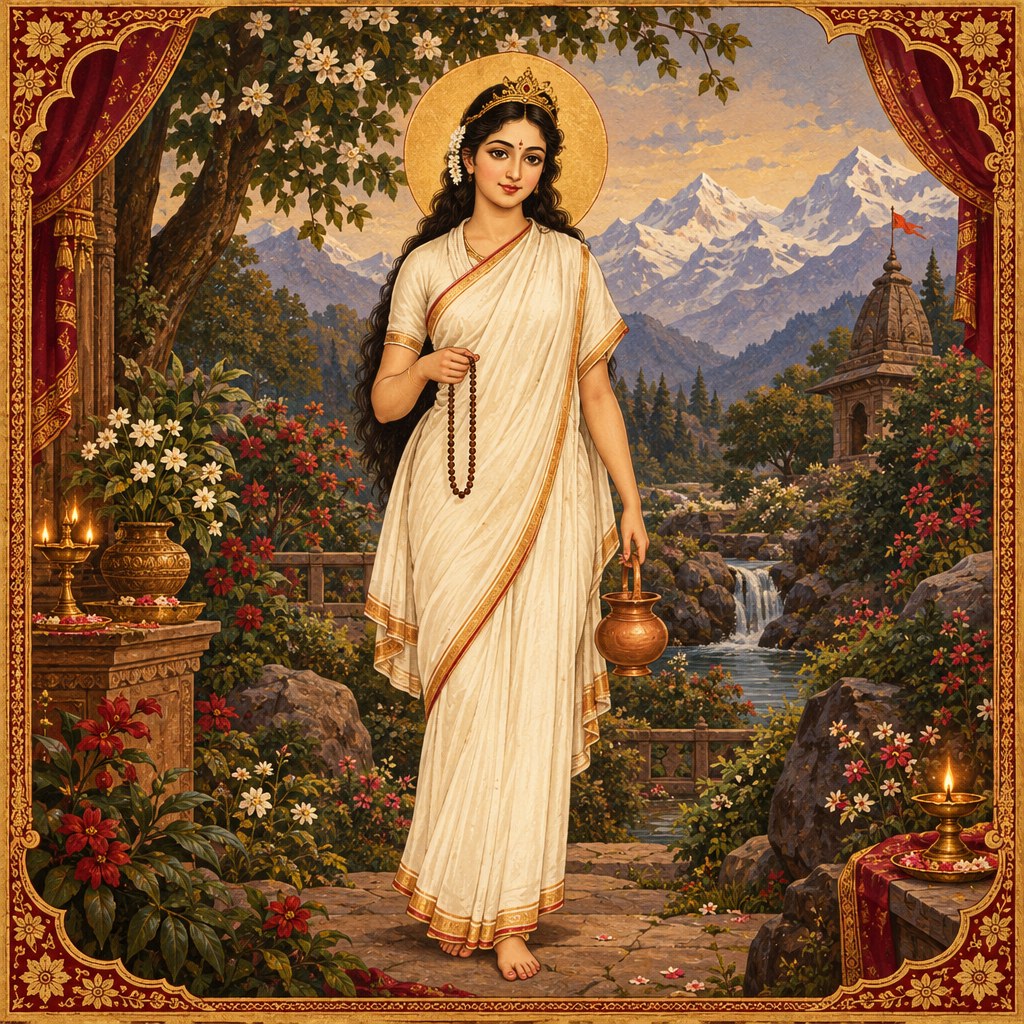
Brahmacharini is the second form in the Navadurga sequence. Devotional accounts remember Parvati’s tapas in seeking Shiva. The focus is sustained practice and commitment. Her simple appearance draws attention to discipline rather than royal splendour. Read the traditional account and iconography.
How to recognise her form
Two arms, prayer beads in her right hand, a water pot in her left and bare feet distinguish her.
Look for these details when you see an image in a home, temple or festival display. Artists and regional traditions may vary. The form is more than a decorative portrait: its identifying details help you follow the devotional account.
A reflection for this Navratri
A meaningful commitment often loses its early excitement. A language lesson becomes another page to study. A promise to listen becomes harder during an argument. Brahmacharini offers a useful subject for reflection: what happens after the first burst of enthusiasm? Returning to a practice can matter more than making it impressive. The reflection here is about patient, ordinary effort. It does not ask you to imitate the extreme austerities described in sacred accounts.
One practice to carry into your day
- Choose a practice you can repeat for ten minutes.
- Make the time easy to remember.
- Notice the effort without demanding an immediate result.
You can use this as a personal reflection alongside your family’s way of observing the festival. It is not a prescribed ritual or a promise of a particular spiritual result.
A question to share
Which quiet commitment deserves another day of your attention?
Send this reflection to someone you would like to hear from. A specific memory or example can make the conversation more meaningful.
Follow the nine-part series
- 1. Maa Shailaputri
- 2. Maa Brahmacharini
- 3. Maa Chandraghanta
- 4. Maa Kushmanda
- 5. Maa Skandamata
- 6. Maa Katyayani
- 7. Maa Kalaratri
- 8. Maa Mahagauri
- 9. Maa Siddhidatri
Our reading order follows the traditional Navadurga sequence. Part numbers are not publication dates or a universal day-by-day ritual calendar. For local observance dates, check the 2026 Delhi Navratri calendar and your local temple or panchang.
Illustrations in this series are AI-generated devotional art.