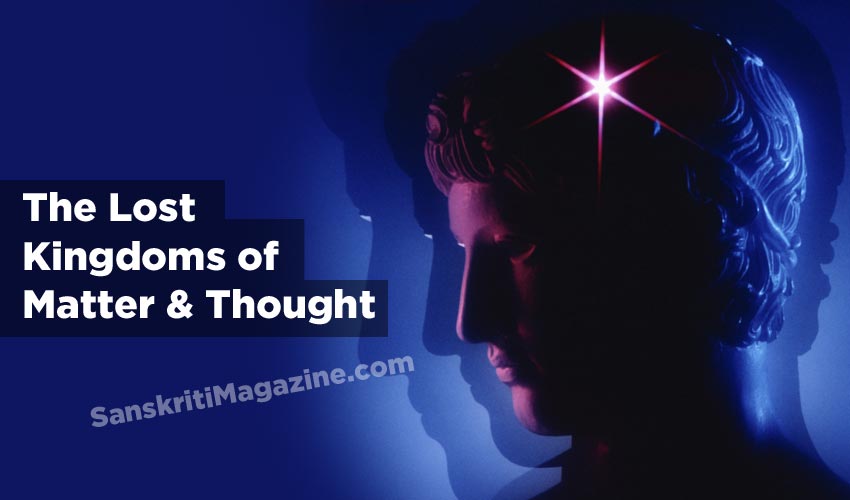
Once upon a time there existed a beautiful kingdom called Nirvikalpa. It was the greatest and richest kingdom there was, and its inhabitants were all happy and peaceful. People used to talk about it as the land of joy, or the land of love.
The king and queen were called Shiva and Shakti, and they ruled the kingdom with great wisdom. They had two sons, Matter and Thought, and as they grew up Shiva and Shakti decided to divide the kingdom in three parts, giving each son one third to rule. But, to make sure that the blissful state of the country would continue, they decided to set up two conditions for the gift. The first condition was that the sons would always obey the commands of their parents; the second that the younger son, Matter, always should obey his elder brother, Thought. The sons agreed, and so they divided the kingdom of Nirvikalpa into three parts. Matter was given the land of form to rule; and his subjects were called the people of plants. Thought was given the land of mind, and his subjects were called the people of animals. For themselves, Shiva and Shakti kept the land of spirit.
Everything went on as it had since the beginning of time. Shiva and Shakti gave their loving and wise commands, and Thought and his people carried them out in the way of intuition. Matter and his people obeyed the commands from Thought in a way which -was called law. This continued for ages; thus the land of Nirvikalpa was rich and happy.
But one day something happened in the land of mind, of which Thought was the ruler. A small tribe from the people of animals, called Man, decided to revolt. They didn’t want to obey Shiva and Shakti or their son Thought any more; their longing for power made them want to rule the kingdom themselves. So they marched to the castle where Thought lived, captured him together with his attendants, and put themselves on the throne. And, as they thought they knew better than Shiva and Shakti how to rule the country, they started making a few changes, guided by such advisers as Power and Desire.
The tribe of Man and the other tribes from the people of animals always lived in peace with each other. Now, the tribe of Man started suppressing the other tribes, sometimes they even killed some of them just for pleasure. Thus the other animal people, afraid of being killed, fled as soon as they saw a man.
Nor did the tribe of Man behave themselves any better with Matter and his people. They poisoned many of the people of plants and disturbed the natural balance between them, as they thought they knew better than Shiva, and Shakti about nature’s harmony.
So, the lands of Matter and Mind started to fall to pieces. The people of Man fought each other for power, and treated the wealth of their country with disrespect. Soon war, confusion and hatred were prevalent in these lands, which had previously been so joyful. Slowly, the tribe of Man completely lost contact with the land of spirit, the part which still could be called Nirvikalpa, and through the ages they even forgot that it actually existed. The way to Nirvikalpa being lost, all that remained were wonderful stories about it; so many legends and myths passed down by the sages from generation to generation.
~ Swami Nirvikalpananda Saraswati