‘Karwa Chauth’ is a ritual of fasting observed by married Hindu women seeking the longevity, well-being and prosperity of their husbands. It is popular amongst married women in the northern and western parts of India, especially, Haryana, Punjab, Rajasthan, Uttar Pradesh and Gujarat.
The Time:
This festival comes 9 days before Diwali on ‘kartik ki chauth’, i.e., on the fourth day of the new moon immediately after Dusshera, in the month of ‘Karthik’ (October-November).
The Meaning:
The term ‘Chauth’ means the ‘fourth day’ and ‘Karwa’ is an earthen pot with a spout – a symbol of peace and prosperity – that is necessary for the rituals. Hence the name ‘Karwa Chauth’.
The Ritual:
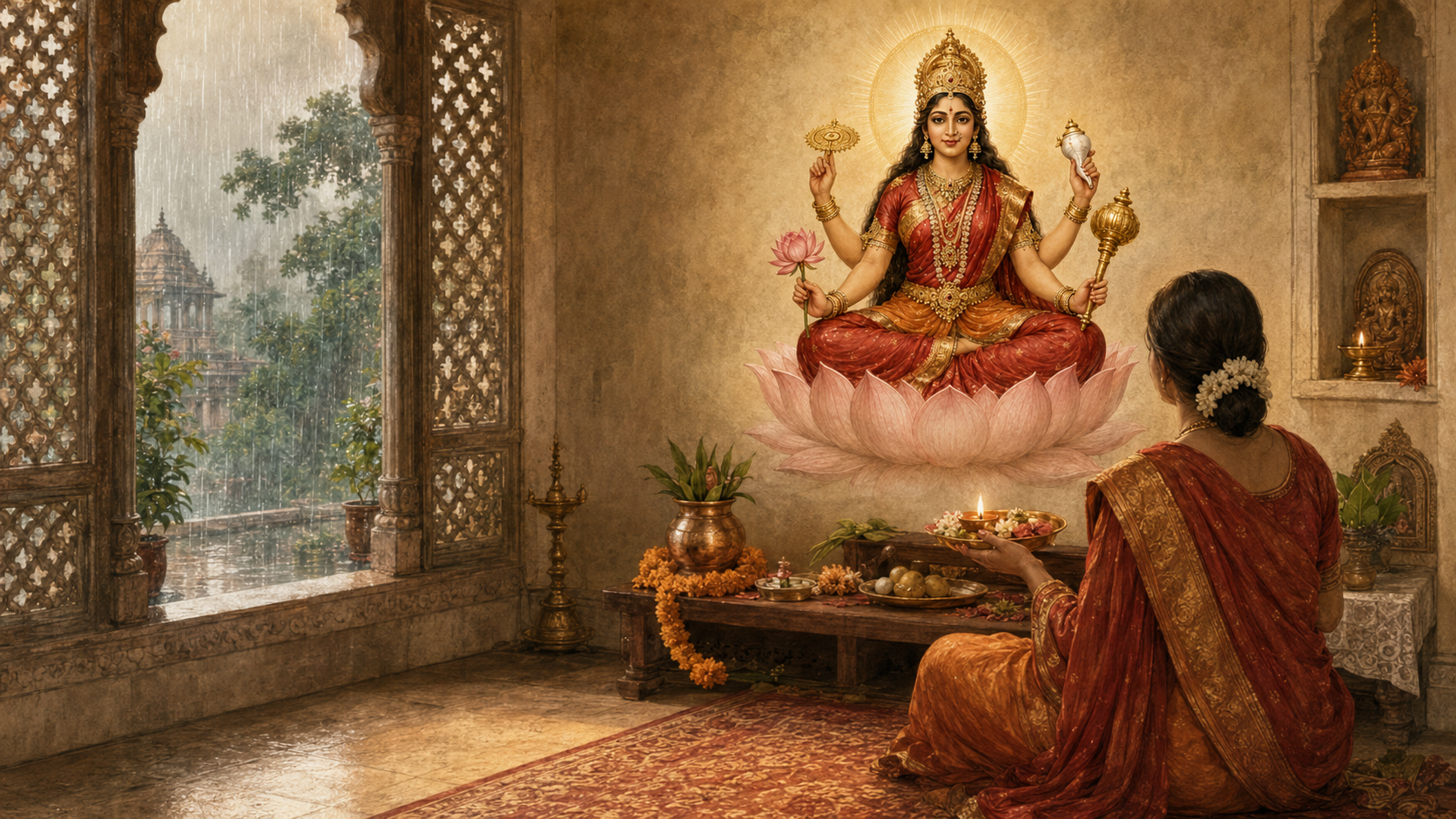
Married women keep a strict fast and do not take even a drop of water. They get up early in the morning, perform their ablutions, and wear new and festive raiment. Shiva, Parvati and their son Kartikeya are worshiped on this day along with the 10 ‘karwas’ (earthen pots) filled with sweets. The Karwas are given to daughters and sisters along with gifts.
The Fast:
It is the most important and difficult fast observed by married Hindu women. (Unmarried women, widows, and spinsters are barred from observing this fast.) It begins before sunrise and ends only after offering prayers and worshiping the moon at night. No food or water can be taken after sunrise. The fast is broken once the moon is sighted and rituals of the day have been performed. At night when the moon appears, women break their fast after offering water to the moon.
The Custom:
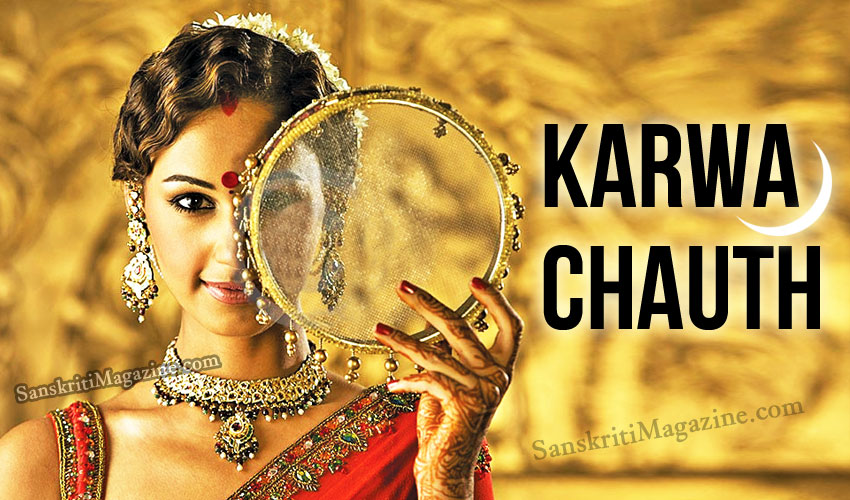
In the evening, women dress up in special clothes, usually a red or pink sari or ‘lehenga-choli’ with gold woven ‘zari’ patterns. New brides often wear their bridal costume. All deck up in jewelry and wear ‘mehendi’ or henna patterns especially on the hands. Decorative ‘bindis’ on the forehead are a must for all women taking part in this celebration. Fasting women from all over the neighborhood gather in a group and narrate mythological stories that underscore the significance of Karwa Chauth. And, of course, all wives expect lavish gifts from their husbands!
The fast of Karwa Chawth truly sets the merry tone of the fun and frolic, festivity and feasting that come in good measure during Diwali — the biggest festival of the Hindus.
~By Subhamoy Das