IndianSanskriti

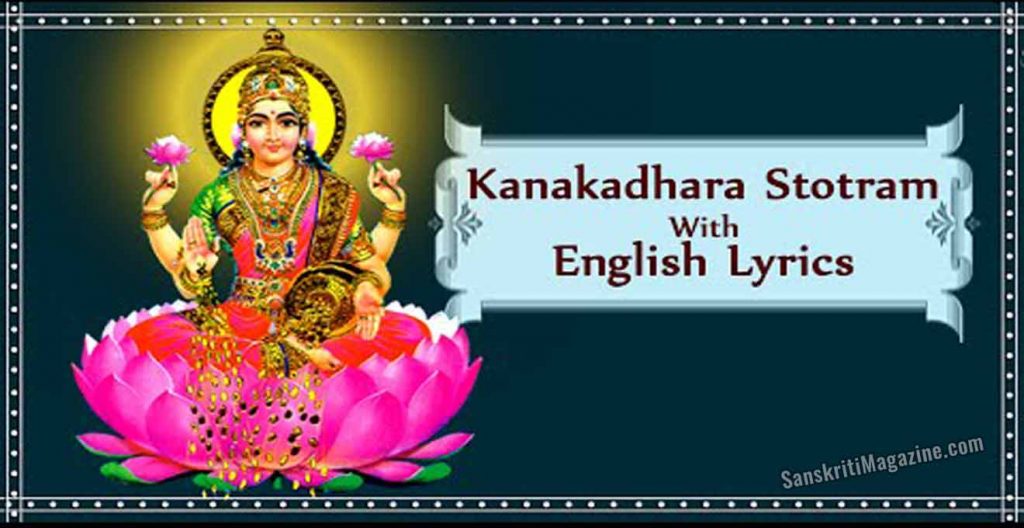
Kanakadhara Stotram

Learn and Chant Kanakadhara Stotram

Singer: SunithaRamakrishna

History of the Stotram.

Once Adi Sankaracharya was going to few houses to take bhiksha. He came across a hut and asked for bhiksha. ( food ).  The women inside the house was embarrassed as a saint has come to her house for food but she is so poor that nothing was available in her house. She searched all the places and finally found a old Amla fruit (Emblic myrobalan) ( nelli kani in tamil ). The poor women was feeling shy to give only this little amla fruit to Sankaya but she has immense devotion and dont want to send the saint who came to her house empty handed. She offered the amla fruit in the bowl of Lord Sankaracharya.

Birth of Kanakadhara stotram :

Sankaracharya realized the womens devotion irrespective of being poor. He immediately started singing twenty one slokas praising Goddess Mahalakshmi , praying her to bless the poor women by driving her poverty and grant her riches.

As you sow, So you reap :

Mahalakshmi replied that the lady has not done any good deeds ( helping others in charity ) in her previous birth. so she doesn’t deserve riches and is destined to suffer in poverty. Adi sankaraya accepted it but said though the poor lady din’t do any good deeds in previous birth, in this birth, she has such a kind heart that irrespective of being poor, she gave this little amla fruit to him and this good deed alone is enough to bless her with all prosperity.

Goddess Mahalakshmi’s grace :

Listening to Sankaracharya’s beautiful stotra and his arguement that the poor women must be blessed for her good deed in this birth ( offering of little amla fruit ), Mahalakshmi was moved. Friends, here comes the greatness of this Goddess. She really is for devotion and purity of heart. If we always involve in good deeds , always chanting Gods name, we will surely be blessed by Mahalakshmi.

As Sanakaracharya was singing Kanagadhara stotram, Mahalakshmi showered Golden amla fruit like rain infront of the poor womens hut. Imagine, rain of golden fruit showering from sky .

Adi Sankaya has sung this “Kanakadhara stotra” for welfare of everyone who is suffering their past karma and suffering in poverty.
You may also like

Search the website

Like us on Facebook

Get daily updates via Email

Enter your email address:

Recent Posts

Purushottam Maas — The Month No Deity Would Claim, and the Lord Who Made It Supreme

Every month of the Hindu calendar has a lord — except the rare thirteenth, the Adhika Maas, born an orphan and shunned as the “impure month.” The Puranas tell how this rejected month went in grief to Bhagavan Vishnu, who claimed it, gave it His own name — Purushottam — and made it the most fruitful month of all. The origin story, the teaching, and what it means for Purushottam Maas 2026 (May 17 – June 14).

Padmini Ekadashi 2026 — The Ekadashi Even the Devas Descend to Keep

Padmini Ekadashi 2026 — The Ekadashi Even the Devas Descend to Keep

The rarest Ekadashi of the entire Hindu calendar is three days away. The Padma Purana preserves a conversation between Bhagavan Krishna and Yudhishthira about a single Ekadashi the great Rishis spend lifetimes waiting for — Padmini. The Vrat Katha of Queen Padmini of Mahishmati, the lotus teaching, and why May 27, 2026 is the morning Vaishnavas across Bharata are preparing for.

Varada Chaturthi 2026 — The Rare Ganesha Day of Purushottam Maas

Varada Chaturthi 2026 — The Rare Ganesha Day of Purushottam Maas

Once every 2.5–3 years — when the rare 13th month of Adhika Maas opens — a thirteenth Vinayaka Chaturthi appears. The Mudgala Purana calls it Varada Chaturthi, the “boon-giving” Chaturthi, and holds it as the most fruit-bearing Ganesha day of the entire calendar. Today, Wednesday May 20, 2026, is that day.

Padmini Ekadashi 2026 — The Rare Ekadashi That Comes Only in Purushottam Maas

Padmini Ekadashi 2026 — The Rare Ekadashi That Comes Only in Purushottam Maas

Padmini Ekadashi 2026 falls on Wednesday, May 27 — the Shukla Paksha Ekadashi of Adhika Maas, the rarest Ekadashi in the entire Hindu calendar (it appears only every 2.5–3 years). The Padma Purana conversation between Bhagavan Krishna and Yudhishthira, the Vrat Katha of Queen Padmini, complete vrat vidhi with jagrana, mantras, and the lotus symbolism that gives the Ekadashi its name.

Ganga Dussehra 2026 — The Day Maa Ganga Came Down to Bhagiratha

Ganga Dussehra falls on Monday, May 25, 2026 — commemorating the day Maa Ganga descended from Vaikuntha to the earth through the millennia-long tapasya of King Bhagiratha. The full account from the Valmiki Ramayana, snan vidhi, dana traditions, mantras, and the teaching of sustained sincerity.

css.php