IndianSanskriti
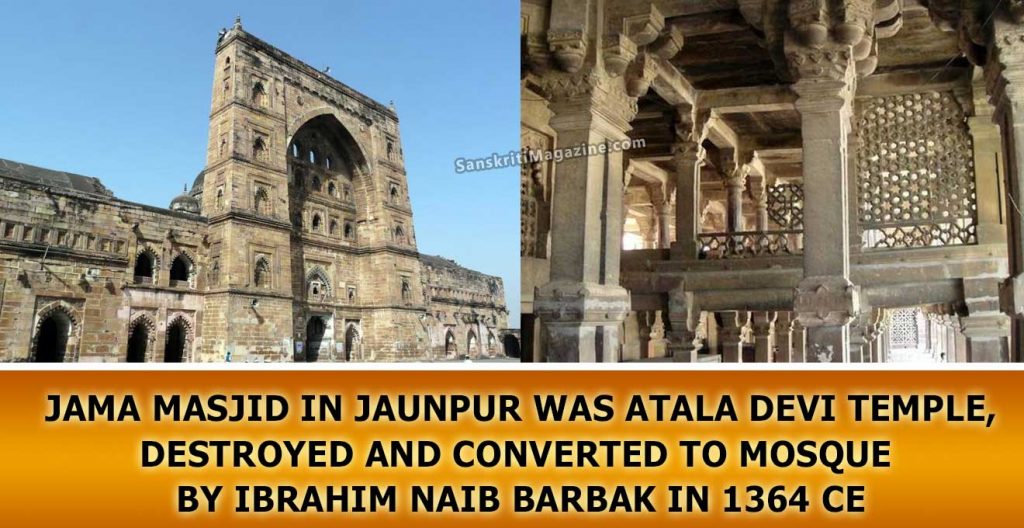
Jama Masjid in Jaunpur was Atala Devi Temple, destroyed and converted to mosque by Ibrahim Naib Barbak 1364 CE

Jama Masjid in Jaunpur was Atala Devi Temple, destroyed and converted to mosque by Ibrahim Naib Barbak

Atala Devi Temple was destroyed by Ibrahim Naib Barbak, the brother of Sultan Firoz Shah Tughlaq III (1351–1388 CE).

Temple was demolished in 1364 CE, Ibrahim started construction in 1377 CE and completed the mosque in 1408 CE.

Atala Masjid or Atala Mosque, as it is popularly called is located 2.2 km north-northeast of Jaunpur, 7.3 km northwest of Zafarābād, 16.8 km north-northeast of Mariāhū, 26.3 km west-northwest of Kirākat.

The Gazetteer of Jaunpur district dated 1908 CE, written by H.R. Nevill, the district collector of Jaunpur, confirms the destruction and construction dates.

Sultan Firoz Shah Tughlaq who erected the Jhanjhari masjid in honour of a saint called Hazrat Ajmali.
According to the gazetteer, there stood an equally large temple of Mukatghat, built by Raja Vijaya Chandra of Kannauj, the father of Jaichand (father-in-law of Prithviraj Chauhan).

Atala Devi is a Hindu goddess of inexorable fate. Her worship almost ended after destruction of that temple.

She was believed to change fate, which is even unavoidable.

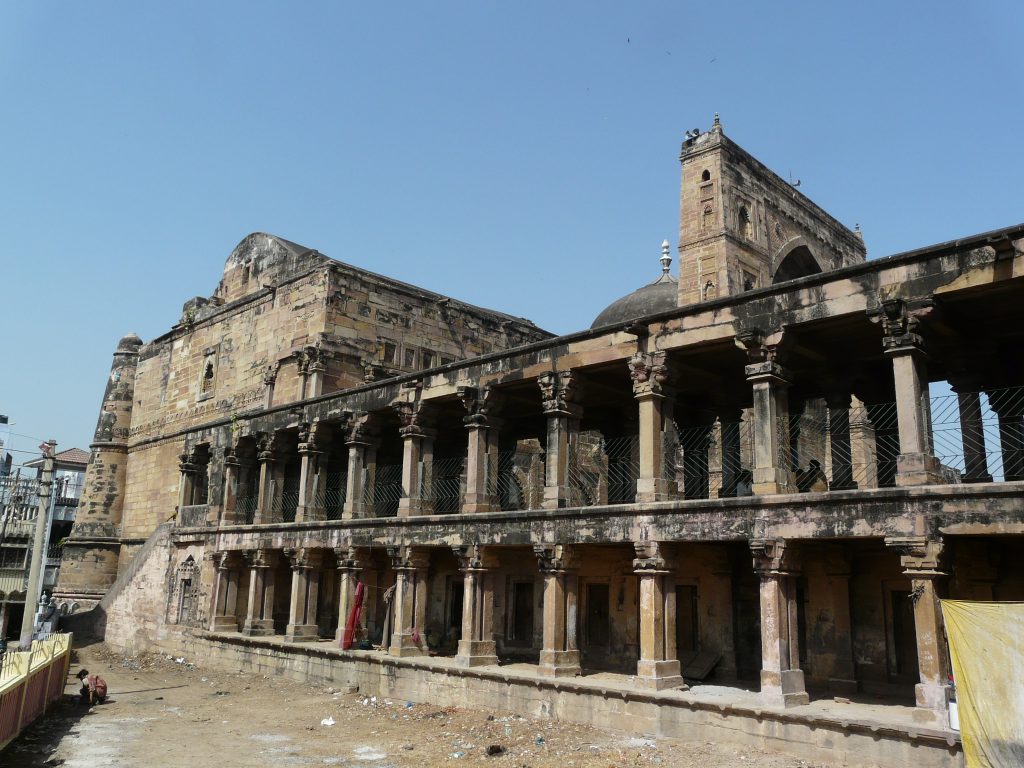
Eventhough, the outer structure is changed, the inner walls, pillars of this masjid have retained the original hindu temple structures.

Atala Devi Mandir was also built by Raja Vijaya Chandra.

The impressive central dome almost 17 meters high above the ground can not be noticed from the front because of the presence of a tall tower (at 23 meters).

The nearby Jhanjhari Mosque is also known by the name of Chachikpur.
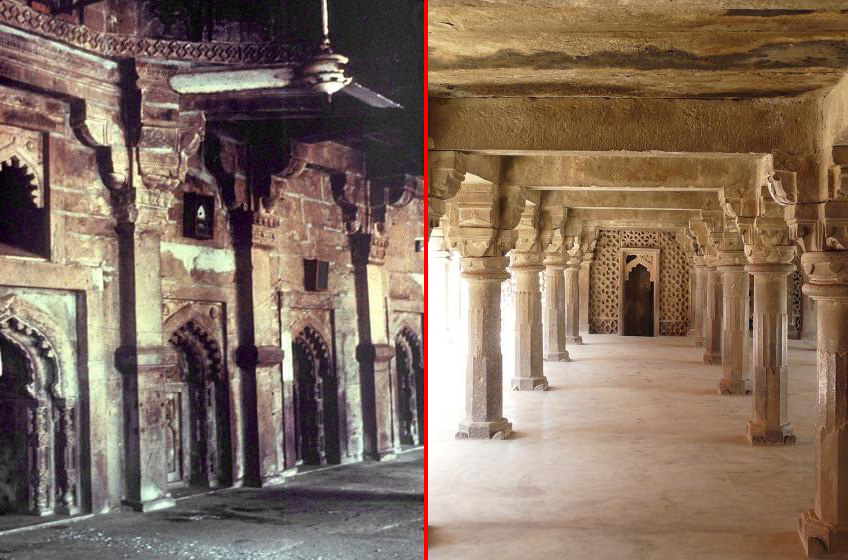

Sultan Ibrahim built it for the convenience of the celebrated saint, Sayyid Sadr Jahan Ajmali, who had once been his prime minister and who, after retiring from that post, used to live in the Muhalla of Shaikhuwarah, which is quite close to it.

This was once destroyed by Sikandar Lodi, and later suffered major damage due to floods of Gomti river.

Source : Book Facts.
You may also like

Search the website

Like us on Facebook

Get daily updates via Email

Enter your email address:

Recent Posts

Purushottam Maas — The Month No Deity Would Claim, and the Lord Who Made It Supreme

Every month of the Hindu calendar has a lord — except the rare thirteenth, the Adhika Maas, born an orphan and shunned as the “impure month.” The Puranas tell how this rejected month went in grief to Bhagavan Vishnu, who claimed it, gave it His own name — Purushottam — and made it the most fruitful month of all. The origin story, the teaching, and what it means for Purushottam Maas 2026 (May 17 – June 14).

Padmini Ekadashi 2026 — The Ekadashi Even the Devas Descend to Keep

Padmini Ekadashi 2026 — The Ekadashi Even the Devas Descend to Keep

The rarest Ekadashi of the entire Hindu calendar is three days away. The Padma Purana preserves a conversation between Bhagavan Krishna and Yudhishthira about a single Ekadashi the great Rishis spend lifetimes waiting for — Padmini. The Vrat Katha of Queen Padmini of Mahishmati, the lotus teaching, and why May 27, 2026 is the morning Vaishnavas across Bharata are preparing for.

Varada Chaturthi 2026 — The Rare Ganesha Day of Purushottam Maas

Varada Chaturthi 2026 — The Rare Ganesha Day of Purushottam Maas

Once every 2.5–3 years — when the rare 13th month of Adhika Maas opens — a thirteenth Vinayaka Chaturthi appears. The Mudgala Purana calls it Varada Chaturthi, the “boon-giving” Chaturthi, and holds it as the most fruit-bearing Ganesha day of the entire calendar. Today, Wednesday May 20, 2026, is that day.

Padmini Ekadashi 2026 — The Rare Ekadashi That Comes Only in Purushottam Maas

Padmini Ekadashi 2026 — The Rare Ekadashi That Comes Only in Purushottam Maas

Padmini Ekadashi 2026 falls on Wednesday, May 27 — the Shukla Paksha Ekadashi of Adhika Maas, the rarest Ekadashi in the entire Hindu calendar (it appears only every 2.5–3 years). The Padma Purana conversation between Bhagavan Krishna and Yudhishthira, the Vrat Katha of Queen Padmini, complete vrat vidhi with jagrana, mantras, and the lotus symbolism that gives the Ekadashi its name.

Ganga Dussehra 2026 — The Day Maa Ganga Came Down to Bhagiratha

Ganga Dussehra falls on Monday, May 25, 2026 — commemorating the day Maa Ganga descended from Vaikuntha to the earth through the millennia-long tapasya of King Bhagiratha. The full account from the Valmiki Ramayana, snan vidhi, dana traditions, mantras, and the teaching of sustained sincerity.

css.php