~ Series By Santosh Kumari, Staff Writer / प्राचीन भारत के देवी-देवताओं का इतिहास शृंखला – संतोष कुमारी
India, more than any other country in the world abounds in beliefs, visions and queries about gods and goddesses. These continue to percolate the Indian lives and mind even until now. One cannot understand the Indian thought and way of life unless one goes deep into the history of gods and goddesses here.
As a matter of fact, gods and goddesses have been regarded here generally as cosmic agencies helping in the creation and sustenance of the world. They have been taken to be realities of the other world favouring the physical world by their presence and good acts.
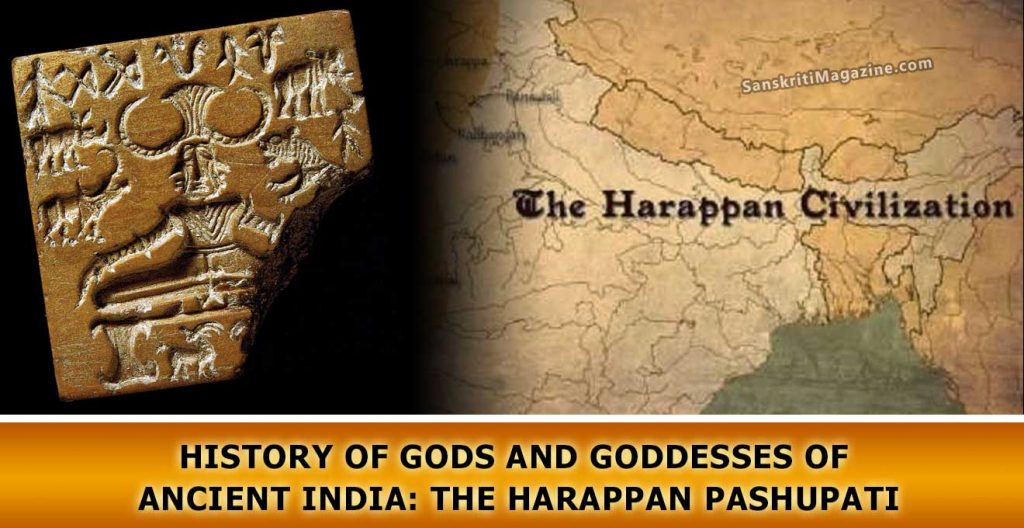
It is of no small significance that the first concrete image of a god to be found in the Indian soil so far is of a person sitting in meditation and giving succour to living beings. This is what the Harappan culture bequeaths for us in the form of what has come to be known as Pashupati.
Circumstantial evidence apart, which due to its inadequacy and difficulty of decipherment still hangs in suspense. The Harappan god does not seem to be any different from the Vedic Rudra, who also is described as meditative and good to animals. If the two are found as one and the same, there would arise twofold possibility regarding their interrelationship. Either the Vedic Rudra would have been inspired by the Harappan Pashupati or vice versa.
Scholars so far have gone mostly in favour the first possibility. But the solitariness of the Pashupati on the one hand and the exuberance shown in the depiction of Rudra on the other hand seem to tell a different tale. Pasupati appears to be a naïve attempt at giving Rudra a plastic form so as to make emulation of him easier or use him in ensuring the business transactions.
Pashupati is calm and tranquil while Rudra has many forms and is mercurial.
हड़प्पा के पशुपति
भारत का इतिहास दुनिया के किसी भी अन्य देशों की तुलना में अधिक विश्वासों, परिकल्पनाओं और प्रश्नों से भरा पड़ा है। यह अभी तक भारतीय जनमानस के जीवन और मन में प्रारंभ से व्याप्त है। किसी और देश का मनुष्य भारतीय विचारधारा, परम्परा और जीवन के तरीकों को नहीं समझ सकता जब तक कि वह भारतीय देवी-देवताओं के इतिहास को गहराई से अध्ययन न करें।
वास्तविकता यह है कि देवी-देवताओं को वैश्विक रचना और पोषण, यानी पालनकर्ता में सहायक और शक्तियों के रूप में जाना जाता है।
उनकी उपस्थिति और अच्छे कर्मों के फलस्वरूप उन्हें भौतिक विश्व के पक्ष में एवं परलोक की वास्तविकताओं के लिए जाना गया है।
यह कोई लघु विषय नहीं है कि भारतीय भूमि पर पाई जाने वाली देवता की सबसे पहली प्रमाणिक प्रतिमा ध्यान मुद्रा में बैठे व्यक्ति की है। वे जीवधारी प्राणियों को सहायता प्रदान करते हैं। अर्थ यह है कि हड़प्पा संस्कृति हमें विरासत में एक प्रतिमा प्रदान करती है जिसको हम पशुपति कहते हैं।
अलग अलग साक्ष्य के अलावा जो उसकी अपर्याप्तता और स्पष्टीकरण की कठनाई के कारण अभी भी वह एक रहस्य बनी हुई है क्योंकि इस सभ्यता की लिपि अभी तक पढ़ी नहीं जा सकी।
हड़प्पा के देवता वैदिक रुद्र से अलग नहीं लगते, जिन्हें ध्येय और पशुओं के लिए शुभ कहा गया है। यदि दोनों एक ही हैं तो उनके अन्तर्सम्बन्धों में दो सम्भावनायें उत्पन्न होती हैं कि वैदिक रुद्र हड़प्पा पशुपति से प्रेरित हैं या फिर हड़प्पा के पशुपति वैदिक रुद्र से। विद्वान अब तक पहली संभावना के पक्ष में हैं। लेकिन एक तरफ पशुपति एकांत में और रुद्र का चित्रण एक से अधिक रूपों में किया गया है जो कि अलग कहानी बताते हैं।
पशुपति भोलेपन और शांत प्रतीत होते हैं जबकि रुद्र के अनेक रूप हैं तथा चंचल हैं।