~ Series By Santosh Kumari / प्राचीन भारत के देवी-देवताओं का इतिहास शृंखला, संतोष कुमारी
Similar is the case with another reference to Vedic gods discovered by Hugo Winkler in Asia Minor in the beginning of the last century.
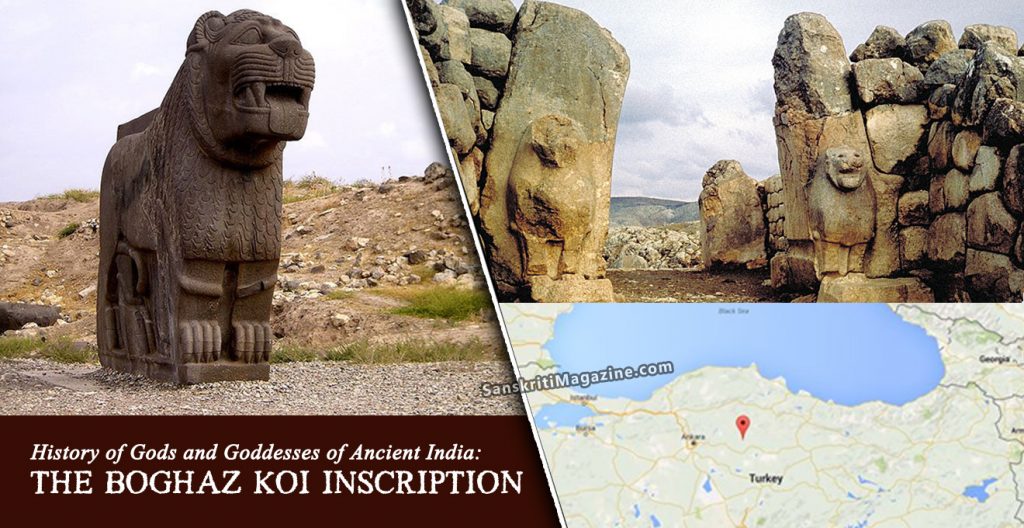
It is in the form of an inscription engraved in the 14th century BC in Asia Minor by way of consolidating a treaty between two kings belonging to Hittites and Mitannis. Suppiluliuma I of the Hittites entered into a treaty with the Mitannis. The Mittanis of the Amarna Tablets fame were linked to the significant power in the region – Egypt. The Mittanis were the closely associated with the Egyptian Pharaohs by marriage and they were also Indo-Aryans.
What is special about this treaty is that Vedic Gods like Indra, Varuna and are referred to as In-da-ra, Mi-ta-ra, U-ru-van and Na-sa-ti-ya. The Ashwini twins were invoked to bless and witness the treaty. The names are obviously Vedic; with of course slight phonetic variations.
The problem is whether the gods were entered into the inscription by a pre-Vedic clan of the Aryans left in Asia Minor while the rest travelled over to Iran and India or they travelled along with their believers to the land of the inscription from India herself. Generally the scholars have gone in favour of the first alternative.
But strong points in favour of the second alternative are that the names entered into the inscription are exactly in the same order in which hymns relating to these deities are arranged in the Rigveda, particularly in its older part and that the form in which the names have been spelled in the inscription seem to be a phonetic corruption over the Vedic one.
Whatever the sequence of events, only further acquisition of evidence would decide. But what we cannot refuse to admit is that as early as in the 14th Century BC the gods have been invoked as superhuman beings capable of acting as mediators for ages to come between two warring princely families.
The Hittites who had become past masters at treaties did not invoke these Gods with any other kingdom – except the Mitannis. Hittites and Mitannis were Indo-Aryan kingdoms – in full presence, with their Vedic Gods and culture.
But besides being controversial as regards their sequence in relation to the Veda, neither the Harappan tablet nor the Boghaz Koi inscription is helpful in understanding the history of the gods. They are just solitary remains left by the stream of history coming down from a much earlier period for which, however, we have no other evidence in this regard except certain verbal affinities among the different branches of the Indo-European language.
A comparative study of these languages shows affinity between Dyaus and Zeus or Jupiter, Ushas and Eos, Surya and Helios, Bhaga and Baga, Varuna and Uranus, Marut and Mars, etc. Just like the Boghaz Koi inscription, these affinities also may have a twofold implication. It is possible that they are due to a common Indo-European language spoken by the Aryans including the Indian branch before their separation.
But it may also possibly be due to the Aryans travelling abroad from India herself and taking along with them the entire culture including the language and the deities. While the second alternative partly implies the possibility of the Vedic gods travelling over to Iran, Greece and other European countries and assuming the form of these deities, both alternatives show a greater possibility of the presence of these gods and the pre-Vedic era.
This is also confirmed by certain of Rigvedic seers referring to their forefathers as worshippers of the same gods. But, whatever the chronological order, from this source also what we get regarding the gods is that they were worshipped as extraterrestrial superhuman beings leading a blessed life far away from man and having some inclination to do good to man if, of course, duly appeased. Very little, however, can be gathered from them regarding their origin and other related problems.
Hence, ultimately one has to come back to the Veda itself as the last resort to understand the phenomenology of gods and goddesses. To offer prayers to the divine by admitting him as a superhuman agency, is quite easy and can be found anywhere in the world, irrespective of the age. But to the dive deep into the mystery of his being is something else which has been the conclusive privilege of India.
The Vedas form the inexhaustible fountainhead of the stream of this enquiry.
बोगाज़-कोई शिलालेख
पिछली शताब्दी कि शुरुआत में एशिया माइनर, सन् 1906-07 में ह्यूगो विंकलर द्वारा की गयी वैदिक–देवताओं की खोज इस संदर्भ में ऐसा ही विषय है। यह एक अभिलेख के रूप में है जो 14वीं शताब्दी ईसा पूर्व में प्रमाणित हुए, एशिया माइनर में खुदाई में जिसमें दो राजाओं के बीच हुए संधि को मजबूत करने का उल्लेख है। हितीतियों के राजा सुपिफिल्यस-1 ने मितानी के साथ एक संधि की। अर्मना टेबलेट की प्रसिद्धी के मितानी इस क्षेत्र के महत्वपूर्ण शक्तिशाली राज्य मिस्र से जुड़े हुए थे। मितानी शादी से मिस्र के फेरों के निकट से जुड़े हुए थे और ये इंडो-आर्यन थे।
इस शिलालेख में जिस संधि का उल्लेख है, उसकी विशेषता ये है कि इसमें इंद्र और वरुण जैसे वैदिक देवताओं का वर्णन है इन-द-र, मी-त-र, उ-रु-वन और न-स-ती-य के नाम से किया गया है। अश्विनीयों को संधि में आशीर्वाद देने और गवाह बनाए जाने के लिए आमंत्रित किया गया है। नाम स्पष्ट रूप से वैदिक हैं और निश्चित रूप से उनको बोलने में थोड़ा अंतर नज़र आता है।
समस्या यह है कि क्या देवताओं को पूर्व के एक वैदिक आर्य कबीले ने अभिलेखों में डाला, जिन्होंने एशिया माइनर को छोड़ दिया था या फिर वो भारत से एशिया माइनर गए थे। आमतौर पर विद्वानों का मत है कि वैदिक आर्य एशिया माइनर से भारत आए परन्तु दूसरे मत के पक्ष में मज़बूत साक्ष्य हैं – शिलालेख में दर्ज किये गए नाम ठीक उसी क्रम में दर्ज हैं जिस प्रकार ऋग्वेद में दिए गए हैं। एशिया माइनर के शिलालेख ऋग्वेद में उल्लिखित नामों के अपभ्रंश रूप नज़र आते हैं। जो भी घटनाओं का अनुक्रम हैं, साक्ष्य का अधिग्रहण ही तय करेगा।
लेकिन हम यह मानने से इनकार नहीं कर सकते कि 14वीं शताब्दी ईसा पूर्व की शुरुआत में देवताओं को आलौकिक शक्तियों के रूप में पेश किया गया है, जो दो मुद्रक रियासतों के मध्यस्थ कार्य करने में सक्षम हैं।
हितिती जो संधि में पिछले स्वामी बन गए थे, उन्होनें इन देवताओं को मितीतियों के सिवाय किसी और के साथ ऐसी संधि नहीं की जिसमें वैदिक देवताओं को साक्षी के रूप में बुलाया गया हो। इस बोगाज़-कोई शिलालेख से स्पष्ट हो जाता है कि हितिती और मितिती इंडो-आर्यन साम्राज्य थे।
वेदों के सम्बन्ध में देवताओं के अनुक्रम विवादास्पद होने के कारण न तो हड़प्पा टैबलेट और न ही बोगाज़-कोई शिलालेख देवताओं के इतिहास को समझने में सहायक हैं, बल्कि वे अवशेष मात्र हैं। जो बहुत समय से चले आ रहे हैं। इस विषय में इस समय इंडो-यूरोपियन भाषा की विभिन्न शाखायें छोड़कर हमारे पास और कोई साक्ष्य नहीं हैं।
अगर हम इन भाषाओँ का तुलनात्मक अध्ययन करें तो हम देखते हैं की द्योस और ज़ियोस या बृहस्पति, ऊषा और ईओस (सुबह की देवी), सूर्य और हेलियोस, मगा और बगा, वरुण और युरेनस तथा मरूत और मार्स आदि के बीच में संबंधों को दर्शाता है। बिलकुल इसी तरह “बोगाज़ कोई-शिलालेख” के इन समानताओं में दो कारण हो सकते हैं – पहला – संभव है कि वे आर्यों द्वारा बोली जाने वाली एक सामान्य इंडो-यूरोपियन भाषा की वजह से, उनको अलग होने से पहले, जिसमें भारतीय शाखा भी शामिल थी, भारत से विदेश यात्रा करने वाले आर्यों के द्वारा पूरी संस्कृति, भाषा एवं देवताओं को भी साथ ले गए हों। दूसरा – आंशिक रूप से ईरान, यूनान (ग्रीस) और अन्य यूरोपियन देशों की यात्रा करने वाले वैदिक देवताओं की सम्भावना का अर्थ है कि इन देवताओं के रूपों को मानते हैं।
यह भी सुनिश्चित है कि ऋग्वेद के ऋषि पुष्टि करते हैं कि जिस देवता की वे पूजा करते हैं उनकी पूजा उनके पूर्वज भी किया करते थे। लेकिन यह बात माननी पड़ेगी कि जो भी अवशेष हम प्राप्त करते हैं इनमें देवताओं के बारे में यह कहा जाता है कि वे मनुष्य से अलग सुखी जीवन प्राप्त करने वाले परग्रही हैं और आलौकिक के रूप में पूजे जाते हैं जो की मनुष्यों को सद्मार्ग दिखाने के लिए सदैव तत्पर रहते हैं, यदि निश्चित रूप से उनके बारे में संतुष्टि की जाये तो हम बहुत कम जानकारी उनके मूल और सम्बंधित समस्याओं के बारे में एकत्र कर पाते हैं।
इसलिए अंततः हमें उनको जानने के लिए वेदों की ओर लौटना पड़ता है। देवी-देवताओं या उनके विज्ञान के रहस्य को समझने के लिए दिव्य प्रार्थना करने के लिए उन्हें आलौकिक माध्यम के रूप में स्वीकार करना बहुत सरल है और दुनिया में कहीं भी उनको पाया जा सकता है। किन्तु उनके अस्तित्व के रहस्यों की गहराई को जानना हमारा विशेषाधिकार है और वेद इस अतुलनीय धारा के एकमात्र स्रोत हैं।