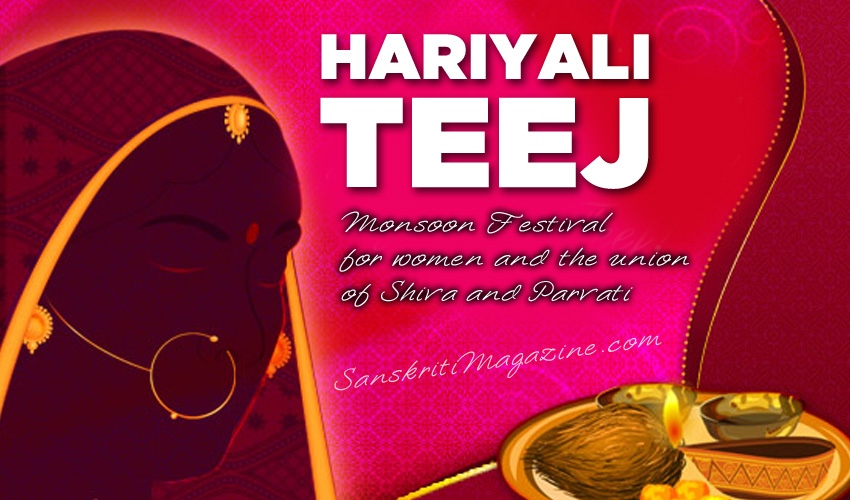
The Hindu festival of Teej is marked by fasting of women who pray to Lord Shiva and Goddess Parvati seeking their blessings for marital bliss. It is a three-day festival that occurs on the third day of ‘Shukla Paksha’ or bright fortnight of the moon in the Hindu month of Shravana or Sawan, which falls during the Indian monsoon season, i.e., July – August.
History and Origin of Teej
It is believed that the name of this festival comes from a small red insect called ‘Teej’ that emerges from the earth during the monsoon season. Hindu mythology has it that on this day, Parvati came to the Shiva’s abode, marking the union of the husband and wife.
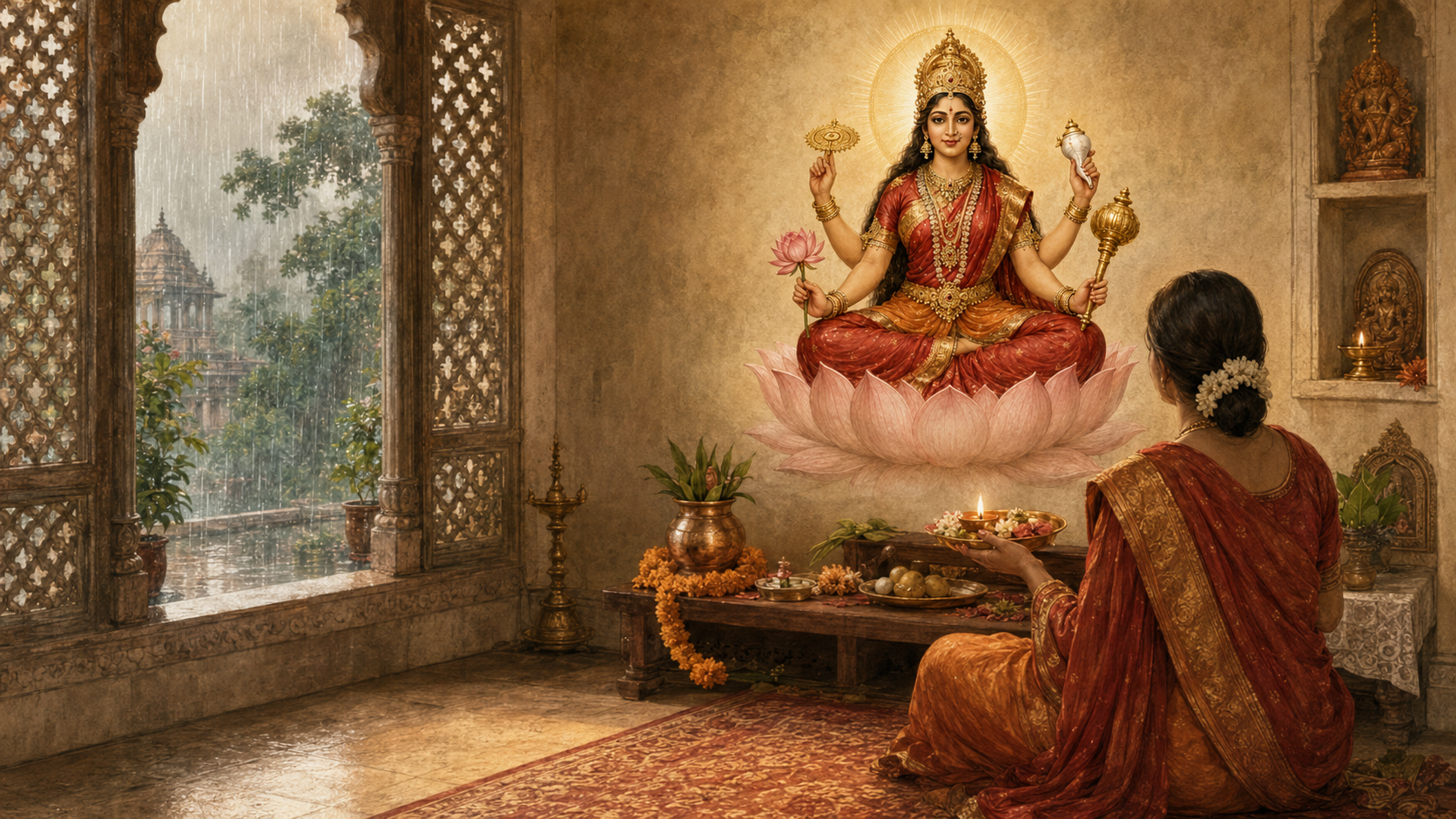
Teej symbolizes the reunion of Shiva and his wife Parvati. It exemplifies the sacrifice of a wife to win the mind and heart of the husband. According to myths, Parvati carried out a rigorous fast for 108 years to prove her love and devotion for Shiva, before he accepted her as his wife. Some scriptures say that she was born 107 times before she was reborn as Parvati, and at her 108th birth she was granted the boon to be the wife of Shiva because for her long penance and perseverance over many births. Hence, Teej is celebrated to honor the devotion of Parvati, who is also known as ‘Teej Mata,’ by those who observe this auspicious day when women seek her blessings for a happy married life and a good husband like Shiva.
Teej – A Regional Monsoon Festival
Teej is not a pan-Indian festival. It is mainly celebrated in the northern Indian states of Uttar Pradesh, Bihar, Rajasthan, Haryana, and Punjab in various forms. In northern and western India, Teej celebrates the arrival of monsoon following the hot months of summer. It has a broader significance in the western Indian arid state of Rajasthan as it is observed to provide relief from the scorching heat of summer. Rajasthan Tourism organizes a Teej fair called ‘Sawan Mela’ or ‘Monsoon Festival’ every year to showcase the customs and traditions of the state during this time. It is also celebrated in Hindu Himalayan kingdom of Nepal, where Teej is a major festival. At the famous Pashupatinath Temple in Kathmandu, women circumambulate the Shiva Linga and perform a special Puja of Shiva and Parvati.
Girls engaged to be married receive a gift from their future in-laws on the day before the festival. The gift consists of henna, bangles, a special dress, and sweets.
Married daughters are given a number of gifts, clothes and sweets by their mother. After the worship has been completed, they are passed on to the mother-in-law.
Celebrations of Teej
While ritual fasting is central to Teej, the festival is marked by colorful celebrations, especially by the womenfolk, who enjoy swing rides, song and dance. Swings are often hung from trees or placed in the courtyard of homes and decked with flowers. Young girls and married women applymehendi or henna tattoos on this auspicious occasion. Women wear beautiful saris and adorn themselves with jewelry, and visit temples to offer their special prayers to goddess Parvati. A special sweet called ‘ghewar’ is prepared and distributed as Prasad or divine offering.
Significance of Teej
The importance of Teej is mainly two-fold: First, as a festival for women, Teej celebrates the victory of a wife’s love and devotion towards her husband – an important factor in Hinduism – symbolized by the union of Shiva and Parvati.
Second, Teej ushers in the advent of the monsoons – the season of rains bringing in a reason to celebrate when people can take a break from the sweltering heat and enjoy the swing of the monsoon – “Sawan ke jhooley.” Besides, it’s an occasion for married women to visit their parents and return with gifts for their in-laws and spouse. So, Teej provides an opportunity to renew family bonds.
~ Subhamoy Das