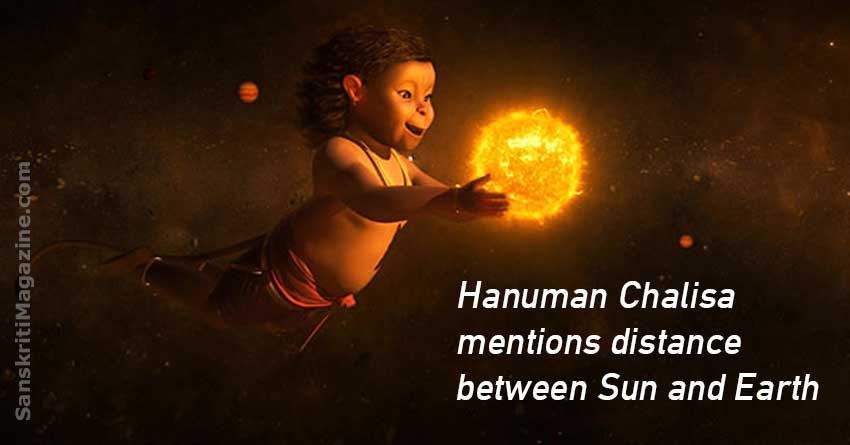
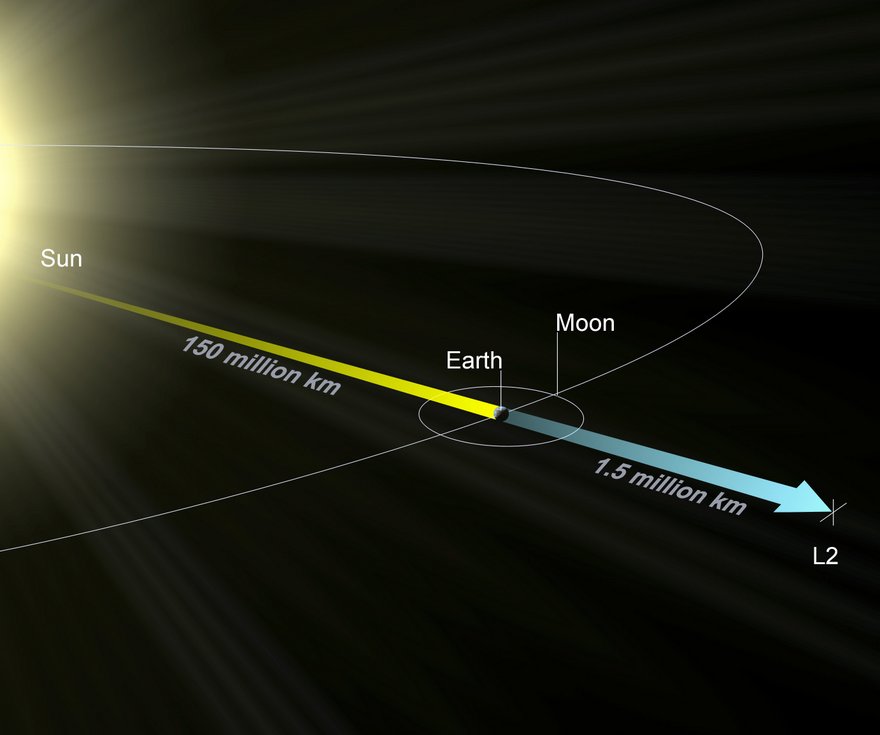
According to modern astronomy and science, we know that the earth’s orbit around the sun is not a circle and is slightly elliptical. Therefore, the distance between the earth and the sun varies throughout the year. At its nearest point on the ellipse that is the earth’s orbit around the sun, the earth is 91,445,000 miles (147,166,462 kms) from the sun. This point in the earth’s orbit is known as Periapsis (perihelion) and it occurs around January 3.
The earth is farthest away from the sun around July 3 when it is 94,555,000 miles (152,171,522 km) from the sun. This point in the earth’s orbit is called Apoapsis (aphelion). The average distance from the earth to the sun is 92,955,807 miles (149,597,870.691 km).
According to records, for the first time in 1672, Jean Richer and Giovanni Domenico Cassini measured the distance between the Earth and Sun as 22,000 times of Earth Radii. (Earth’s Radius is 6,371 Kms) i.e. 22,000 * 6,371 kms = 140,162,000 kms (140 million kms).
Two lines of the Hindu prayer Hanuman Chalisa compute this distance with great simplicity.
जुग सहस्त्र योजन पर भानु, लील्यो ताहिमधुर फल जानू
This means that the Sun (भानु) is at a distance of yuga sahastra yojanas (जुग सहस्त्र योजन – Distance Unit in Sanskrit/Hindi).
According to the following conversion practices that are in use as per Hindu Vedic literature:
 1 yuga = 12000 celestial years
1 sahastra = 1000
1 yojana = 8 Miles
yuga x sahastra x yojana = para bhanu
12,000 x 1000 x 8 miles = 96,000,000 miles
1 mile = 1.6kms
96,000,000 x 1.6kms = 153,600,000 kms to the Sun.
The earth moves in an elliptical orbit around the sun, so there will be slight variation depending on the season.
Hanuman challisa was written by Goswami Tulasidas (born 15th century) in Awadhi language who belongs to 15th century. which means the distance between the Sun and earth had been calculated much more accurately than the 17th century scientists even before 2 centuries.
The Question here is how Tulsidas calculated this distance or how he is able to know about this distance. We also have to observe that the people of that age had more knowledge, capabilities and much more advanced technology that is beyond the imagination of our present day technologies.
ALSO READ: Importance of being Hanuman
History is not presented to us in the way it should be. There are still many elements and precious jewels of information that are being kept hidden from us. The ocean of history is before you, dive in and dig the jewels out. The gleaming beam of knowledge from these jewels will not only enrich our country but will also keep bestowing direction to our future generations.
We hope that this post will help you to understand the significance of our ancient principles, technology and culture.