IndianSanskriti
Friendship-Explained-in-the-Mahabharata-by-Ashwathama

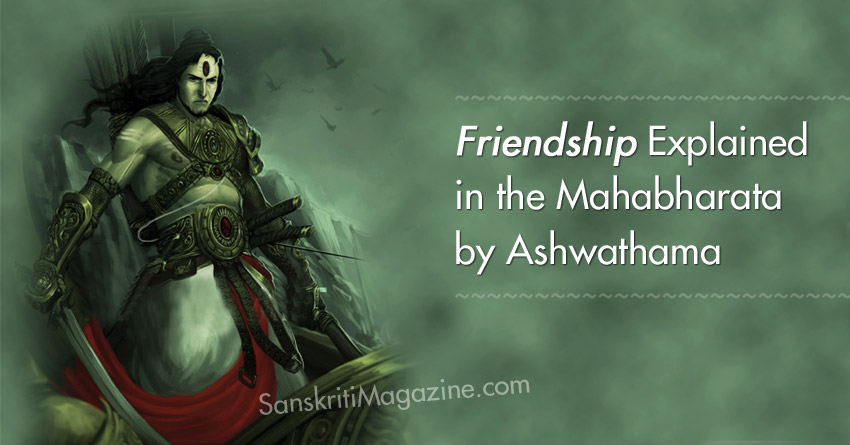
Friendship Explained in the Mahabharata by Ashwathama

After the death of Dushasana at the hands of Bhima, Ashwathama approached Duryodhana and pleaded him to make peace with the Pandavas. His logic was that by becoming friends with the Pandavas both parties could live happily as he thought that the Pandavas would certainly forego the war on becoming friends.

To convince Duryodhana, he explained the four kinds of friends.

First kind of a friend is a natural friend, without any reason.

Second kind of friend is one who becomes a friend by truce.

Third kind of friend is one who makes a friend by purchasing friendship.

Fourth kind of friend is one who on being influenced by the power of a person, wants to be the friend of such a personality.

Ashwathama continued, “Since you are born in the same family you can be natural friends, and you could also have truce with them and save the remaining Kuru clan. “

Ashwathama was convinced that the Pandavas would agree to the truce and that even Krishna would be happy and the difficult Bhima would follow the superior Yudhisthira.

Duryodhana heard and took a deep breath and concluded that it was not possible. He said “After seeing how Dushasana was killed, it will be an insult to Karna, who is capable of killing Arjuna to make a truce, so there is no question of friendship with the Pandavas.”

We see here that Duryodhana had lost the qualification to befriend any one. He was looking to kill the very people whom Ashwathama was asking him to befriend. He had forgotten the crime he had committed he simply remembered the death of Dushasana at the hands of Bhima.

It shows that friendship is not one sided, even though Ashwathama told Duryodhana how there was a chance and facility to be friends with the Pandavas, Duryodhana proved that he could not reciprocate with the magnanimous Pandavas and preferred to die than to live for a good cause.

Eventually Duryodhana lost everything along with his life.

Friendship requires an effort from both the sides or else we lose friends and life both.
You may also like

Search the website

Like us on Facebook

Get daily updates via Email

Enter your email address:

Recent Posts

Adi Shankaracharya Jayanti 2026 — Advaita Vedanta, Om symbol, and four Amnaya Peethas

Adi Shankaracharya — The Monk Who Reunited Bharata

Shankaracharya Jayanti 2026 — the 1238th birth anniversary of Adi Shankaracharya. His extraordinary life, the Digvijaya, the debate with Mandana Mishra, Advaita Vedanta, the four Amnaya Peethas, and his timeless literary legacy.

Akshaya Tritiya 2026 — royal purple hero banner with Akshaya Patra vessel and Devanagari text

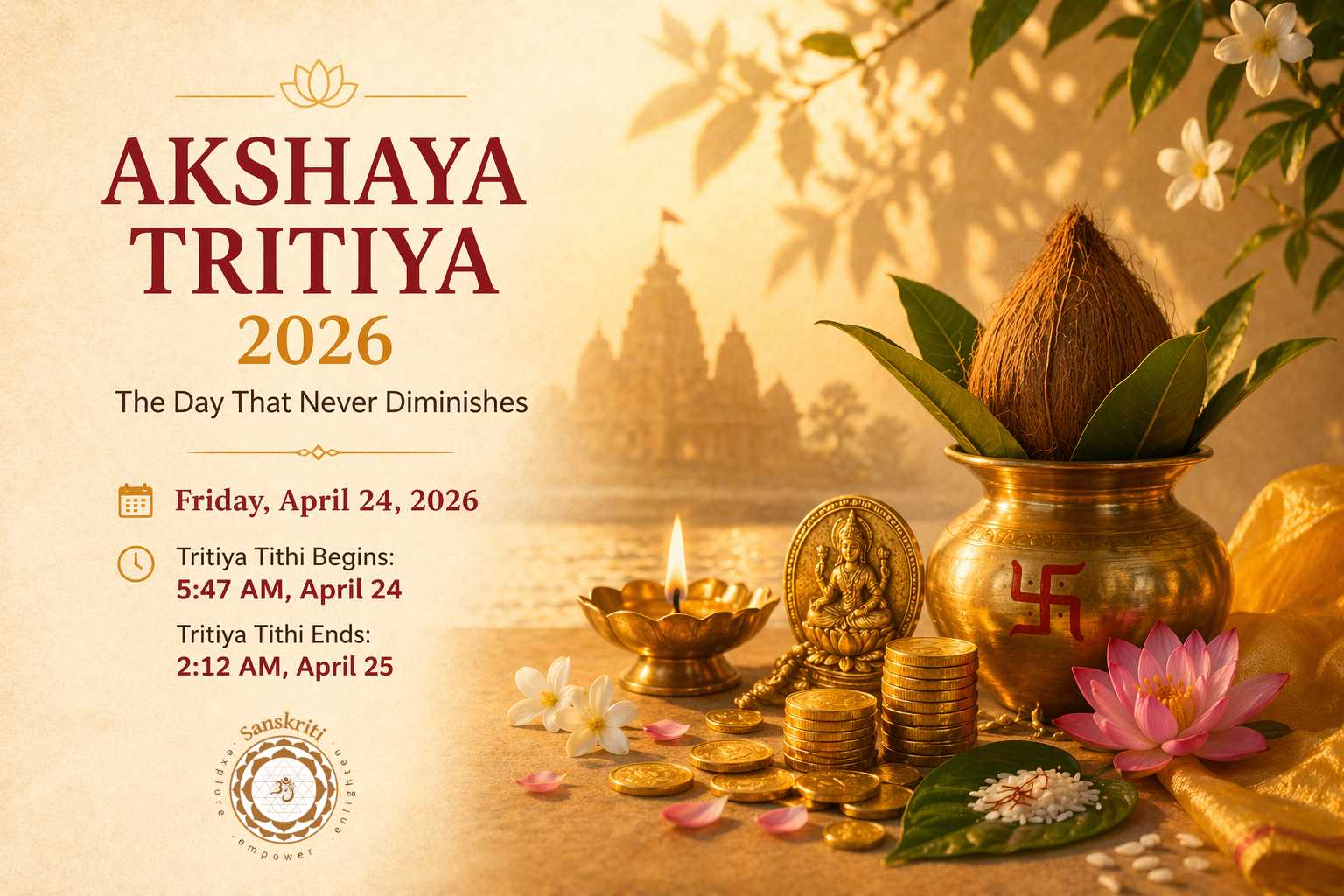
Akshaya Tritiya 2026 — The Day That Never Diminishes

Akshaya Tritiya (April 19, 2026) is one of the most auspicious days in the Vedic calendar — when any act of dharma, dana, or japa yields imperishable merit. Discover the five sacred Puranic events, complete puja vidhi, timings, mantras, and the deeper spiritual teaching beyond gold-buying.

Baisakhi 2026 — Mesha Sankranti Hindu Solar New Year hero banner with rising sun, Om symbol and wheat harvest

Baisakhi 2026 — Harvest, Hope, and the Hindu Solar New Year

Baisakhi 2026 falls on Tuesday, April 14 — the day Bhagavan Surya enters Mesha Rashi at 9:39 AM, marking the Hindu Solar New Year. Discover the sacred science of Mesha Sankranti, the Punya Kaal rituals, and how this one cosmic moment is celebrated across Bharata as Vishu, Puthandu, Pohela Boishakh, Bohag Bihu, and Pana Sankranti.

Varuthini Ekadashi 2026 — sacred vrat guide hero banner with Vishnu Chakra mandala

Varuthini Ekadashi 2026 — The Sacred Vrat That Shields from Sin

Varuthini Ekadashi (April 13, 2026) is one of the most powerful Ekadashi vrats — dedicated to Lord Vamana, it dissolves lifetimes of karmic burden and shields the devoted soul with Bhagavan Vishnu’s protective grace. Complete vrat vidhi, timings, mantra, and the sacred Vrat Katha from the Bhavishya Purana.

css.php