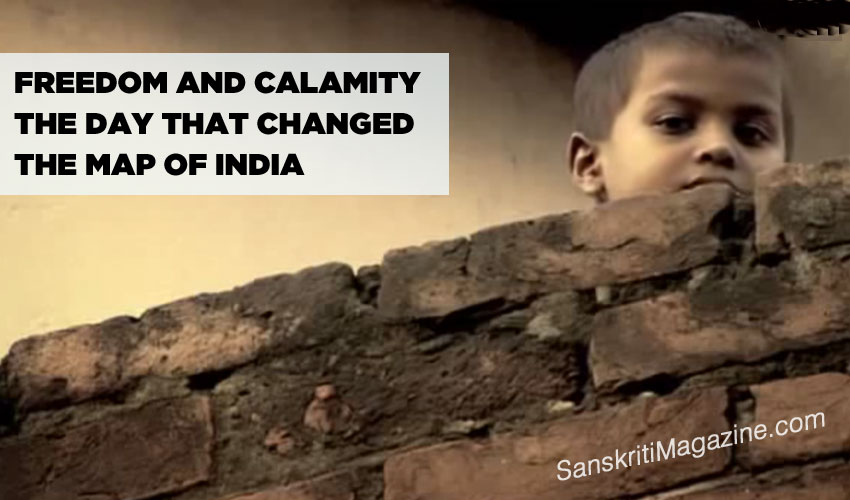
“At the stroke of midnight hour, when the world sleeps, India will awake to life and freedom.” So declared Jawaharlal Nehru in his speech on the eve of his nation’s independence from Britain. In New Delhi the next day, the celebrating crowd was so huge that Nehru, the new Prime Minister, had to fight his way to the grandstand, at one point knocking off the turban of a man who had gotten in his way. He was worried for the safety of his friends, the last British viceroy Lord Mountbatten, who was a cousin of England’s monarch, and his wife Edwina, with whom Nehru was secretly enamored. But Mountbatten knew of another secret that would cause great grief.
Muslims and Hindus were inheriting a divided subcontinent from Britain, made up of Pakistan and India. Already the legalistic partition had led to deadly rioting. But one important division had yet to be announced, that of Punjab, a rich province with a volatile mix of Sikhs, Muslims and Hindus. A decision had been made on Aug. 12, but Mountbatten had ordered its details unpublished until two days after India’s independence.
He foresaw chaos and wanted British responsibility for it to be moot by the time the screaming started over the new borders. No preparations were therefore made to control the inevitable havoc. The result was a bloody birthday gift to newborn India and Pakistan as millions of people were uprooted amid massacres and murder. “I am sick with horror,” Nehru would write his friend Mountbatten after visiting one affected area. More horror was to come: refugee camps everywhere and, eventually, war with Pakistan over Kashmir, an enmity, potent as nuclear bombs, that lasts to this day.