Dussehra 2025 — The Triumph of Dharma over Adharma
Observed on Sunday, October 12, 2025 | Ashwin Shukla Dashami (Vijayadashami)
Dussehra — also known as Vijayadashami — is one of the most significant days in the Hindu calendar. Falling on the tenth day of the bright half of Ashwin, it marks the culmination of Sharad Navratri and celebrates the eternal victory of Dharma over Adharma. On this day, two great triumphs converge: Bhagavan Rama’s victory over Ravana after the great battle of Lanka, and Devi Durga’s vanquishing of the asura Mahishasura after nine nights of fierce battle.
Dussehra 2025 falls on Sunday, October 12 — a day when the entire land of Bharata erupts in celebration, from the Ramlila grounds of the north to the Durga Puja pandals of the east, from the Mysore Dasara procession to the Ayudha Puja of the south.
Bhagavan Rama’s Victory — The Ramayana Tradition
The Ramayana tells us that after fourteen years of exile, the abduction of Devi Sita by the asura-king Ravana, and a long and terrible war, Bhagavan Rama — Maryada Purushottama, the ideal of righteous conduct — finally defeated Ravana on the battlefield of Lanka on this Dashami tithi. Ravana was not merely a villain. He was a great scholar, a master of the Vedas, a formidable tapasvi, and the ruler of the wealthiest kingdom on earth. But his downfall came from his unchecked ahamkara (ego), his adharmic desire for what was not his, and his refusal to heed the counsel of wisdom.
The burning of the towering effigies of Ravana, Kumbhakarna, and Meghanada at Ramlila grounds across North India is a powerful reminder: no matter how mighty the forces of adharma may appear, they cannot stand before one who walks the path of Dharma with unwavering resolve.
Devi Durga’s Triumph — The Shakti Tradition
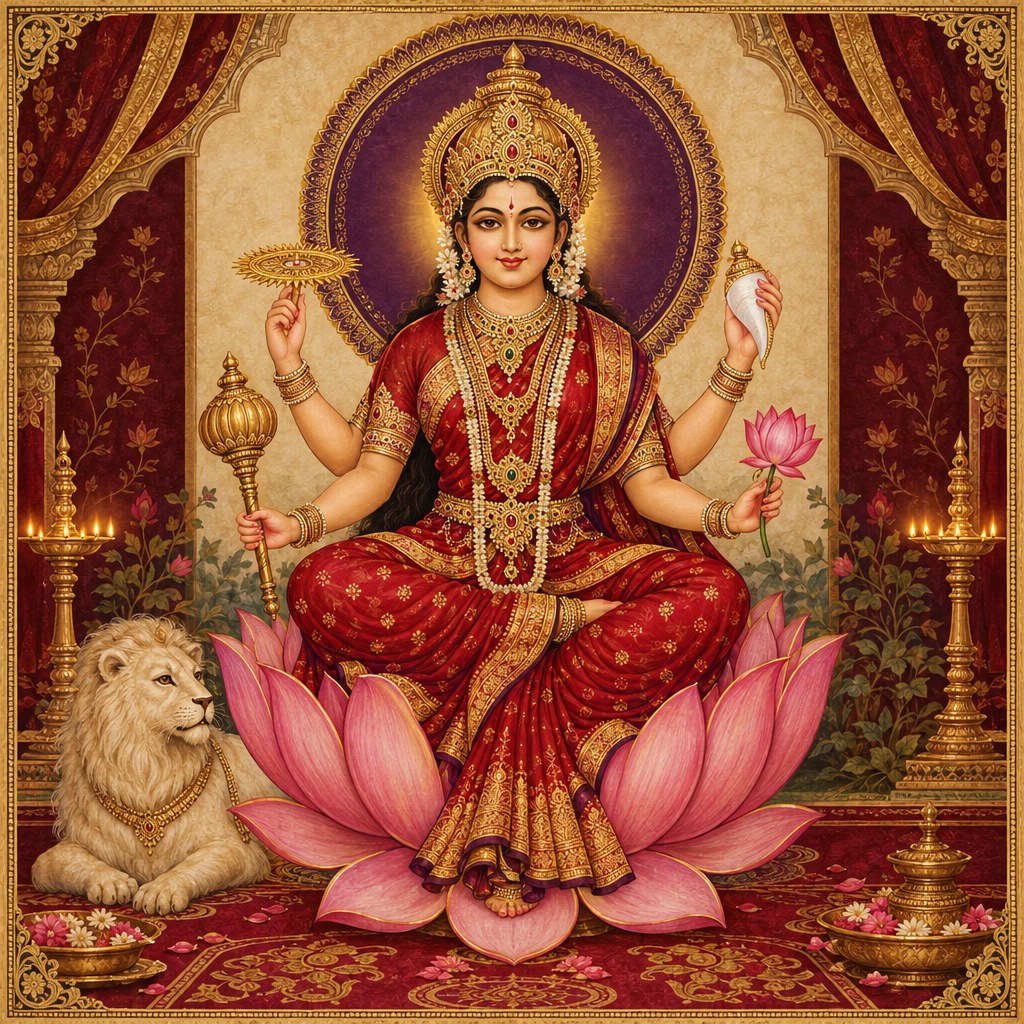
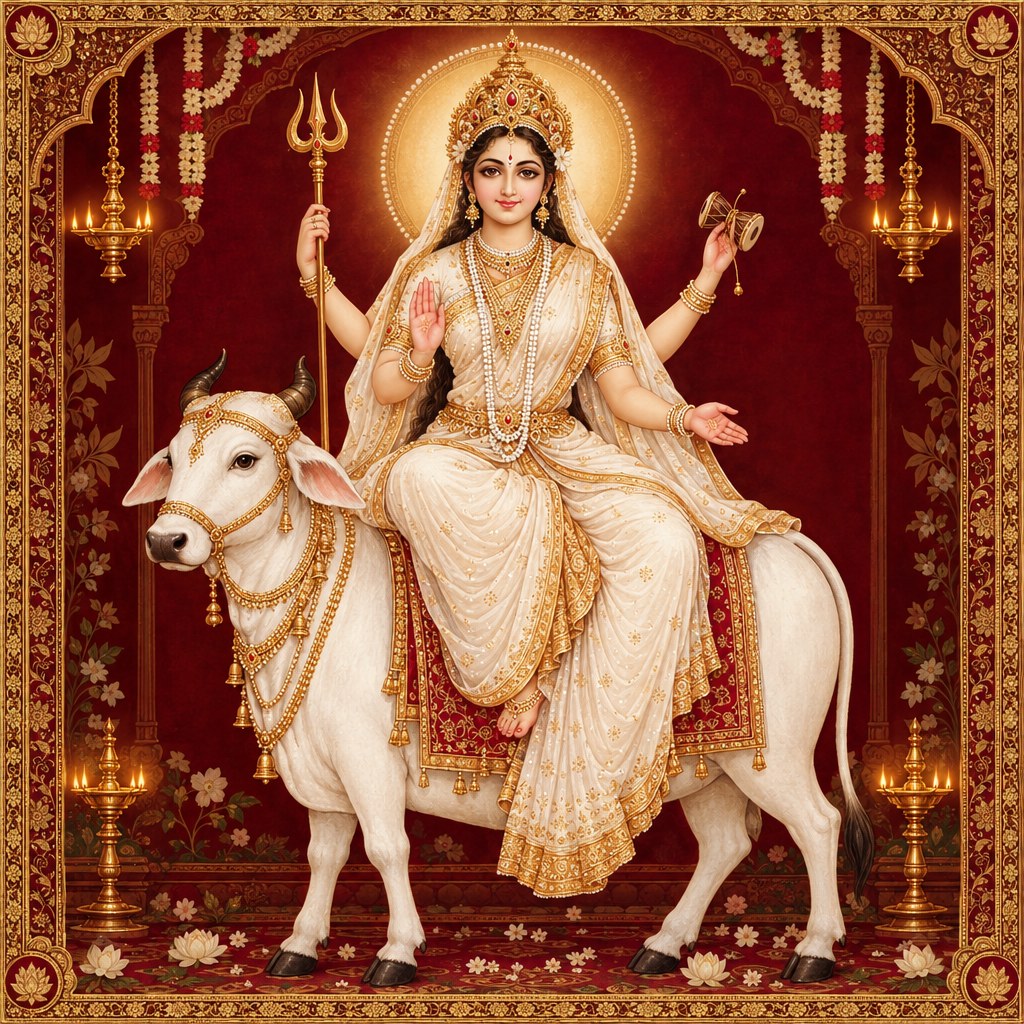
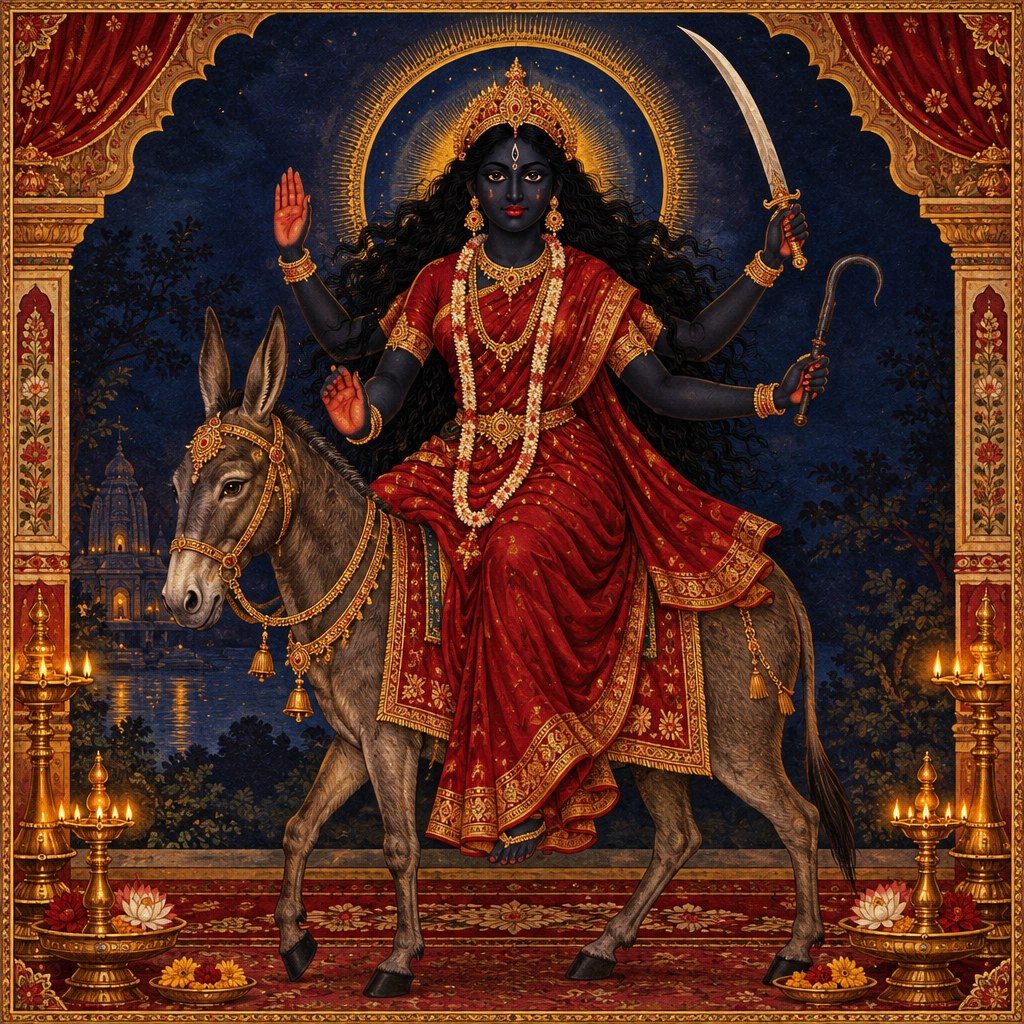
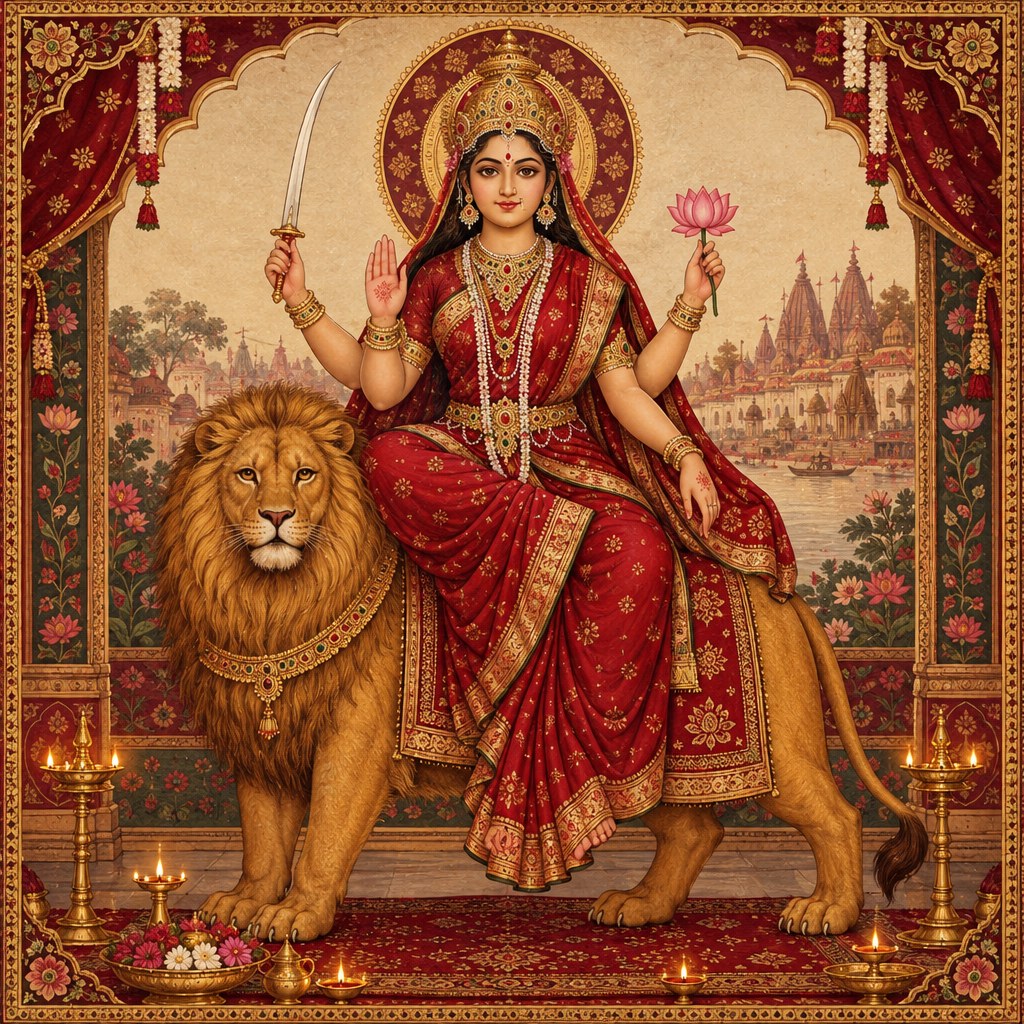
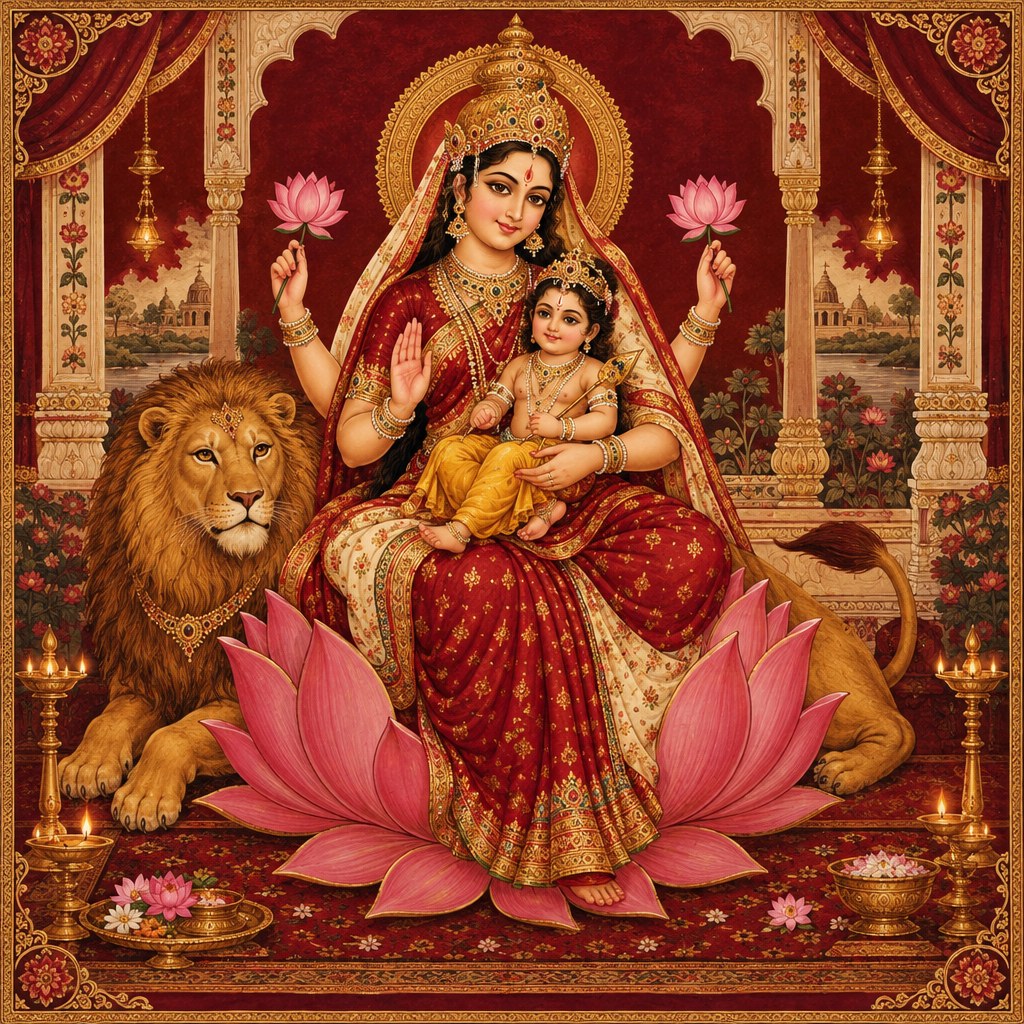
In the Shakti tradition, particularly dominant in Bengal, Odisha, and Assam, Vijayadashami marks the day Devi Durga vanquished Mahishasura — the buffalo-asura who had conquered the three worlds and driven the Devas from Swarga. The Devi Mahatmyam recounts how the Devas, unable to defeat Mahishasura, pooled their collective tejas (divine energy) to give birth to Devi Durga — a Shakti so immense that She alone could accomplish what no Deva could.
After nine nights of battle — corresponding to the nine nights of Navratri — Devi Durga slew Mahishasura on the tenth day. The Vijayadashami Sindur Khela, where married women smear each other with sindur, and the emotional Durga Visarjan, where the clay murti of Devi Durga is immersed in water, are among the most moving rituals in all of Hindu tradition.
Regional Celebrations Across Bharata
Ramlila and Ravan Dahan (North India): The ten-day Ramlila — dramatic enactments of the Ramayana — culminates on Dussehra evening with the spectacular burning of massive effigies. The Ramlila of Ramnagar (Varanasi), recognised by UNESCO, is among the oldest and most authentic.
Durga Puja and Sindur Khela (Bengal, Odisha, Assam): The five-day Durga Puja festival, centred on magnificent pandals housing artistically crafted Durga murtis, reaches its emotional peak on Dashami with the Visarjan procession.
Mysore Dasara (Karnataka): The royal Dasara of Mysore, with its grand procession featuring the golden howdah atop a decorated elephant, is a celebration with over 400 years of history. The illuminated Mysore Palace during Dasara is one of the most magnificent sights in Bharata.
Ayudha Puja and Saraswati Puja (South India): In Tamil Nadu, Kerala, and parts of Karnataka, Vijayadashami is the day of Ayudha Puja — the worship of tools, instruments, vehicles, and books. It is also considered the most auspicious day to begin learning, known as Vidyarambham.
The Eternal Teaching of Dussehra
Dussehra is not merely the celebration of an ancient victory. It is a reminder that the battle between Dharma and Adharma is not only out there in the world — it rages within every human heart. Ravana represents the ten heads of our own adharmic tendencies: lust, anger, greed, delusion, pride, envy, the mind’s restlessness, intellectual arrogance, cruelty, and ego. Bhagavan Rama represents the Atma — the innermost self — armed with the bow of Dharma and the arrow of resolve.
Every Dussehra, when the effigy burns, it is an invitation to each of us to burn our own inner Ravana — to let go of the tendencies that keep us bound, and to choose, once again, the path of righteousness.
Jai Shri Ram 🙏
Sanskriti Magazine — Sharing Indian Heritage, Achievements, Practices and Values with the world.