IndianSanskriti
Celebrate Ganesha Chaturthi the eco-friendly way

Celebrate Ganesha Chaturthi the eco-friendly way

This year, maybe you should consider how you can celebrate Ganesh Chaturthi with as much gusto, but with a little more concern for the environment. Consider buying these eco-friendly Ganeshas instead.

Despite all the reverie Ganesha Chaturthi brings, environmentalists point out year after year how its after-effects are menacing for marine life. This time then, as the festival kicks off around the country on September 17, several organisations have come up with eco-friendly solutions to address these growing concerns. Ganesh Chaturthi ends with the immersion of Ganesha idols made from Plaster of Paris (PoP) into the sea, which are non-biodegradable and thus, harmful for the aquatic life and water bodies.
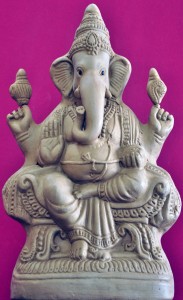
Mudpiez was started by an IT professional from Bengaluru. Photo courtesy: Mudpiez.in

Sprouts Environment Trust: This Mumbai-based NGO has launched the #GodSaveTheOcean campaign, and undertakes making 9-inch Ganesha idols that are ocean-friendly. These idols are made of vegetarian food material that is bound with clay, and can be harmlessly consumed by fish. The initiative was started mainly in order to save the aquatic life, which suffers heavily during the immersions. The organisation is also planning to conduct a clean-up drive on September 28, the day after the immersion rituals.

Mudpiez : Founded by a Bengaluru IT consultant, Shashi Shah, Mudpiez not only sells eco-friendly Ganesha idols, but also provides assistance for their visarjan (immersion). According to thebetterindia.com, the main aim of Mudpiez is to provide an eco-friendly way of disposing off the idols, for which they plan to create an artificial tank in Narayanpur and Bannerghatta. The group plans to keep the idols in the tank for three days until they completely dissolve and till the material thus obtained can be used to make other products.Mudpiez will also give 10-15 per cent of their revenues for the welfare of a rescued elephant which is presently housed at the Wildlife Rescue & Rehabilitation Centre (WRRC), Bengaluru.

To Make a Difference: Based in Bengaluru, To Make a Diferrence (TMAD) is an organisation that  delivers eco-friendly Ganesha idols at your doorstep. The orders can be made online, on their website www.tmad.org. Formed in 2005, TMAD currently delivers to areas like Whitefield, Bellandur, Sarjapura road and Indira Nagar in Bengaluru. People from the areas not mentioned can pick up their idols from the list of stalls mentioned on the website.
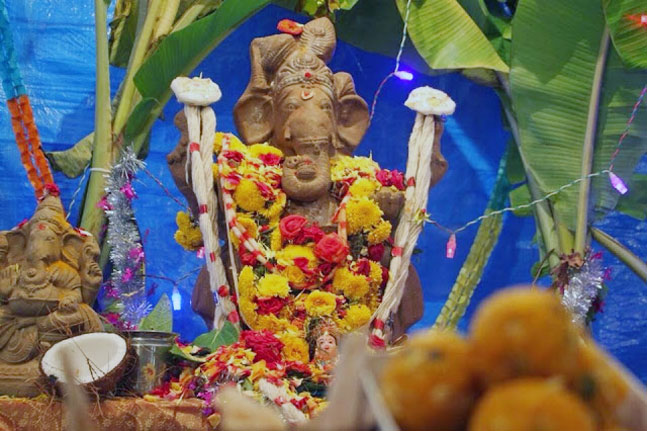
 

To Make a Difference delivers eco-friendly Ganeshas at your doorstep. Photo courtesy: Tmad.org


Green Yatra: With the aim of raising awareness regarding the ill-effects of PoP Ganesha idols, Green Yatra’s initiative, ‘Go Green Ganesha’ is instrumental in organising several campaigns and workshops that encourage people to adopt eco-friendly methods for disposing off Ganesha idols. According to its website, Green Yatra conducts these awareness campaigns across schools, colleges, malls etc.

Youth For Seva: Highlighting the problem of chemical dyes and PoP that is used in making Ganesha idols, the ‘Parisara Ganapati’ project of Youth for Seva aims to provide a lists of vendors and dealers involved in making environment-friendly Ganesha idols, to the community. The list is compiled by Youth for Seva volunteers, who believe in the use of natural dyes over chemical dyes.
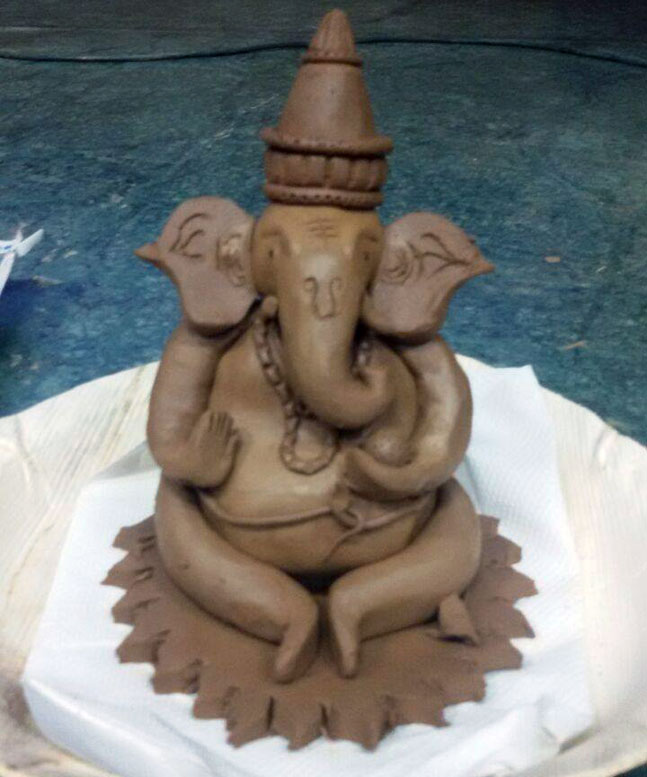
Youth For Seva volunteers complie lists of traders that sell eco-friendly idols. Photo courtesy: Youthforseva.org

You may also like

Search the website

Like us on Facebook

Get daily updates via Email

Enter your email address:

Recent Posts

Yogini Ekadashi 2026 — The Yaksha Who Missed the Morning Flowers, and the Ekadashi That Undid His Curse

On Friday, July 10, 2026, the rare Krishna Paksha Ekadashi of Nija Ashadha arrives. The Padma Purana tells the story of Hemamali — the Yaksha gardener of Bhagavan Kubera in Alaka, whose single morning of distraction with his wife Vishalakshi cost him his form, his wife, and his celestial city. Cursed to wander the earth of Bharata as a leper for a long time, he was at last shown the way back by Sage Markandeya — a single sincere keeping of Yogini Ekadashi.

Jamai Shashthi 2026 — The Story of Maa Shashthi, the Cat, and the Wife Who Was Forgiven

Jamai Shashthi 2026 — The Story of Maa Shashthi, the Cat, and the Wife Who Was Forgiven

On Saturday, June 20, 2026, Bengali households across Bharata will welcome their married daughters and sons-in-law home for the legendary jamai-aador feast and perform the Shashthi Vrata. But behind the warmth lies a story most Bengalis know by heart and most non-Bengalis have never heard — the wife who stole the hilsa, blamed the cat, lost six sons to Maa Shashthi’s wrath, and was finally forgiven. The Vrat Katha, the vidhi, the mantras, and the deeper teaching.

Vat Purnima 2026 — The Wife Who Argued Yama Into Returning Her Husband’s Life

On Monday, June 29, 2026, women across Maharashtra, Gujarat, and southern Bharata will tie red thread around banyan trees and hear the story of Savitri — the wife who walked behind Yamaraja Himself when He came for her husband, and out-argued the Lord of Dharma into returning Satyavan’s life. The Mahabharata’s Pativrata Mahatmya Parva, the vrat vidhi, and why the banyan witnessed everything.

Nija Jyeshtha 2026 — The Real Jyeshtha Begins, and the Calendar Resumes

Nija Jyeshtha 2026 — The Real Jyeshtha Begins, and the Calendar Resumes

With Adhik Maas now closed on the Somvati Amavasya of June 15, the long-postponed festivals of Jyeshtha return — Vat Purnima (June 29, the Savitri-Yamaraja katha), Jamai Shashthi (June 20, the Bengali festival of Maa Shashthi), Sankashti Chaturthi (June 28), Yogini Ekadashi (July 10), and Devshayani Ekadashi (July 16, opening the four-month Chaturmas of Bhagavan Vishnu’s yoga-nidra). A guide to what the next four weeks hold and what the household that kept Purushottam Maas now carries forward.

The Closing of Purushottam Maas 2026 — Adhik Amavasya and the Sealing of the Month-Long Vrat

On Monday, June 15, 2026 — a rare Somvati Amavasya — the intercalary month that bears Bhagavan Vishnu’s own name comes to its close. The Acharyas teach that a vrat is not measured by its duration but by its closing. Here are the Padma Purana’s instructions for sealing the month-long Purushottam Maas vrat: the morning snan, the closing puja with the Vishnu Sahasranama, the day of dana, the Somvati Amavasya gift, and the final sarva-arpana — the offering of all merit at the feet of the Lord.

css.php