Healing the Vedic way
The Vedas are not only meant for the performance of rituals, and are not only the property of Hindus. They offer great wisdom and knowledge

The Vedas are not only meant for the performance of rituals, and are not only the property of Hindus. They offer great wisdom and knowledge

Marriages in India are largely based on Kundali Milan (horoscope matching). It is considered as a crucial step before making any final commitment to the
Electricity and energy can be used in daily life apart from military usage and this was described in Atharvana Veda. General impression created about this 4th Veda

Brahmastra (Sanskrit: ब्रह्मास्त्र, Brahmāstra) was a weapon created by the creator Brahma, for the purpose of upholding Dharma and Satya (truth). When the Brahmastra was discharged,
Surya Siddhanta is the first among the traditions or doctrines (siddhanta) in archaeo-astronomy of the Vedic era. Infact, it is the oldest ever book in world
SVAMI B.B. VISHNU – I remember the time my father pulled me aside and said, “Son, you can explain everything with math.” He was a


The 12 Jyotirlingas of Lord Shiva — where each stands, its sacred story, and how to make the Dwadasha Jyotirlinga pilgrimage in person or in spirit this Shravan.

The Rudrabhishek is the abhishekam said to please Lord Shiva fastest. What it is, the meaning of each sacred substance, the Sri Rudram, and how it is performed at home this Shravan.

Shravan runs July 30–Aug 27 in 2026, with four Sawan Somwars (Aug 3, 10, 17, 24). Why the whole month belongs to Mahadeva — the churning of the ocean, the poison He drank, and how to keep the Sawan vrat.

Thiruvonam 2026 falls on Wednesday, August 26 — the crown of Kerala’s ten-day festival. The Bhagavata story of King Mahabali and the Vamana avatar, and why Onam is a homecoming, not a defeat.
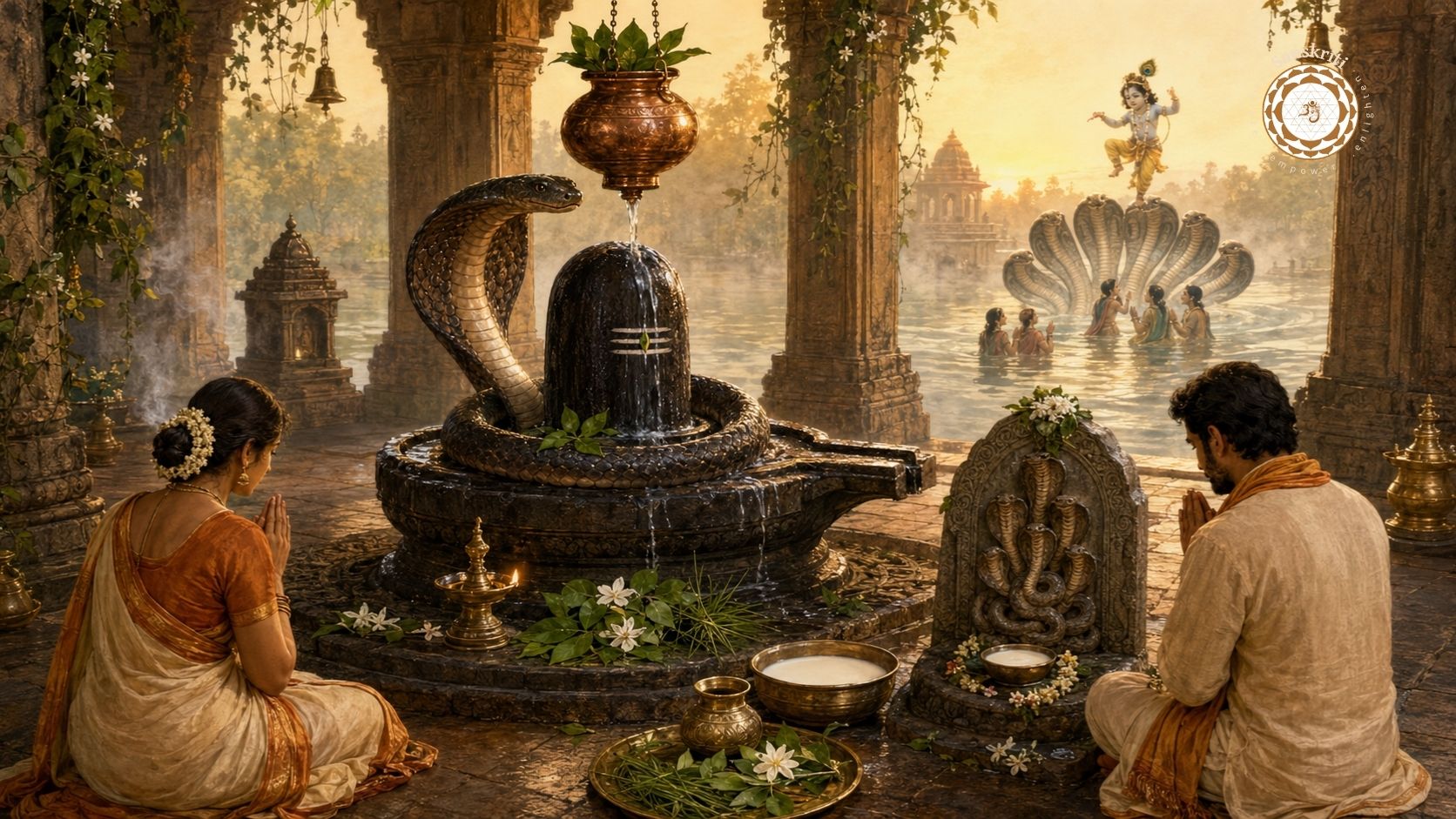
On Monday, August 17, 2026 — a Shravan Monday — Hindus offer milk and prayers to the serpent. The stories of Shesha, Vasuki, Kaliya and Astika, and the puja vidhi for Nag Panchami.

