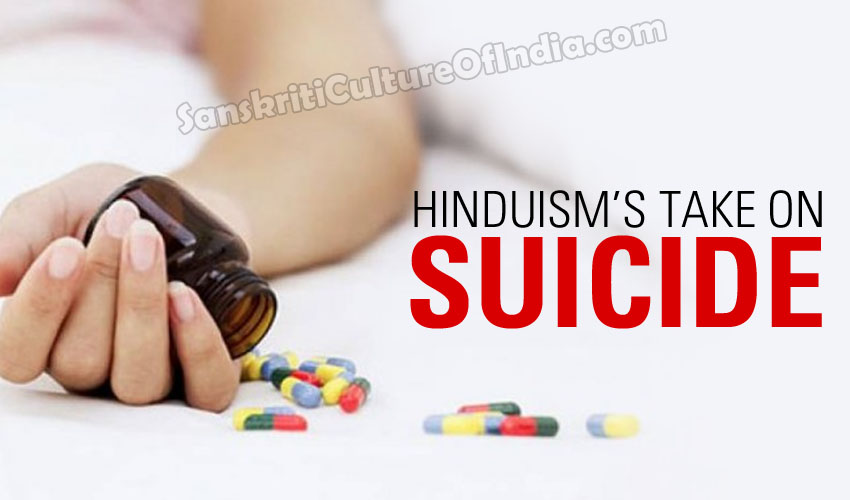
There are several Hindu points of view on euthanasia and suicide. Most would say that assisting death brings bad karma because it violates the nonviolence principle. But there are accepted Hindu ways to bring about death.
Most Hindus would say that a doctor should not accept a patient’s request for euthanasia since this will cause the soul and body to be separated at an unnatural time. The result will damage the karma of both doctor and patient. Other Hindus believe that euthanasia cannot be allowed because it breaches the teaching of ahimsa (doing no harm). However, some Hindus say that by helping to end a painful life a person is performing a good deed and so fulfilling their moral obligations.
Background
Hinduism is less interested than western philosophers in abstract ideas of right or wrong. Rather it focuses on the consequences of our actions.
For Hindus, culture and faith are inextricable. So although many moral decisions taken by Hindus seem more influenced by their particular culture than by the ideas of their faith, this distinction may not be as clear as it seems.
Karma: Hindus believe in the reincarnation of the soul (or atman) through many lives – not necessarily all human. The ultimate aim of life is to achieve moksha, liberation from the cycle of death and rebirth.
A soul’s next life is decided by karma, as the consequence of its own good or bad actions in previous lives. You could regard a soul’s karma as somehow representing the net worth of its good and bad actions.
A soul cannot achieve moksha without good karma.
Non-violence: Another important principle is ahimsa, not being violent or causing harm to other beings.
Dharma: Hindus live their lives according to their dharma – their moral duties and responsibilities.
The dharma requires a Hindu to take care of the older members of their community.
Killing
Killing (euthanasia, murder, suicide) interferes with the killed soul’s progress towards liberation. It also brings bad karma to the killer, because of the violation of the principle of non-violence.
When the soul is reincarnated in another physical body it will suffer as it did before because the same karma is still present.
Death: The doctrine of karma means that a Hindu tries to get their life in a good state before they die, making sure that there is no unfinished business, or unhappinesses. They try to enter the state of a sannyasin – one who has renounced everything.
The ideal death is a conscious death, and this means that palliative treatments will be a problem if they reduce mental alertness.
The state of mind that leads a person to choose euthanasia may affect the process of reincarnation, since one’s final thoughts are relevant to the process.
Euthanasia
There are two Hindu views on euthanasia:
- By helping to end a painful life a person is performing a good deed and so fulfilling their moral obligations
- By helping to end a life, even one filled with suffering, a person is disturbing the timing of the cycle of death and rebirth. This is a bad thing to do, and those involved in the euthanasia will take on the remaining karma of the patient.
- The same argument suggests that keeping a person artificially alive on a life-support machine would also be a bad thing to do
- However, the use of a life-support machine as part of a temporary attempt at healing would not be a bad thing
Suicide
Prayopavesa, or fasting to death, is an acceptable way for a Hindu to end their life in certain circumstances.
Prayopavesa is very different from what most people mean by suicide:
- it’s non-violent and uses natural means;
- it’s only used when it’s the right time for this life to end – when this body has served its purpose and become a burden;
- unlike the suddenness of suicide, prayopavesa is a gradual process, giving ample time for the patient to prepare himself and those around him for his death;
- while suicide is often associated with feelings of frustration, depression, or anger, prayopavesa is associated with feelings of serenity
Prayopavesa is only for people who are fulfilled, who have no desire or ambition left, and no responsibilities remaining in this life. It is really only suitable for elderly ascetics.
Hindu law lays down conditions for prayopavesa:
- inability to perform normal bodily purification
- death appears imminent or the condition is so bad that life’s pleasures are nil
- the decision is publicly declared
- the action must be done under community regulation
An example of prayopavesa:
Satguru Sivaya Subramuniyaswami, a Hindu leader born in California, took his own life by prayopavesa in November 2001.
After finding that he had untreatable intestinal cancer the Satguru meditated for several days and then announced that he would accept pain-killing treatment only and would undertake prayopavesa – taking water, but no food.
He died on the 32nd day of his self-imposed fast.
~ BBC