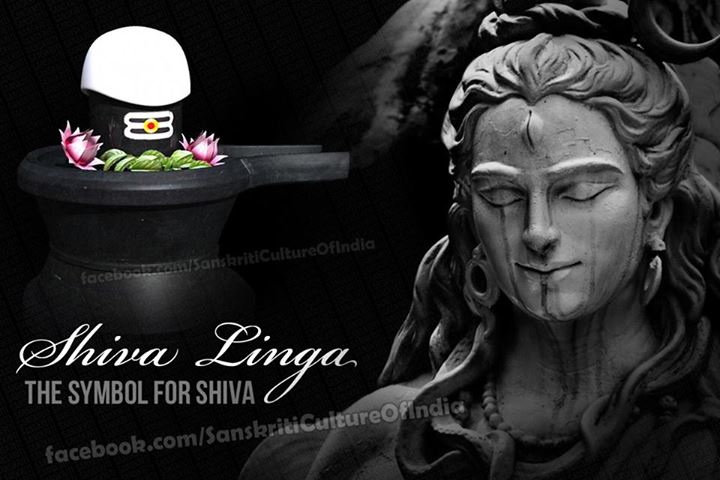
What is behind Lord Shiva being represented as a ‘Linga?’ The popular belief is that the Shiva Linga or Lingam represents the phallus, the emblem of the generative power in nature. According to Swami Sivananda, this is not only a serious mistake, but also a grave blunder.
Shiva Linga: The Symbol for Shiva
In Sanskrit, Linga means a ‘mark’ or a symbol, which points to an inference. Thus the Shiva Linga is a symbol of Lord Shiva – a mark that reminds of the Omnipotent Lord, which is formless.
Shiva Linga speaks to the devotee in the unmistakable language of silence, and it is only the outward symbol of the formless being, Lord Shiva, who is the undying soul seated in the chambers of your heart, who is your in-dweller, your innermost self or ‘Atman,’ and who is identical with the supreme ‘Brahman.’
The Linga as a Symbol of Creation:
The ancient scripture Linga Purana says that the foremost Linga is devoid of smell, colour, taste, etc., and is spoken of as ‘Prakriti’ or Nature itself. In the post-Vedic period, the Linga became symbolical of the generative power of Lord Shiva.
The Linga is like an egg, and represents the ‘Brahmanda’ or the cosmic egg. Linga signifies that the creation is effected by the union of ‘Prakriti’ and ‘Purusha,’ the male and the female powers of Nature. Linga also signifies ‘Satya,’ ‘Jnana’ and ‘Ananta’ – Truth, knowledge and Infinity.
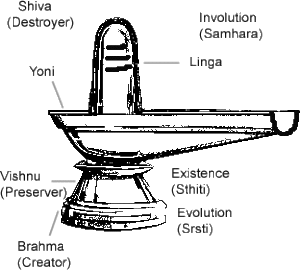
The 3 Parts of a Shiva Linga:
A Shiva Linga consists of three parts, the lowest of which is called the ‘Brahma-Pitha,’ the middle one, the ‘Vishnu-Pitha’ and the uppermost one, the ‘Shiva-Pitha.’
The Holiest Shiva Lingas of India:
There are 12 ‘Jyotir-lingas’ and 5 ‘Pancha-bhuta Lingas’ in India. The dozen Jyotir-lingas are: Kedarnath, Kashi Vishwanath, Somnath, Baijnath, Rameswar, Ghrusneswar, Bhimshankar, Mahakal, Mallikarjun, Amaleshwar, Nageshwar and Tryambakeshwar.
The 5 Pancha-bhuta Lingas are: Kalahastishwar, Jambukeshwar, Arunachaleshwar, Ekambareshwar of Kanjivaram and Nataraja of Chidambaram. The temple of Lord Mahalinga at Tiruvidaimarudur known also as Madhyarjuna is regarded as the great Shiva temple of South India.
The Quartz Shiva Linga:
The ‘Sphatika-linga’ is made up of quartz. It is prescribed for the deepest kind of worship of Lord Shiva. It has no color of its own, but takes on the color of the substance which comes in contact with it. It represents the ‘Nirguna Brahman’ or the attribute-less Supreme Self or the formless Shiva.
What the Linga Means to Devotees:
There is a mysterious or indescribable power or ‘Shakti’ in the Linga, to induce concentration of the mind, and helps focus one’s attention. That is why the ancient sages and seers of India prescribed Linga to be installed in the temples of Lord Shiva.
For a sincere devotee, the Linga is not merely a block of stone. It is all-radiant – talks to him, raises him above body-consciousness, and helps to communicate with the Lord. Lord Rama worshiped the Shiva Linga at Rameshwaram. Ravana, the learned scholar, worshiped the golden Linga for its mystical powers.
– Based on the teachings of Swami Sivananda
When the mind is clear and is without prejudices, we will realize that the Linga form of Shiva is the most innocent form of Brahman that our ancestors had realized. It is pure and they got it from pure nature. Many of the forms that we worship today are the reflections of our mind, which is corrupted by ego, society and education.