“Death is not extinguishing the light; it is putting out the lamp because dawn has come.”
~ Rabindranath Tagore
There is one thing that is certain in this lifetime: eventually we all must die. This inevitable aspect of human existence has become a taboo subject in the western world. The difficulty that we have in discussing death leaves many people unprepared for what some believe is the end to their existence. This can lead to a great deal of fear and anxiety over what other cultures view as just the conclusion to a phase in the continuous cycle of life, death and rebirth. A belief in the cyclical reincarnation of the soul is one of the foundations of the Hindu religion. Death is viewed as a natural aspect of life, and there are numerous epic tales, sacred scriptures, and law books that describe the reason for death’s existence, the rituals that should be performed surrounding it, and the many possible destinations of the soul after departure from its earthly existence. While the ultimate goal is to transcend the need to return to life on earth, most Hindus believe they will be reborn into a future that is based primarily on their past thoughts and actions. The lessons of these mythic Hindu texts about death are really lessons about the meaning of life, a life that that can be truly enjoyed once the mind is released from worrying about the fate of its immortal soul.
Death in Hinduism
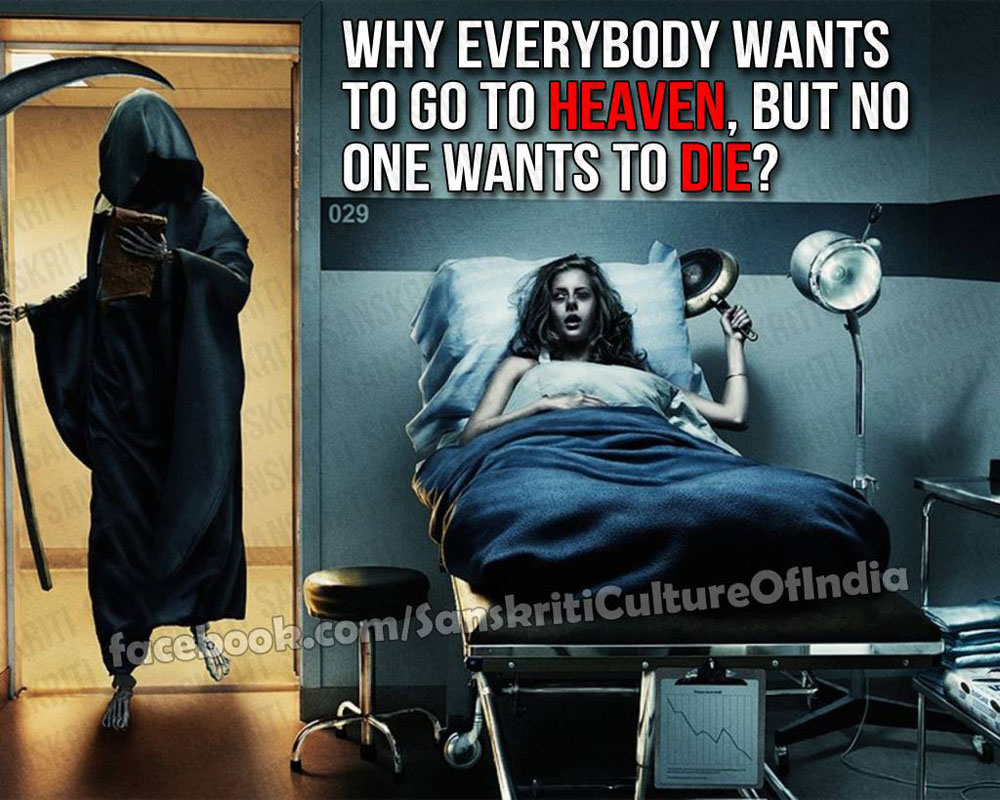
In Hinduism, death is not viewed as an anathema or the end of all but only a step in the existence of soul, a temporary cessation of physical activity. Since Hindus believe in reincarnation and the trans-migration of the soul, they approach the subject of death without much fear.
At 65, Gyan Rajhans, scientist and Hindu spiritual thinker, contemplates upon the inevitable end of life – death, and comes up with words of advice from Hindu scriptures about what should be the right attitude to death, and how one should approach it.
A Natural Phenomenon
“As I am growing older, I am beginning to think of life after death. The fear of death is founded upon the love of life, which is the deepest instinct in human nature. I am talking about death as a natural phenomenon; death as it makes its presence felt through disease and through old age, is hugely different from deaths due to accidents and natural calamities, for the latter is a totally different directive process, which I am yet to understand.
The Fear Factors
Let us first accept the fact that most of us loathe death because of the uncertainty of its time and place. Failure to survive when the time comes is the basic fear. The unwillingness to face this fear with proper understanding is due to the emphasis we lay upon the physical body. It is also based upon an innate fear of loneliness due to the loss of those we have been familiar with during our worldly existence.
Loneliness After Death
The thought of loneliness after death establishes the fact that there is life after death. Simply put, there are now many evidences in favor of the existence of soul consciousness after death based on reams of anecdotes of “out-of-body” experiences.
The loneliness after death is nothing as compared to the loneliness at birth. At birth, the soul finds itself in new surroundings and in a body which is at first totally incompetent to take care of itself or to establish intelligent contact with surrounding conditions for a long period of time. The child at birth has no recollection of identity of the family members with whom he finds himself in relationship. This loneliness only disappears gradually as he comes in contact with those who are congenial to him and eventually becomes his friends and families.
After death, however there is no loneliness. The person after death finds those who he knows and who have been connected with him in physical plane. They may be his parents, his relatives and his friends who died before him. Moreover, after death the person is also conscious of those friends and family members who are still alive. He can see them, he can tune in on their emotions, and also upon their thinking. (Read the biography of Sir Mackenzie King, the ex-Prime Minister of Canada, a devout Christian, who believed in an afterlife and communicated with his dead relatives in séances.)
Can We Welcome Death?
One must accept the fact that the consciousness remains the same whether in physical body or out of it. This consciousness continues to develop with even greater ease than when limited and conditioned by the brain consciousness while in physical body. Death releases the individualized life into a less cramped and confined existence. Therefore, one has no need to fear death or anything that lies beyond it. In fact, one should welcome it, because one will be making a transition to a higher consciousness. Freedom from the limitations of the physical body is of real beneficence.
Let the Soul Live On…
The Bhagwad Gita talks about the eternal soul and the necessity for that soul to live spiritually, constructively and divinely within the physical body. So, why not make our physical existence as pleasant as we can for others so that they will remember us for years afterwards? What have we to lose?
Become Soul Conscious!
We brought nothing with us when we came, and would take nothing with us when we leave this world. In fact, we will leave a little extra behind if we lead a life of goodness and philanthropy. If we become soul-conscious, death will be an “ordered” process, carried out in full consciousness and with understanding of cyclic purpose.
Once understood, the fear of death ceases. It gives us a certain power to control our passing over to the other side of the veil. Let us approach death with as much normalcy as we can manage.”