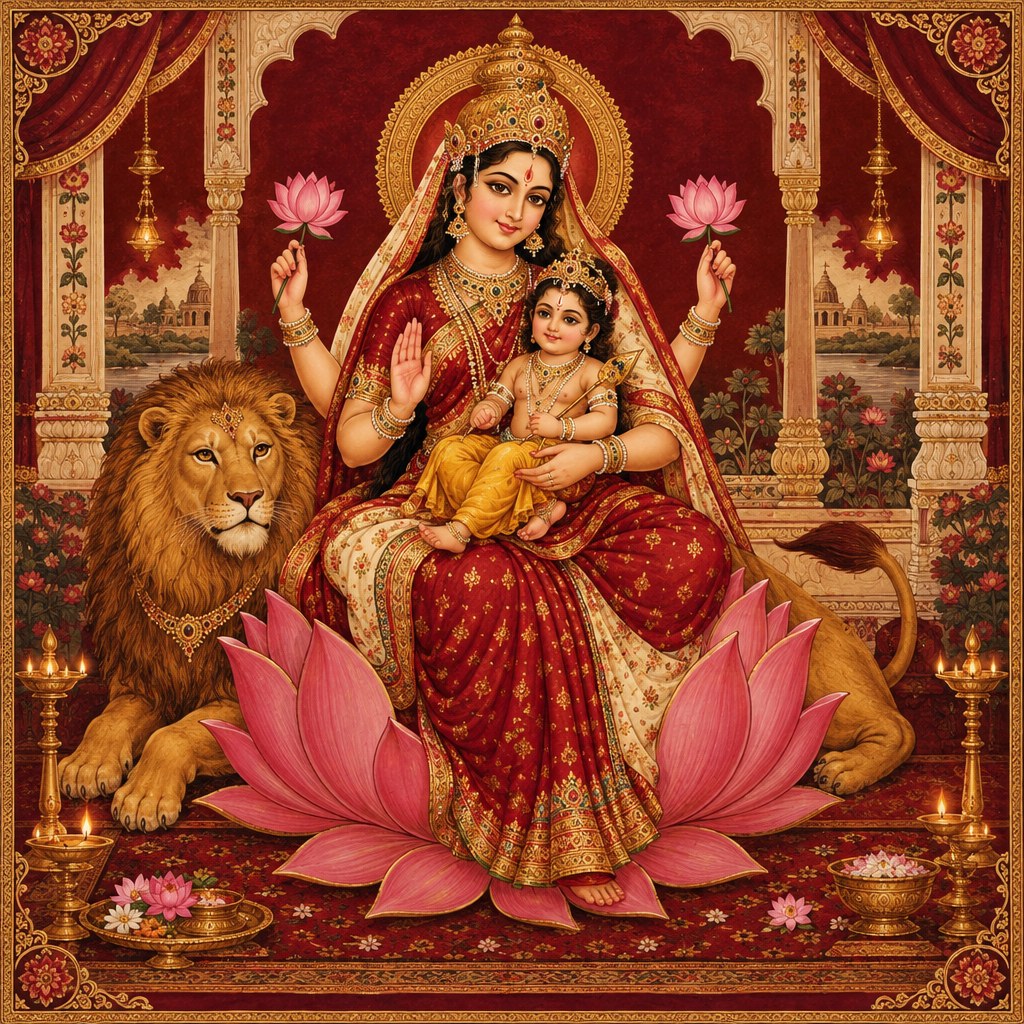
Chhath Puja 2025 — The Ancient Vedic Worship of Surya
Observed from Wednesday, November 12 to Saturday, November 15, 2025 | Kartik Shukla Chaturthi to Saptami
Of all the festivals in the vast tapestry of Sanatana Dharma, few demand the discipline, devotion, and physical austerity that Chhath Puja does. This ancient Vedic festival — dedicated to Bhagavan Surya and Chhathi Maiya (Usha, the consort of Surya) — is a four-day vrat of extraordinary rigour. No pandits are needed. No temples are required. The devotee stands in water, faces the rising and setting Sun, and offers Arghya with bare hands and a heart full of devotion. It is the most direct form of worship in all of Hindu tradition — the human being standing before the visible form of the Divine with nothing but faith.
Chhath Puja 2025 spans from Wednesday, November 12 to Saturday, November 15, with the key Arghya offerings on the evening of November 14 (Sandhya Arghya to the setting Sun) and the morning of November 15 (Usha Arghya to the rising Sun).
The Four Days of Chhath
Day 1 — Nahay Khay (Chaturthi)
The vratti (devotee) takes a holy bath in a river or clean water body and prepares a satvik meal of rice, dal, and lauki (bottle gourd) cooked in a new clay chulha. This is the last full meal before the intense fasting begins. The entire household observes purity — the home is cleaned thoroughly and only satvik food is consumed.
Day 2 — Kharna / Lohanda (Panchami)
The vratti observes a nirjala vrat (without water) throughout the day. In the evening, after sunset, they prepare kheer (rice pudding with jaggery and milk) and roti, offer it to Surya, and break the fast. After this meal, the vratti begins a continuous 36-hour nirjala vrat — no food, no water — that lasts until the Usha Arghya on the morning of the fourth day.
Day 3 — Sandhya Arghya (Shashthi)
This is the first of the two climactic moments of Chhath. The vratti, accompanied by family and community, goes to a river ghat or water body carrying soop (winnowing baskets) laden with offerings — thekua (a sweet made of wheat flour, jaggery, and ghee), fruits (especially sugarcane, coconut, and banana), and earthen diyas. Standing waist-deep in water, facing the setting Sun, the vratti offers Arghya — pouring water from cupped hands toward the Sun while chanting mantras. The scene at the ghats — hundreds of devotees standing in water, the sky ablaze with sunset, the air filled with Chhath geets — is one of the most powerful sights in all of Bharata.
Day 4 — Usha Arghya (Saptami)
Before dawn, the vratti returns to the water body and waits for the first rays of the rising Sun. As the Sun appears over the horizon, the vratti offers Arghya to the rising Sun — the culmination of the four-day vrat. After this, the vratti breaks the fast with prasad, and the community celebrates with joy and relief. The discipline is over. The vow is fulfilled.
The Rigvedic Roots of Sun Worship
Chhath Puja is among the oldest surviving Vedic rituals. The worship of Surya (the Sun) is one of the most ancient forms of worship in Sanatana Dharma, with roots in the Rigveda itself. The Gayatri Mantra — the most sacred mantra of the Vedas — is a prayer to Savitri, the vivifying power of the Sun. Surya is not merely a celestial body in the Vedic worldview — He is the visible manifestation of Brahman, the source of all life, light, and consciousness on earth.
Chhathi Maiya, worshipped alongside Surya, is identified with Usha (the goddess of dawn) and is considered the mind-born daughter of Surya. She represents the nurturing, life-giving feminine aspect of solar energy — the warmth that sustains all living beings.
The Unmatched Discipline of Chhath
What sets Chhath apart from every other Hindu festival is its sheer austerity. The 36-hour nirjala fast — no food, no water, while standing in cold water at dawn and dusk — demands extraordinary physical endurance and mental resolve. There are no shortcuts, no concessions, no priestly intermediaries. The vratti does everything herself (Chhath is predominantly observed by women, though men also keep the vrat).
This discipline is the essence of tapasya — the Vedic practice of voluntary austerity that purifies the body, concentrates the mind, and generates spiritual merit. Chhath Puja is living proof that the Vedic tradition of tapasya is not a relic of the past but a living, breathing practice observed by millions across Bihar, Jharkhand, eastern Uttar Pradesh, and the Terai region of Nepal.
May Bhagavan Surya and Chhathi Maiya bless you with health, abundance, and the unwavering light of Dharma.
Jai Chhathi Maiya 🙏🌅
Sanskriti Magazine — Sharing Indian Heritage, Achievements, Practices and Values with the world.