IndianSanskriti

Navratri Day 8: Worship of Goddess Mahagauri

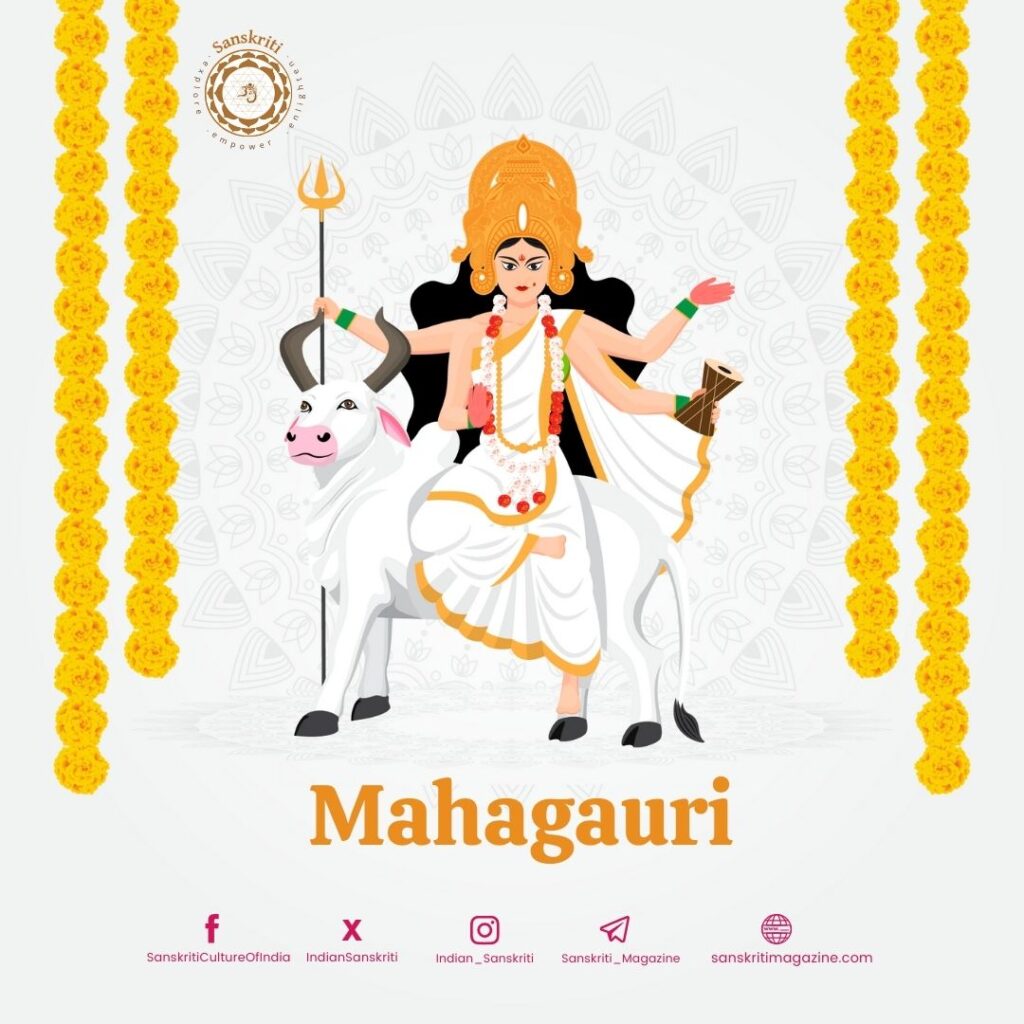
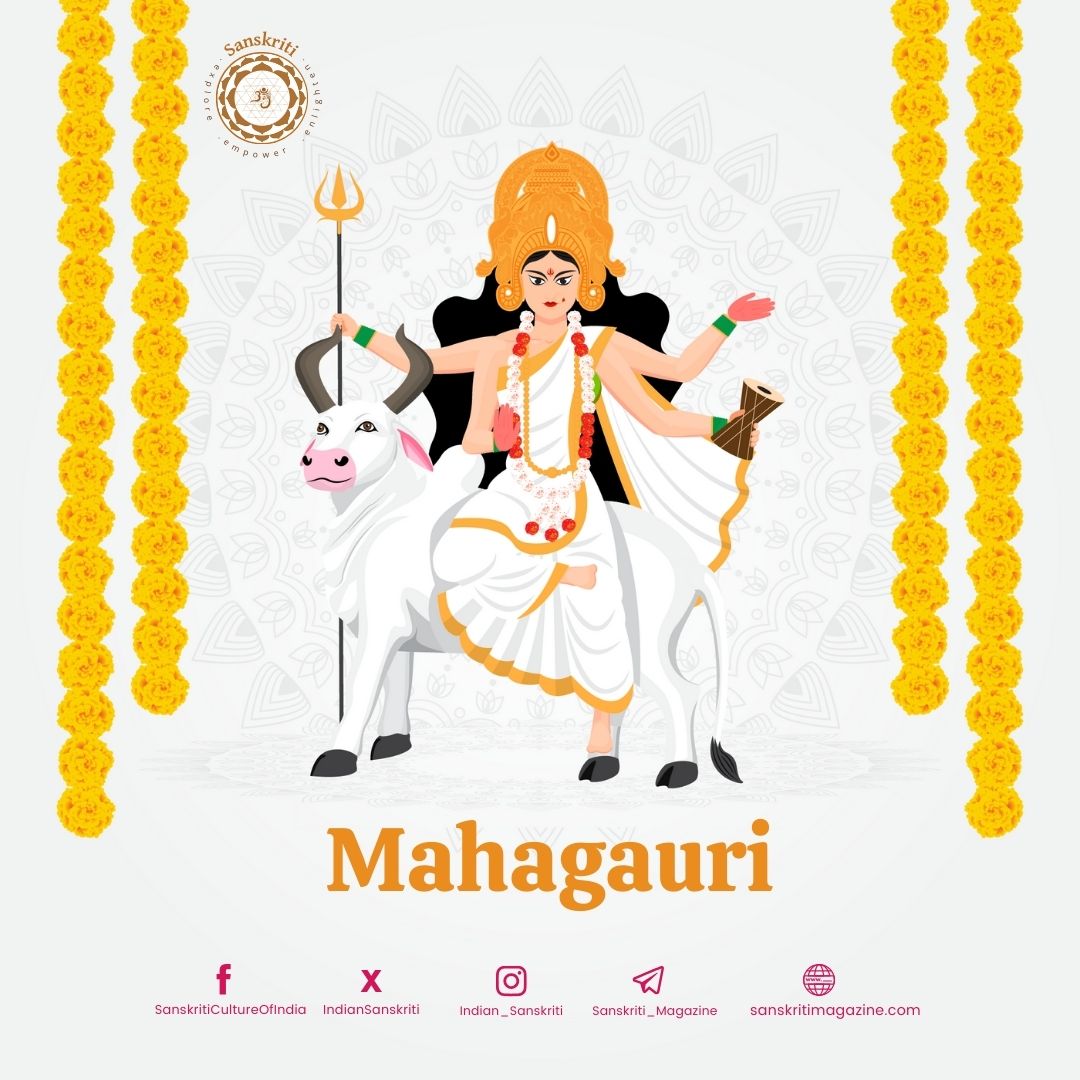
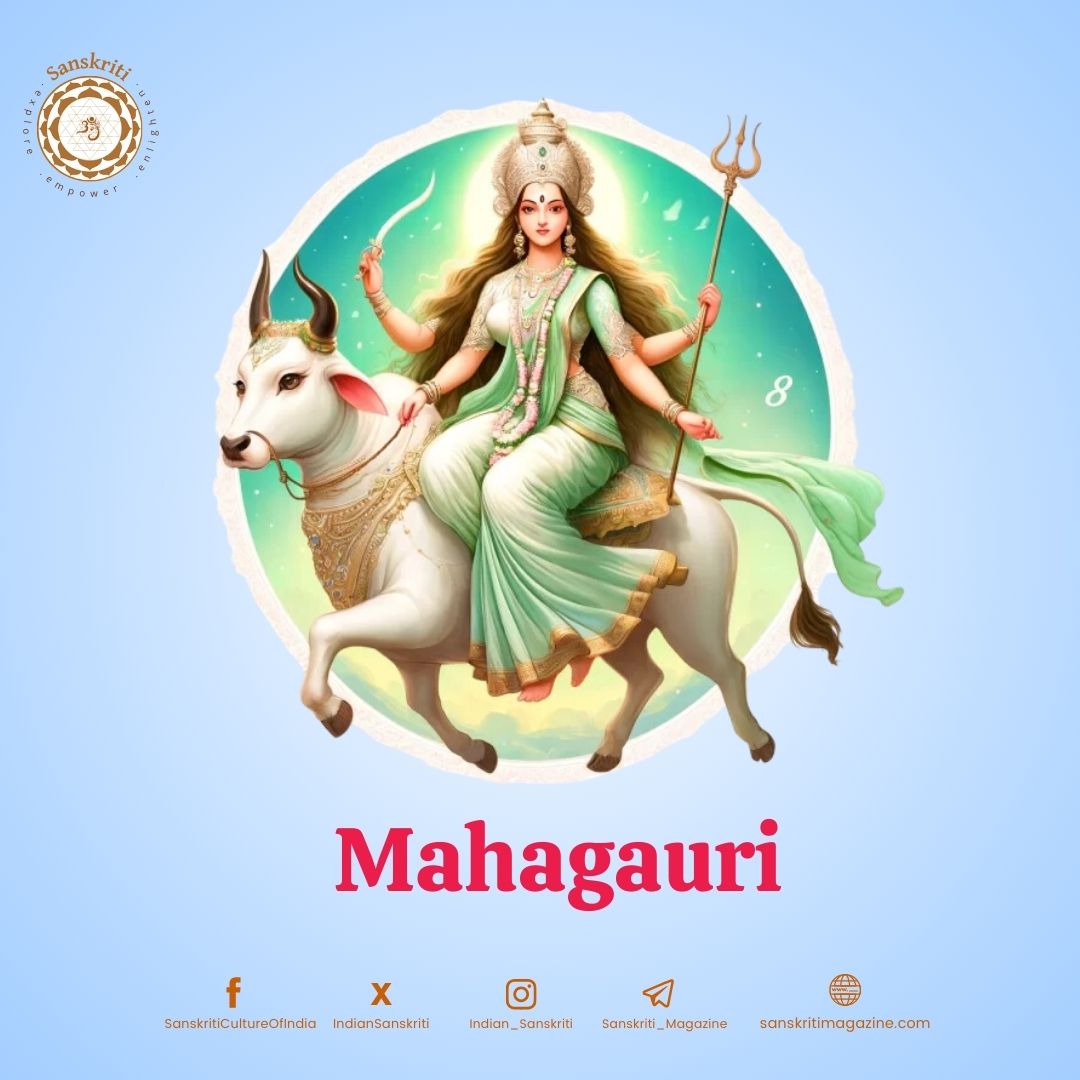
On the eighth day of Navratri, devotees honor Goddess Mahagauri, the symbol of purity, peace, and serenity. Mahagauri is depicted with a fair complexion, riding a bull and holding a trident and a damru (small drum). She is a form of Goddess Parvati who, after undergoing severe penance, was blessed with eternal beauty and purity.

Significance of Day 8: Mahagauri represents the ability to forgive and cleanse all sins. Worshipping her helps devotees eliminate all negative energies and lead a peaceful, prosperous life. She is believed to fulfill all desires and is known for bestowing inner peace and clarity.

Spiritual Aspect: Mahagauri is associated with the Sahasrara Chakra, the Crown Chakra, which represents purity of thought and spiritual enlightenment. Worshipping her on this day helps in attaining spiritual growth and deep inner transformation.

Rituals of the Day:

  • Offerings: Devotees offer white flowers, coconut, and sweets to Goddess Mahagauri. White is a symbol of peace and cleanliness.
  • Fasting: Many devotees observe fasting, and prayers are offered seeking forgiveness and blessings for a life of purity and devotion.
  • Chanting and Meditation: Reciting the Mahagauri mantra and meditating on her form helps in attaining inner peace and enlightenment.

Color of the Day: Peacock Green The color for Day 8 is Peacock Green, symbolizing compassion, tranquility, and spiritual growth. Wearing this color helps devotees connect with the peaceful and compassionate energies of Mahagauri.

Mantra to Chant: “Om Devi Mahagauryai Namah”
Chanting this mantra invokes the blessings of Goddess Mahagauri, helping devotees achieve purity and wisdom.

Prasad of the Day: Coconuts and sweets like halwa are offered as prasad on this day, symbolizing purity and devotion.

Story of Goddess Mahagauri: Mahagauri, a form of Parvati, underwent intense penance to unite with Lord Shiva. After years of meditation and penance, her complexion darkened due to the heat and austerity. Pleased with her devotion, Lord Shiva bathed her in the holy waters of the Ganges, restoring her beauty and giving her the name Mahagauri, meaning “extremely fair.”

Devotees’ Practices: Devotees offer prayers and chant hymns to seek forgiveness for their past actions and receive the blessings of Goddess Mahagauri for a peaceful and prosperous life. Many homes are decorated with white flowers, symbolizing the purity and tranquility associated with her.

Day 8 of Navratri is a day of purification and serenity, as Goddess Mahagauri embodies the peaceful and forgiving aspect of the Divine Mother. Let us invoke her blessings to cleanse our minds and souls, leading us to a life filled with inner peace and spiritual growth.

Share this with your family and friends to spread the purity and blessings of Maa Mahagauri. #MaaMahagauri #NavratriBlessings #SanskritiCulture
You may also like

Search the website

Like us on Facebook

Get daily updates via Email

Enter your email address:

Recent Posts

Yogini Ekadashi 2026 — The Yaksha Who Missed the Morning Flowers, and the Ekadashi That Undid His Curse

On Friday, July 10, 2026, the rare Krishna Paksha Ekadashi of Nija Ashadha arrives. The Padma Purana tells the story of Hemamali — the Yaksha gardener of Bhagavan Kubera in Alaka, whose single morning of distraction with his wife Vishalakshi cost him his form, his wife, and his celestial city. Cursed to wander the earth of Bharata as a leper for a long time, he was at last shown the way back by Sage Markandeya — a single sincere keeping of Yogini Ekadashi.

Jamai Shashthi 2026 — The Story of Maa Shashthi, the Cat, and the Wife Who Was Forgiven

Jamai Shashthi 2026 — The Story of Maa Shashthi, the Cat, and the Wife Who Was Forgiven

On Saturday, June 20, 2026, Bengali households across Bharata will welcome their married daughters and sons-in-law home for the legendary jamai-aador feast and perform the Shashthi Vrata. But behind the warmth lies a story most Bengalis know by heart and most non-Bengalis have never heard — the wife who stole the hilsa, blamed the cat, lost six sons to Maa Shashthi’s wrath, and was finally forgiven. The Vrat Katha, the vidhi, the mantras, and the deeper teaching.

Vat Purnima 2026 — The Wife Who Argued Yama Into Returning Her Husband’s Life

On Monday, June 29, 2026, women across Maharashtra, Gujarat, and southern Bharata will tie red thread around banyan trees and hear the story of Savitri — the wife who walked behind Yamaraja Himself when He came for her husband, and out-argued the Lord of Dharma into returning Satyavan’s life. The Mahabharata’s Pativrata Mahatmya Parva, the vrat vidhi, and why the banyan witnessed everything.

Nija Jyeshtha 2026 — The Real Jyeshtha Begins, and the Calendar Resumes

Nija Jyeshtha 2026 — The Real Jyeshtha Begins, and the Calendar Resumes

With Adhik Maas now closed on the Somvati Amavasya of June 15, the long-postponed festivals of Jyeshtha return — Vat Purnima (June 29, the Savitri-Yamaraja katha), Jamai Shashthi (June 20, the Bengali festival of Maa Shashthi), Sankashti Chaturthi (June 28), Yogini Ekadashi (July 10), and Devshayani Ekadashi (July 16, opening the four-month Chaturmas of Bhagavan Vishnu’s yoga-nidra). A guide to what the next four weeks hold and what the household that kept Purushottam Maas now carries forward.

The Closing of Purushottam Maas 2026 — Adhik Amavasya and the Sealing of the Month-Long Vrat

On Monday, June 15, 2026 — a rare Somvati Amavasya — the intercalary month that bears Bhagavan Vishnu’s own name comes to its close. The Acharyas teach that a vrat is not measured by its duration but by its closing. Here are the Padma Purana’s instructions for sealing the month-long Purushottam Maas vrat: the morning snan, the closing puja with the Vishnu Sahasranama, the day of dana, the Somvati Amavasya gift, and the final sarva-arpana — the offering of all merit at the feet of the Lord.

css.php