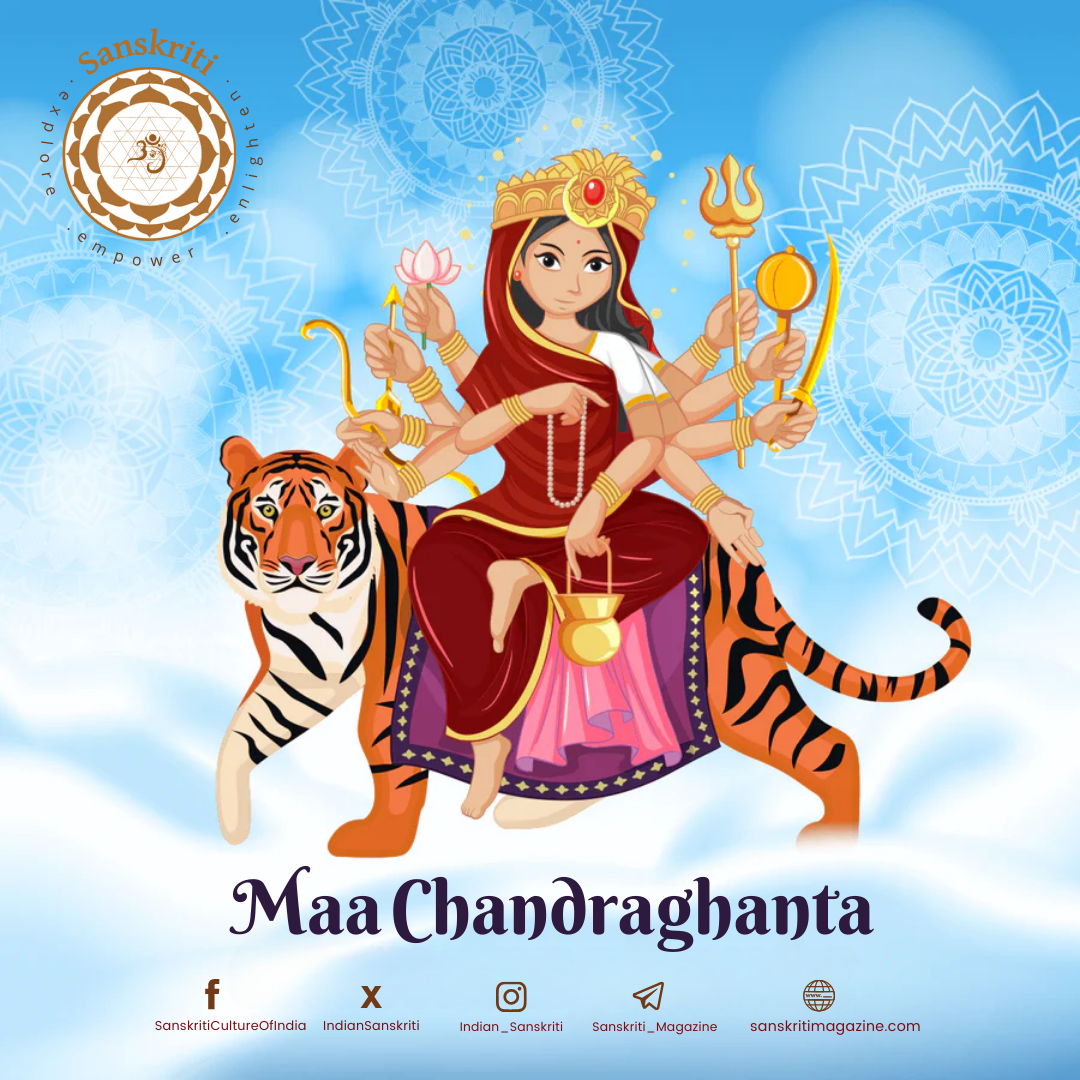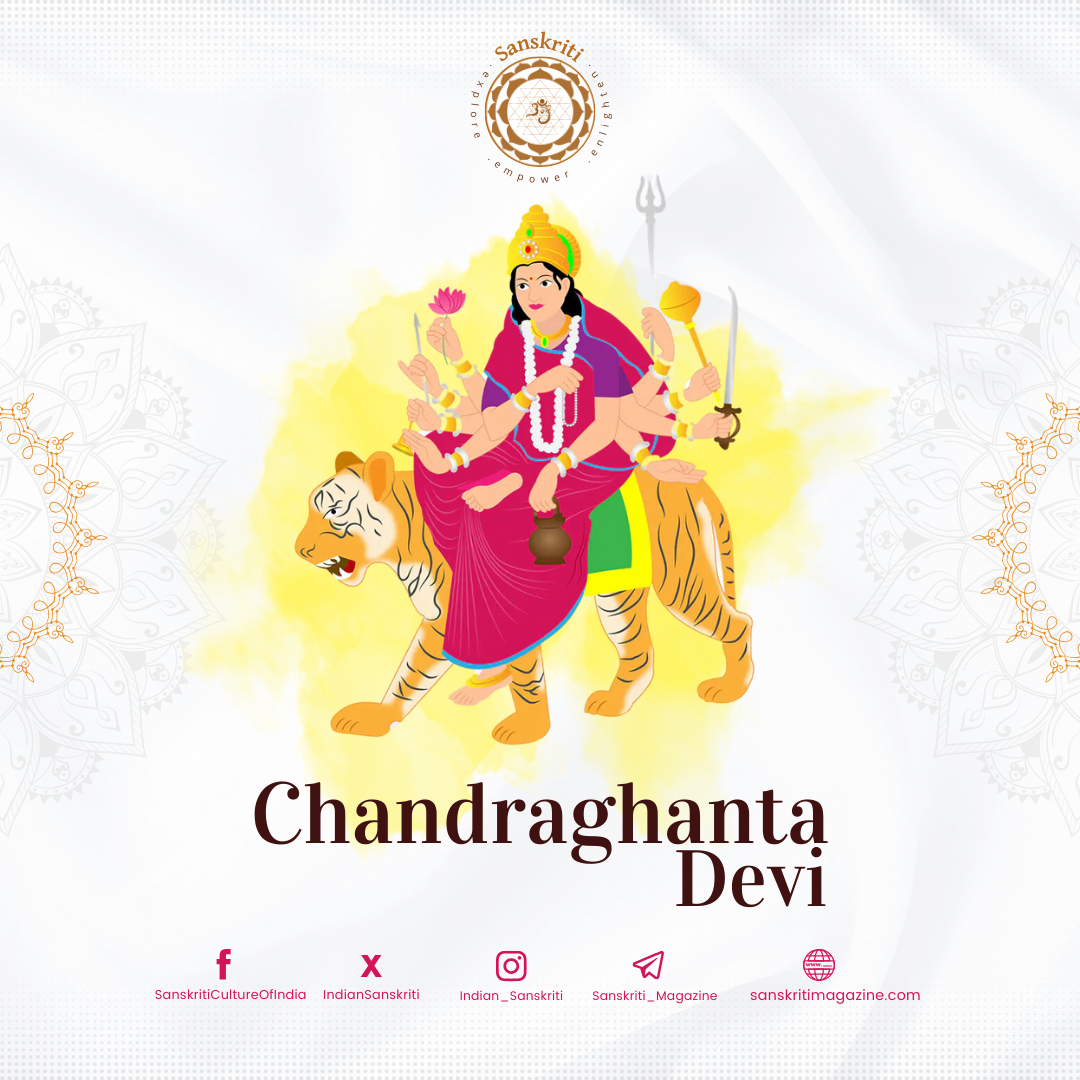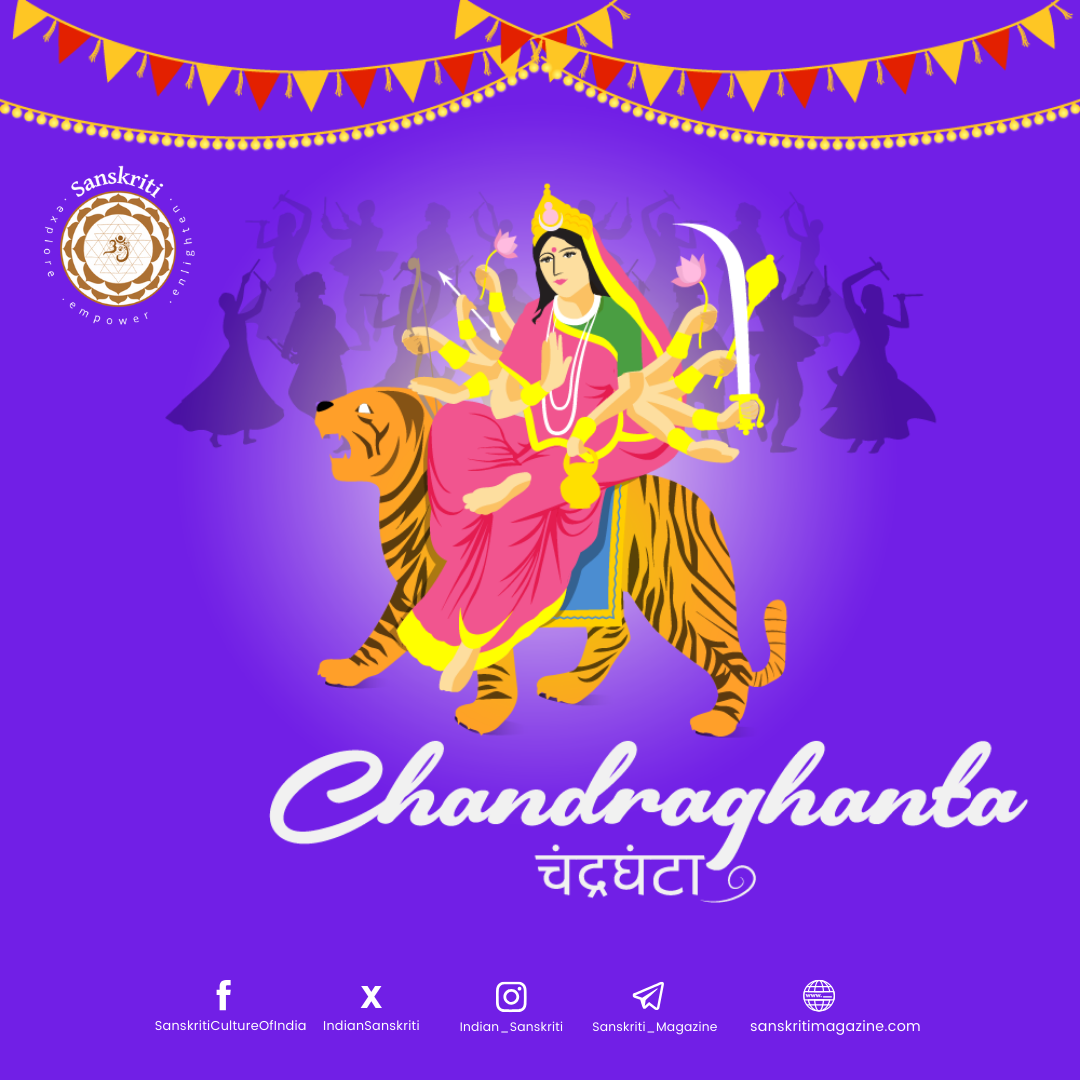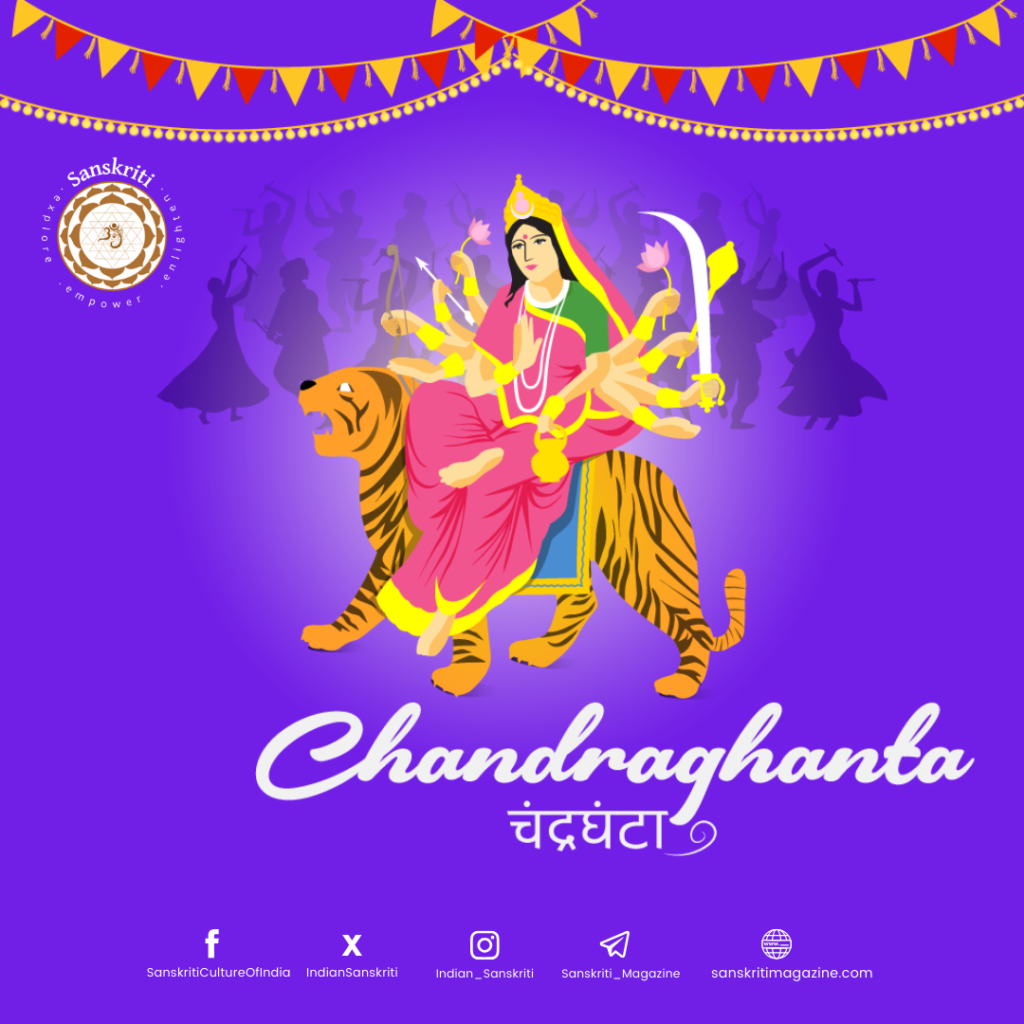
Navratri Day 3 celebrates Goddess Chandraghanta, the third form of Maa Durga. Chandraghanta represents courage, grace, and protection, symbolizing the warrior form of the Goddess. She is depicted with a crescent moon on her forehead, giving her the name Chandraghanta. Her aura radiates peace, while her third eye is ever-ready to unleash divine wrath against evil.
Significance of Day 3:
Goddess Chandraghanta symbolizes the divine power that protects against negativity and instills confidence in devotees. She is the manifestation of supreme bravery and power. Her blessing brings strength, courage, and an unwavering determination to face life’s challenges. The sound of her ghanta (bell) creates a celestial atmosphere, cleansing negative energies and bestowing harmony and positivity.
Chandraghanta is a significant symbol for devotees, representing the balance between internal peace and the fierce courage needed to confront and overcome obstacles in life. She embodies the divine energy that destroys ignorance and bestows peace and prosperity.
Spiritual Aspect:
Goddess Chandraghanta is associated with the “Manipura Chakra” or Solar Plexus Chakra, which is the seat of power and self-confidence. Worshipping her on this day helps to awaken this chakra, bringing clarity, strength, and fearlessness.
Rituals of the Day:
- Devotees wake early, bathe, and perform Kalash Sthapana, invoking the divine presence of Goddess Durga.
- Goddess Chandraghanta is offered white-colored flowers, milk, sweets, and dishes prepared with kheer, symbolizing purity.
- Devotees also practice fasting to purify themselves and to increase their connection with the divine.
- Durga Saptashati and other sacred texts are recited to praise the Goddess and invoke her blessings.
- On this day, devotees worship the Goddess by meditating on her form, which helps in enhancing one’s inner strength and focus.
Color of the Day: Royal Blue
The color for Day 3 of Navratri is Royal Blue, representing elegance and grace. Wearing this color is believed to bring tranquility and align with the divine energy of Goddess Chandraghanta. Royal Blue symbolizes the powerful aura and commanding nature of the Goddess, helping devotees resonate with her celestial energies.
Mantra to Chant:
“Om Devi Chandraghantayai Namah”
Chanting this mantra helps evoke courage and blessings from the Goddess, providing spiritual power to overcome obstacles.
Prasad of the Day:
- Offerings made to Goddess Chandraghanta include kheer or milk-based dishes, signifying purity and peace.
- Sweets like peda are distributed as prasad among family and friends.
Story of Goddess Chandraghanta:
Goddess Chandraghanta is an embodiment of strength and valor. In her previous form as Parvati, she married Lord Shiva. On her forehead, she bears the half-moon, which looks like a bell, thus earning her the name Chandraghanta. After her marriage, she took this fierce form to protect her devotees and to show her readiness for battle against evil forces. Despite her ferocity, she is ever-compassionate towards her devotees, always ready to protect them from harm.
Devotees’ Practices:
On the third day of Navratri, devotees focus on cultivating inner strength and eliminating their fears. Temples organize bhajans and kirtans in honor of the Goddess, invoking her protection and blessings. The resonance of her bell is believed to cleanse all negative vibrations, replacing them with positivity and light.
Navratri Day 3 is about invoking the courage and grace embodied by Goddess Chandraghanta. As devotees continue their journey through Navratri, they learn to balance inner tranquility with fierce determination, preparing themselves for the battles of life. Let us seek her blessings to overcome our fears and embrace the inner warrior within us.
Stay tuned for Day 4 of Navratri as we honor Goddess Kushmanda, the creator of the universe and bringer of light and energy.
Share this with your family and friends to spread the festive joy. #MaaChandraghanta #NavratriVibes #SanskritiCulture