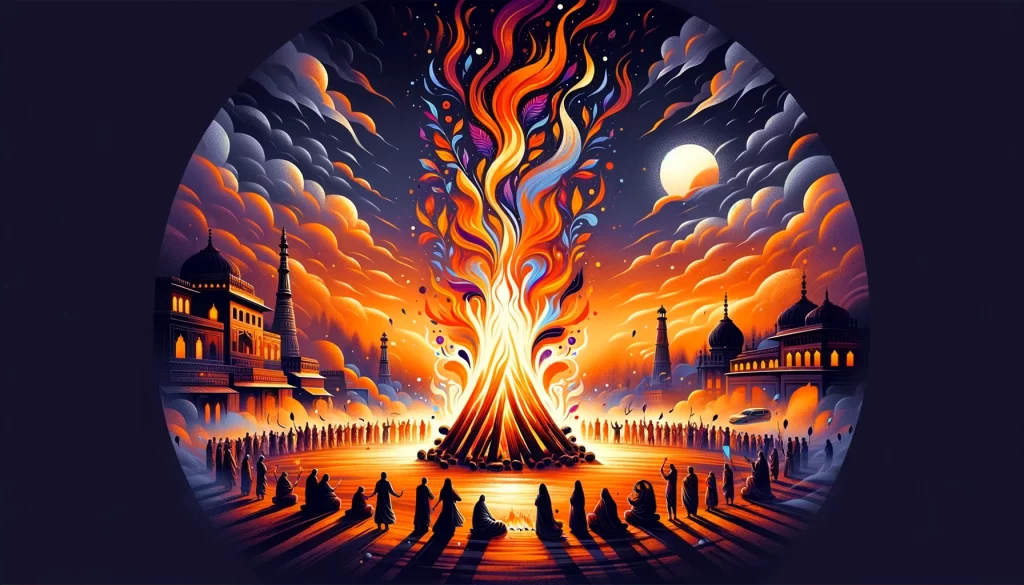
The Holika bonfire, lit on the eve of Holi, is more than just a prelude to the festival of colors. It holds profound significance, embodying the themes of purification, renewal, and the triumph of good over evil. This tradition, deeply rooted in the legend of Prahlad and Holika, serves as a powerful reminder of the eternal struggle between righteousness and malevolence, and the ultimate victory of faith and purity.
The Historical Essence of Holika Dahan
The lighting of the Holika bonfire commemorates the miraculous survival of Prahlad, a devout follower of Lord Vishnu, from the pyre that was meant to consume him. Instead, it was Holika, armed with a boon that she believed would protect her from fire, who perished, unable to harm Prahlad. This event symbolizes the destruction of evil by the fire of devotion and righteousness.
The ritual of Holika Dahan is a collective expression of this symbolism. Communities gather around a large bonfire to perform rituals, pray, and sing, invoking the power of the fire to purify, protect, and renew. It is a moment of reflection on the moral and spiritual battles within and around us, and a reaffirmation of faith and good values.
Purification and Renewal
The fire of Holika Dahan is symbolic of the cleansing fire that burns away impurities. Just as the fire consumes the physical effigy of Holika, it is believed to burn away the inner demons of ego, hatred, envy, and malice. This purification process is not just a physical act but a deeply spiritual journey towards renewal and rebirth. As the bonfire illuminates the night, it represents the light of knowledge dispelling the darkness of ignorance, guiding the soul towards enlightenment and unity with the divine.
The Triumph of Good Over Evil
The Holika bonfire serves as a yearly reminder of the power of good over evil, of truth over falsehood. It celebrates the inherent strength within all to overcome trials and tribulations with faith and perseverance. This aspect of Holi encourages individuals to look within, identify their own shortcomings, and strive for a better, purer self. It is a time to forgive and forget, to let go of past grievances and embrace a future of peace and harmony.
Celebrating Unity and New Beginnings
Finally, Holika Dahan is a time for community, for coming together around the fire in a spirit of joy and brotherhood. It marks the onset of spring, a season of new beginnings, offering a chance to start afresh with a clean heart and a renewed spirit. The bonfire night is thus not only a commemoration of a historical event but a living tradition that reinforces the values of unity, love, and renewal among all who participate in its warmth and light.
As we gather around the Holika bonfire, let us imbibe its lessons, carrying its warmth and light into our lives. Let it remind us of the eternal cycle of life, death, and rebirth, and the ever-present possibility of transformation and renewal. In this spirit, the celebration of Holi becomes a deeply meaningful, enriching experience that goes beyond the play of colors to touch the very soul of humanity.