IndianSanskriti

Mahashivratri: Celebrating Lord Shiva’s Role in Indian History and Religion

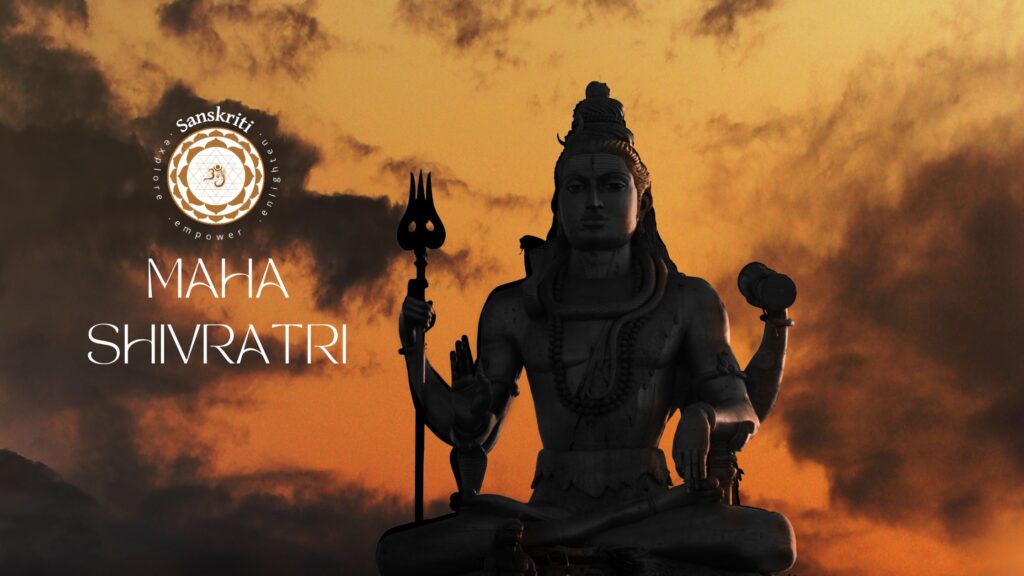
Mahashivratri, or the “Great Night of Shiva,” is one of the most important festivals in Hinduism. It is celebrated annually on the 14th night of the new moon in the month of Phalguna (February/March), and is dedicated to Lord Shiva, one of the three main deities in Hinduism.

The origins of Mahashivratri can be traced back to ancient Indian history, which tells the story of how Lord Shiva saved the world from destruction by drinking the poison that emerged during the churning of the ocean by the gods and demons. The poison was so potent that it could have destroyed the entire world, but Lord Shiva consumed it and held it in his throat, which turned blue and earned him the name “Neelkanth” (blue-throated). In gratitude for his sacrifice, devotees began to celebrate Mahashivratri as a way to honor Lord Shiva and pray for his blessings.

Today, Mahashivratri is celebrated in many different ways throughout India and around the world. Devotees often fast and abstain from food and water throughout the day, and spend the night in prayer and meditation. They also visit Shiva temples and offer flowers, fruits, and other offerings to the deity.

The festival is especially significant for those who follow the Shaivism tradition, which focuses on the worship of Lord Shiva. Shaivites believe that on Mahashivratri, the energy of Lord Shiva is particularly strong, and that by meditating on him and offering prayers and offerings, they can receive his blessings and guidance.

Overall, Mahashivratri is a time to honor Lord Shiva and celebrate his role in Indian history and religion. It is a time for devotees to come together in prayer and meditation, and to seek the blessings and guidance of the Great Lord Shiva.
You may also like

Search the website

Like us on Facebook

Get daily updates via Email

Enter your email address:

Recent Posts

Padmini Ekadashi 2026 — The Ekadashi Even the Devas Descend to Keep

Padmini Ekadashi 2026 — The Ekadashi Even the Devas Descend to Keep

The rarest Ekadashi of the entire Hindu calendar is three days away. The Padma Purana preserves a conversation between Bhagavan Krishna and Yudhishthira about a single Ekadashi the great Rishis spend lifetimes waiting for — Padmini. The Vrat Katha of Queen Padmini of Mahishmati, the lotus teaching, and why May 27, 2026 is the morning Vaishnavas across Bharata are preparing for.

Varada Chaturthi 2026 — The Rare Ganesha Day of Purushottam Maas

Varada Chaturthi 2026 — The Rare Ganesha Day of Purushottam Maas

Once every 2.5–3 years — when the rare 13th month of Adhika Maas opens — a thirteenth Vinayaka Chaturthi appears. The Mudgala Purana calls it Varada Chaturthi, the “boon-giving” Chaturthi, and holds it as the most fruit-bearing Ganesha day of the entire calendar. Today, Wednesday May 20, 2026, is that day.

Padmini Ekadashi 2026 — The Rare Ekadashi That Comes Only in Purushottam Maas

Padmini Ekadashi 2026 — The Rare Ekadashi That Comes Only in Purushottam Maas

Padmini Ekadashi 2026 falls on Wednesday, May 27 — the Shukla Paksha Ekadashi of Adhika Maas, the rarest Ekadashi in the entire Hindu calendar (it appears only every 2.5–3 years). The Padma Purana conversation between Bhagavan Krishna and Yudhishthira, the Vrat Katha of Queen Padmini, complete vrat vidhi with jagrana, mantras, and the lotus symbolism that gives the Ekadashi its name.

Ganga Dussehra 2026 — The Day Maa Ganga Came Down to Bhagiratha

Ganga Dussehra falls on Monday, May 25, 2026 — commemorating the day Maa Ganga descended from Vaikuntha to the earth through the millennia-long tapasya of King Bhagiratha. The full account from the Valmiki Ramayana, snan vidhi, dana traditions, mantras, and the teaching of sustained sincerity.

Adhik Jyeshtha Maas 2026 — The Hidden Month That Belongs to Lord Vishnu

Once every 2.5–3 years, the Hindu calendar opens a quiet thirteenth chamber — the intercalary month Lord Vishnu took for His own. A Puranic look at Adhik Jyeshtha Maas 2026 (May 2–31), the Padma Purana account of how it became Purushottam Maas, and a complete householder’s guide for its closing days.

css.php