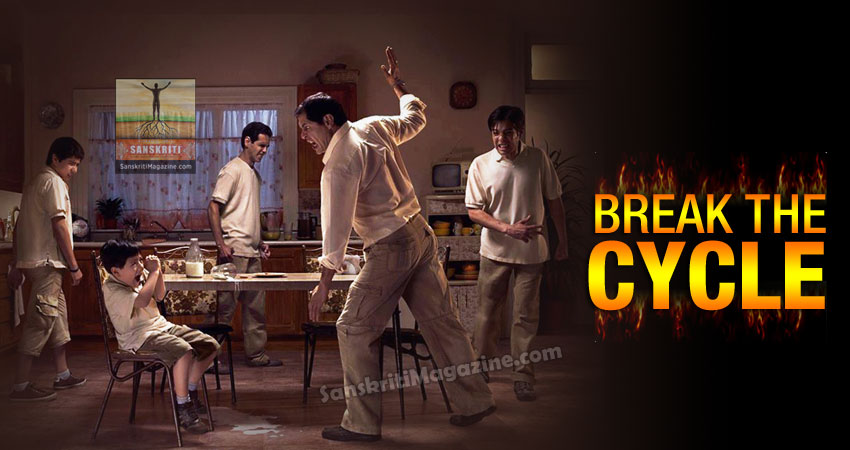
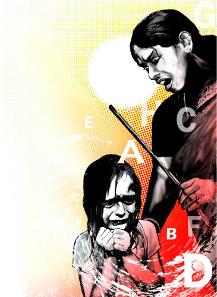
 1. Hitting children teaches them to become hitters themselves. Extensive research data is now available to support a direct correlation between corporal punishment in childhood and aggressive or violent behavior in the teenage and adult years. Virtually all of the most dangerous criminals were regularly threatened and punished in childhood. It is nature’s plan that children learn attitudes and behaviors through observation and imitation of their parents’ actions, for good or ill. Thus it is the responsibility of parents to set an example of empathy and wisdom.
2. In many cases of so-called “bad behavior”, the child is simply responding in the only way he can, given his age and experience, to neglect of basic needs. Among these needs are: proper sleep and nutrition, treatment of hidden allergy, fresh air, exercise, and sufficient freedom to explore the world around him. But his greatest need is for his parents’ undivided attention. In these busy times, few children receive sufficient time and attention from their parents, who are often too distracted by their own problems and worries to treat their children with patience and empathy. It is surely wrong and unfair to punish a child for responding in a natural way to having important needs neglected. For this reason, punishment is not only ineffective in the long run, it is also clearly unjust.
3. Punishment distracts the child from learning how to resolve conflict in an effective and humane way. As the educator John Holt wrote, “When we make a child afraid, we stop learning dead in its tracks.” A punished child becomes preoccupied with feelings of anger and fantasies of revenge, and is thus deprived of the opportunity to learn more effective methods of solving the problem at hand. Thus, a punished child learns little about how to handle or prevent similar situations in the future.
4. The phrase “Spare the rod and spoil the child” is not from the Bible but from Samuel Butler’s “Hudibras”, a 17th Century satirical poem. The poem, like his novel, The Way of All Flesh, was written to expose and denounce violence against children. Ironically, this phrase is now used to justify corporal punishment and other punitive actions against children.
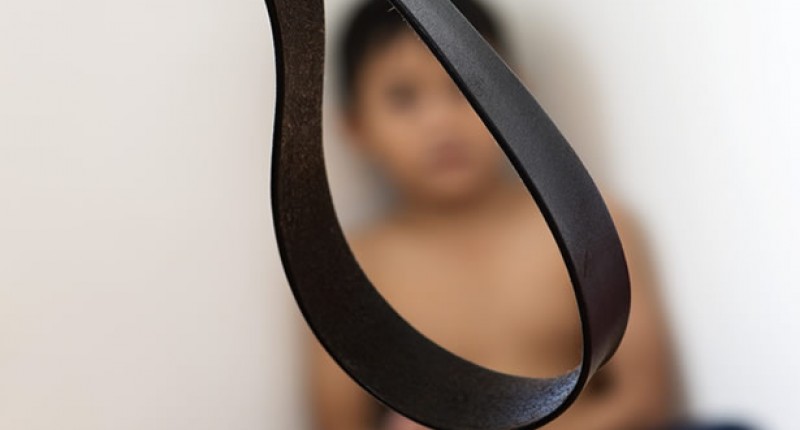
5. Punishment interferes with the bond between parent and child, as it is not human nature to feel loving toward someone who hurts us. The true spirit of cooperation which every parent desires can arise only through a strong bond based on mutual feelings of love and respect. Punishment, even when it appears to work, can produce only superficially good behavior based on fear, which can only take place until the child is old enough to resist. In contrast, cooperation based on respect will last permanently, bringing many years of mutual happiness as the child and parent grow older.
6. Many parents never learned in their own childhood that there are positive ways of relating to children. When punishment does not accomplish the desired goals, and if the parent is unaware of alternative methods, punishment can escalate to more frequent and dangerous actions against the child.
7. Anger and frustration which cannot be safely expressed by a child become stored inside; angry teenagers do not fall from the sky. Anger that has been accumulating for many years can come as a shock to parents whose child now feels strong enough to express this rage. Punishment may appear to produce “good behavior” in the early years, but always at a high price, paid by parents and by society as a whole, as the child enters adolescence and early adulthood.
 8. Spanking on the buttocks, an erogenous zone in childhood, can create in the child’s mind an association between pain and sexual pleasure, and lead to difficulties in adulthood. “Spanking wanted” ads in alternative newspapers attest to the sad consequences of this confusion of pain and pleasure. If a child receives little parental attention except when being punished, this will further merge the concepts of pain and pleasure in the child’s mind. A child in this situation will have little self-esteem, believing he deserves nothing better.
Even relatively moderate spanking can be physically dangerous. Blows to the lower end of the spinal column send shock waves along the length of the spine, and may injure the child. The prevalence of lower back pain among adults in our society may well have its origins in childhood punishment. Some children have become paralyzed through nerve damage from spanking, and some have died after mild paddlings, due to undiagnosed medical complications.
9. Physical punishment gives the dangerous and unfair message that “might makes right”, that it is permissible to hurt someone else, provided they are smaller and less powerful than you are. The child then concludes that it is permissible to mistreat younger or smaller children. When he becomes an adult, he can feel little compassion for those less fortunate than he is, and fears those who are more powerful. This will hinder the establishment of meaningful relationships so essential to an emotionally fulfilling life.
10. Because children learn through parental modeling, physical punishment gives the message that hitting is an appropriate way to express feelings and to solve problems. If a child does not observe a parent solving problems in a creative and humane way, it can be difficult for him to learn to do this himself. For this reason, unskilled parenting often continues into the next generation.
Gentle instruction, supported by a strong foundation of love and respect, is the only truly effective way to bring about commendable behavior based on strong inner values, instead of superficially “good” behavior based only on fear.
– by Jan Hunt