A very interesting read about Western assimilation of Eastern Philosophies and bantering of the same. PLEASE READ AND SHARE YOUR THOUGHTS…
“Only believe what you experience on yourself”, said the Buddha 2500 years ago. Indian philosophy and spiritual thought was thus always very down to earth and attempted to define scientifically and logically the different means and ways to reach the goal: “If you do this, this is what will happen; if you breathe in this way, this is what may result; if you practice this particular posture, these are the results you will gain”…
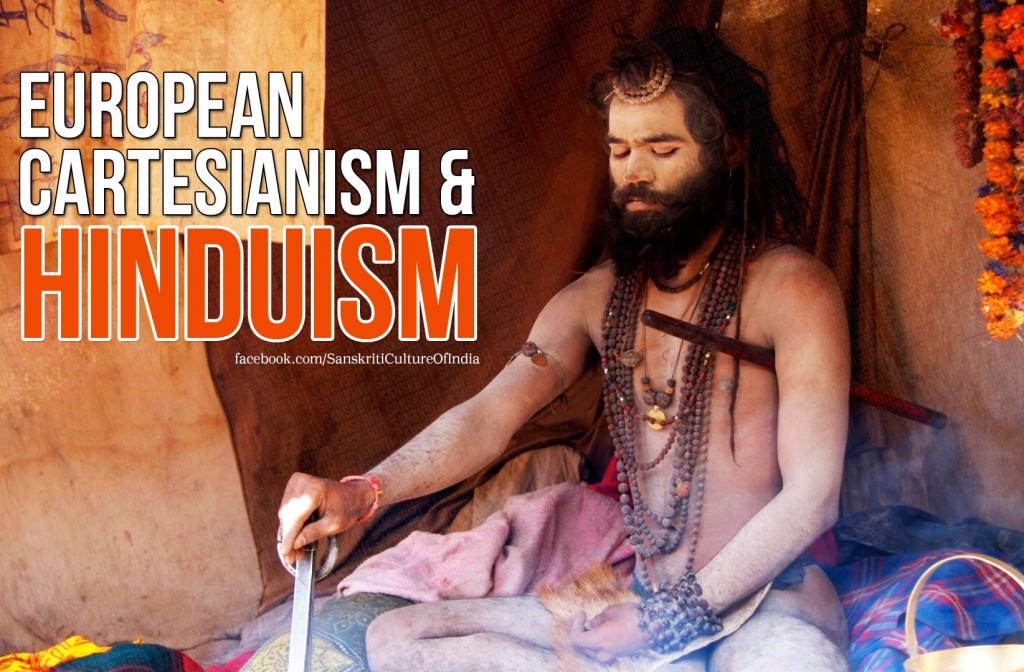
Yet the West is today wary of anything which has a Hindu flavor and is quick to label as “sects” everything that does not spring from the larger conventional family of Christianity. It is true that gurus teaching in the West can be a mixed lot, and some of them might have brought a bad name to Hinduism, but the ordinary Indian meditating every morning, or doing his pujas, practicing his asanas, chanting bhajans, or doing pranayama, does not feel he is doing anything out of the ordinary. There is no sectarism here, no fake mysticism, no pagan obscure rites.
To understand India and Hinduism, one then has to go beyond the clichés of paganism and the accusations of sects that have been applied to Hindus, particularly after the coming of Christian missionaries to India who had a vested motive to show Hinduism in a bad light. It is true that Hindus adore Gods made out of stone or cast in brass. But is it less rational or Cartesian to think, as the Catholics do, that Mary conceived a child while remaining a virgin, or that Christ came back from the dead and ascended physically to heaven (and not in his subtle body, which is more likely)?
Muslim invaders were also immensely shocked by this worshipping of images and gods and set upon destroying hundreds of thousand of temples and idols. But Alexandra David-Neel, the remarkable French explorer, writer and mystic, had noticed that the role that Gods play in India is unique “because the images or statues are like a battery which is charged over the ages by the adoration of the devotees, who in turn can draw energy, inspiration, or grace from these statues”.
She goes on: “As a battery, the energy in the statue will not get discharged, as long as the faithful continue worship it by their cult and adoration”. And she concludes: “Gods are thus created by the energy given out by the faith in their existence”.
At any rate, Hindus are great rationalists: they have discovered for instance that the sound Aum, “Amen” for the Christians, possesses very strong vibrations which take you to the deepest level and that the Creator is the Original Verb: Shabda Brahman; that the ragas, these few notes of music on which one can improve indefinitely, have also a strong inner power; or that the breath is the physical conduit to the Divine, which they have codified into pranayama, the Indian science of breathing. Sri Sri Ravi Shankar has today shown that breath has no religion and can be practiced by anybody.
But nothing, without any doubt, is more scientific, more logical, more Cartesian, more noble and prophetic than the Vedas, the most ancient and sacred Scriptures of Hinduism, which are nearly totally ignored in the West and misunderstood in India.
~ By Francois Gautier, Writer and Journalist