IndianSanskriti
holi - festival of colours

Holi – festival of colours

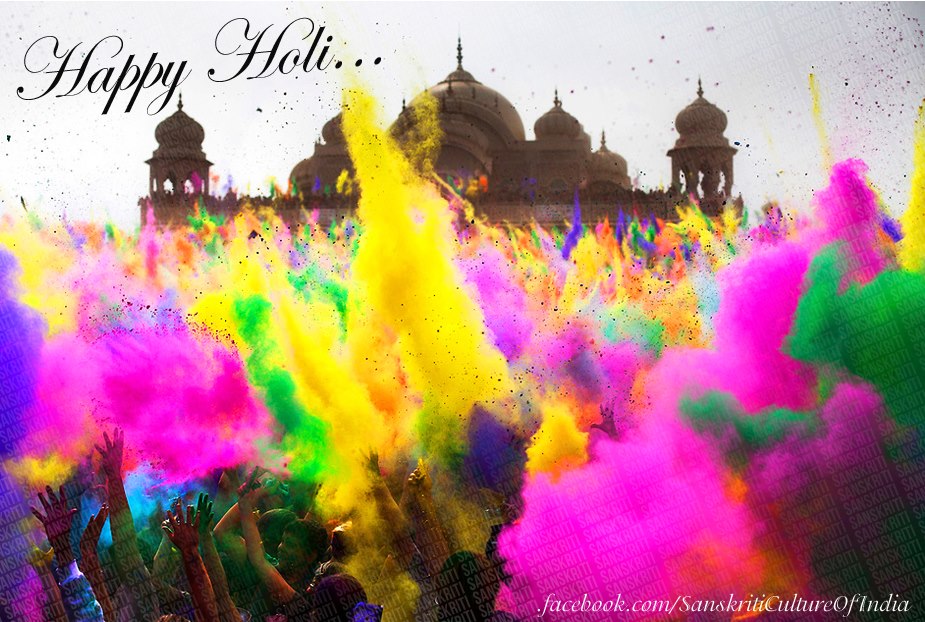
The highlight of any festival is celebration, and in the case of Holi, the celebration includes rejoicing in the complete annihilation of the self-ego — even if only for a brief period. Hence, Holi is synonymous with fun, frolic and freedom as you are completely liberated from any kind of inhibition or notion that might prevent you from joyful participation. You are now identity-less. Any hierarchy, class or gender consciousness fly out of the window with the smearing of colours even obliterating the need to recognise another through face or costume, for instance.

Holi is fun-filled revelry of the highest order, which is why routinely, Krishna and the gopis are shown playing Holi with ecstasy, squirting colour on each other, playing hide-and-seek, even taking liberties in the confidence that nothing will be taken amiss. The common denominator is colour that erases all signs of division. There’s no pulling of rank and file, and hence this was one great chance for the privileged and the less privileged to truly come together on an occasion of pure rejoicement. And a chance for the lower self to merge with the higher Self, the Atman-Paramatman Milan, Holi Milan.

In the Indic era of kings, queens and kingdoms, Holi revelry was an intrinsic part of the raja-praja milan (King-citizens get-together). The royal family organised festivities where everyone could participate, sing songs, eat, drink and throw colours; even tease and crack jokes — whether or not under the influence of bhang (weed drink), the mild herbal intoxicant added to sweets and thirst quenchers, loosening you up.
You may also like

Search the website

Like us on Facebook

Get daily updates via Email

Enter your email address:

Recent Posts

Adi Shankaracharya Jayanti 2026 — Advaita Vedanta, Om symbol, and four Amnaya Peethas

Adi Shankaracharya — The Monk Who Reunited Bharata

Shankaracharya Jayanti 2026 — the 1238th birth anniversary of Adi Shankaracharya. His extraordinary life, the Digvijaya, the debate with Mandana Mishra, Advaita Vedanta, the four Amnaya Peethas, and his timeless literary legacy.

Akshaya Tritiya 2026 — royal purple hero banner with Akshaya Patra vessel and Devanagari text

Akshaya Tritiya 2026 — The Day That Never Diminishes

Akshaya Tritiya (April 19, 2026) is one of the most auspicious days in the Vedic calendar — when any act of dharma, dana, or japa yields imperishable merit. Discover the five sacred Puranic events, complete puja vidhi, timings, mantras, and the deeper spiritual teaching beyond gold-buying.

Baisakhi 2026 — Mesha Sankranti Hindu Solar New Year hero banner with rising sun, Om symbol and wheat harvest

Baisakhi 2026 — Harvest, Hope, and the Hindu Solar New Year

Baisakhi 2026 falls on Tuesday, April 14 — the day Bhagavan Surya enters Mesha Rashi at 9:39 AM, marking the Hindu Solar New Year. Discover the sacred science of Mesha Sankranti, the Punya Kaal rituals, and how this one cosmic moment is celebrated across Bharata as Vishu, Puthandu, Pohela Boishakh, Bohag Bihu, and Pana Sankranti.

Varuthini Ekadashi 2026 — sacred vrat guide hero banner with Vishnu Chakra mandala

Varuthini Ekadashi 2026 — The Sacred Vrat That Shields from Sin

Varuthini Ekadashi (April 13, 2026) is one of the most powerful Ekadashi vrats — dedicated to Lord Vamana, it dissolves lifetimes of karmic burden and shields the devoted soul with Bhagavan Vishnu’s protective grace. Complete vrat vidhi, timings, mantra, and the sacred Vrat Katha from the Bhavishya Purana.

css.php