A nice story of Adi Shankaracharya teaching his students about true freedom
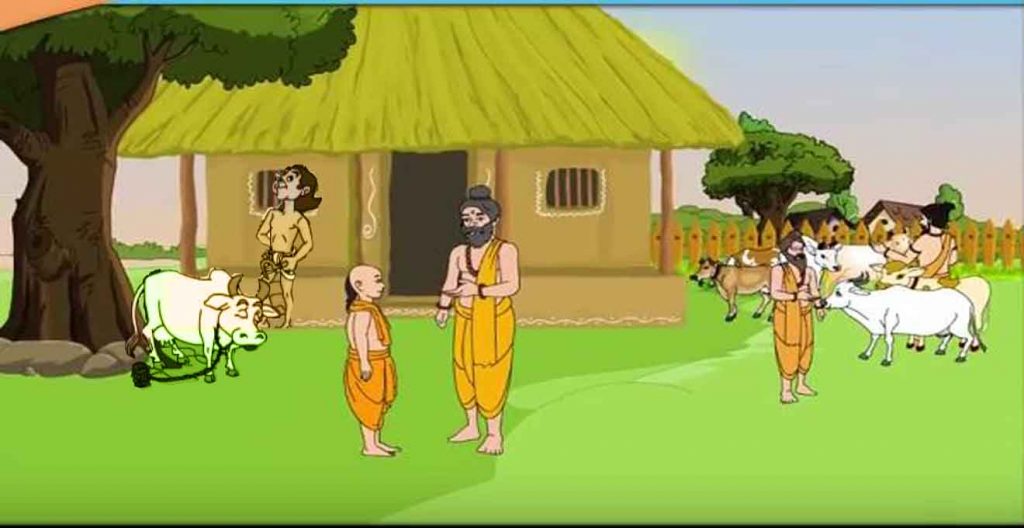
Adi Sankara was walking through the market place with his disciples.
They saw a man dragging a cow by a rope.
Sankara told the man to wait and asked his disciples to surround them.
“I am going to teach you something” and continued…
“ Tell me who is bound to whom? Is the cow bound to this man or the man is bound to the cow?”
The disciples said without hesitation “Of course the cow is bound to the man!. The man is the master. He is holding the rope. The cow has to follow him wherever he goes. The man is the master and the cow is the slave.”
“Now watch this”, said Sankara and took a pair of scissors from his bag and cut the rope.
The cow ran away from the master and the man ran after his cow. “Look, what is happening”, said Sankara
“Do you see who the Master is? The cow is not at all interested in this man. The cow in fact, is trying to escape from this man.
This is the case with our MIND.
Like the cow, all the non-sense that we carry inside is not interested in us. WE ARE INTERESTED IN IT, we are keeping it together somehow or the other. We are going crazy trying to keep it all together under our control.
The moment we lose interest in all the garbage filled in our head, and the moment we understand the futility of it, it will start to disappear. Like the cow, it will escape and disappear.”
Feeling Free and Relaxed is a Choice!This is real freedom🙏.