IndianSanskriti
Saharsa Linga of Karnataka and Kbal Spean of Cambodia

Sahasra Linga of Karnataka and Kbal Spean of Cambodia

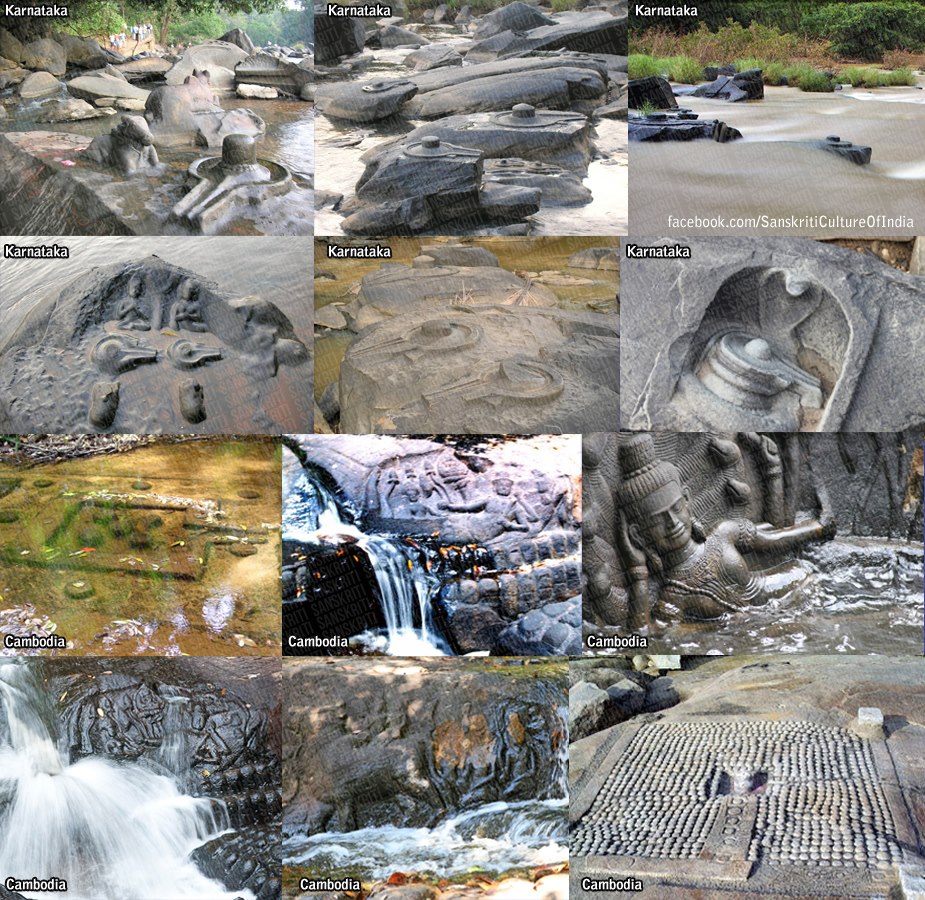
There are quite a few places in the world that are not exposed to tourists much, whether it is due to lack of good transportation facilities, easy accessibility or bad roads. One such spot is Sahasra Linga, located in North Canara, near Sirsi, Karnataka in the middle of the forests of western ghats in the river Shalmala. The name literally means place of 1000 Lingas. During Shivratri, thousands of pilgrims visit this place and offer pujas, a perfect time when the water level in the river is low and most of the Lingas are visible with their bases called Yonis. Each Linga also has an individual bull carved facing towards them.

 No one really knows when or who carved these Lingas but it is speculated that the King of Sirsi, Sadashivaraya may have ordered their construction during his reign from 1678 to 1718. Interestingly, there is a mysterious link between this location in Karnataka and another country. Cambodia, a country famous for its Angkor Watt temple, the largest Hindu temple in the world outside India, dedicated to Lord Vishnu and full of beautiful sculptures. This country also has another place with the same name of Sahasra Linga where similar Shiva Lingas are carved in the middle of a river, located about 25kms from Angkor Watt. The place is called Kbal Spean, meaning “the Head Bridge” and is much harder to visit than the ones in Karnataka. Tourists have to climb very hard and rough rocks and a stone bridge.

 There are also statues of Hindu gods Lakshmi, Rama and Hanuman in addition to the Lingas.Again, no one knows who built the Lingas in Cambodia and no one offers their prayers to them unlike the ones in India. However, the tourists are told that they are the symbols of creative energy and the river waters that flow on these Lingas make the Cambodian paddy field more fertile. Cambodia lost a lot of its beautiful ancient architecture during the civil war but these Lingas were not affected, mainly because of the surrounding thick forest.

 No matter who the artists were, these mysterious carvings in two different parts of the world are truly an amazing site to see.

You may also like

Search the website

Like us on Facebook

Get daily updates via Email

Enter your email address:

Recent Posts

Padmini Ekadashi 2026 — The Ekadashi Even the Devas Descend to Keep

Padmini Ekadashi 2026 — The Ekadashi Even the Devas Descend to Keep

The rarest Ekadashi of the entire Hindu calendar is three days away. The Padma Purana preserves a conversation between Bhagavan Krishna and Yudhishthira about a single Ekadashi the great Rishis spend lifetimes waiting for — Padmini. The Vrat Katha of Queen Padmini of Mahishmati, the lotus teaching, and why May 27, 2026 is the morning Vaishnavas across Bharata are preparing for.

Varada Chaturthi 2026 — The Rare Ganesha Day of Purushottam Maas

Varada Chaturthi 2026 — The Rare Ganesha Day of Purushottam Maas

Once every 2.5–3 years — when the rare 13th month of Adhika Maas opens — a thirteenth Vinayaka Chaturthi appears. The Mudgala Purana calls it Varada Chaturthi, the “boon-giving” Chaturthi, and holds it as the most fruit-bearing Ganesha day of the entire calendar. Today, Wednesday May 20, 2026, is that day.

Padmini Ekadashi 2026 — The Rare Ekadashi That Comes Only in Purushottam Maas

Padmini Ekadashi 2026 — The Rare Ekadashi That Comes Only in Purushottam Maas

Padmini Ekadashi 2026 falls on Wednesday, May 27 — the Shukla Paksha Ekadashi of Adhika Maas, the rarest Ekadashi in the entire Hindu calendar (it appears only every 2.5–3 years). The Padma Purana conversation between Bhagavan Krishna and Yudhishthira, the Vrat Katha of Queen Padmini, complete vrat vidhi with jagrana, mantras, and the lotus symbolism that gives the Ekadashi its name.

Ganga Dussehra 2026 — The Day Maa Ganga Came Down to Bhagiratha

Ganga Dussehra falls on Monday, May 25, 2026 — commemorating the day Maa Ganga descended from Vaikuntha to the earth through the millennia-long tapasya of King Bhagiratha. The full account from the Valmiki Ramayana, snan vidhi, dana traditions, mantras, and the teaching of sustained sincerity.

Adhik Jyeshtha Maas 2026 — The Hidden Month That Belongs to Lord Vishnu

Once every 2.5–3 years, the Hindu calendar opens a quiet thirteenth chamber — the intercalary month Lord Vishnu took for His own. A Puranic look at Adhik Jyeshtha Maas 2026 (May 2–31), the Padma Purana account of how it became Purushottam Maas, and a complete householder’s guide for its closing days.

css.php