IndianSanskriti
Reason-why-Lord-Hanuman-is-sometimes-depicted-as-married

Reason why Lord Hanuman is sometimes depicted as married?

The details of this celestial event are found in the manuscript written by Parasara Maharishi in his book Parasra Samhita. Sri Parasara Maharishi had written the life history of Lord Hanuman from his birth and goes on to depict his life even after the Ramayana.

According to Parasara Maharishi, Hanuman had worshipped Surya Bhagwan (the Sun god) as his Guru and studied the Vedas and mastered the Nine Vyakarnas. Being an Aajanma Brahmachari, Lord Hanuman was not eligible to study the Nava Vyakarnas (nine grammers) for which the status of being a grihastha (married man) was essential.

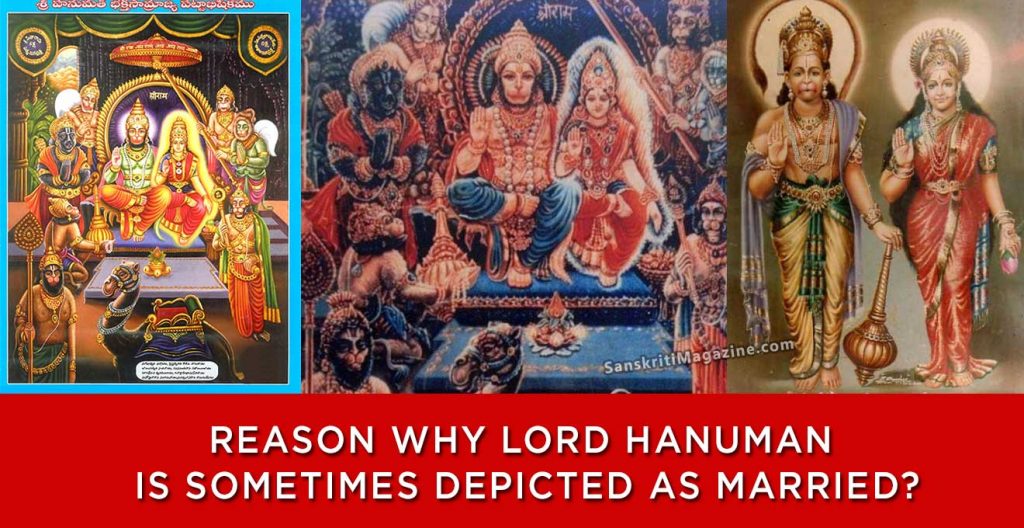
In order to facilitate the completion of his education, the Trimurtis approached Surya Bhagavan and created a beautiful Kanya, Suvarchala Devi, an Aajanma Brahmacharini, from the Sun’s Kiranas (rays) and arranged a marriage with Hanumanji to make him a Grihastha without Brahmacharya being affected. Whereby he learnt and became a genius in the nine vyakaranas (sanskrit grammar). These details can be found in Parasara Samhita.

There is also a sloka called ‘Hanuman Mangalashtakam’ depicts the Lord thus and runs as follows:

suvarchalaa kalathraaya chaturbhuja dharaaya cha
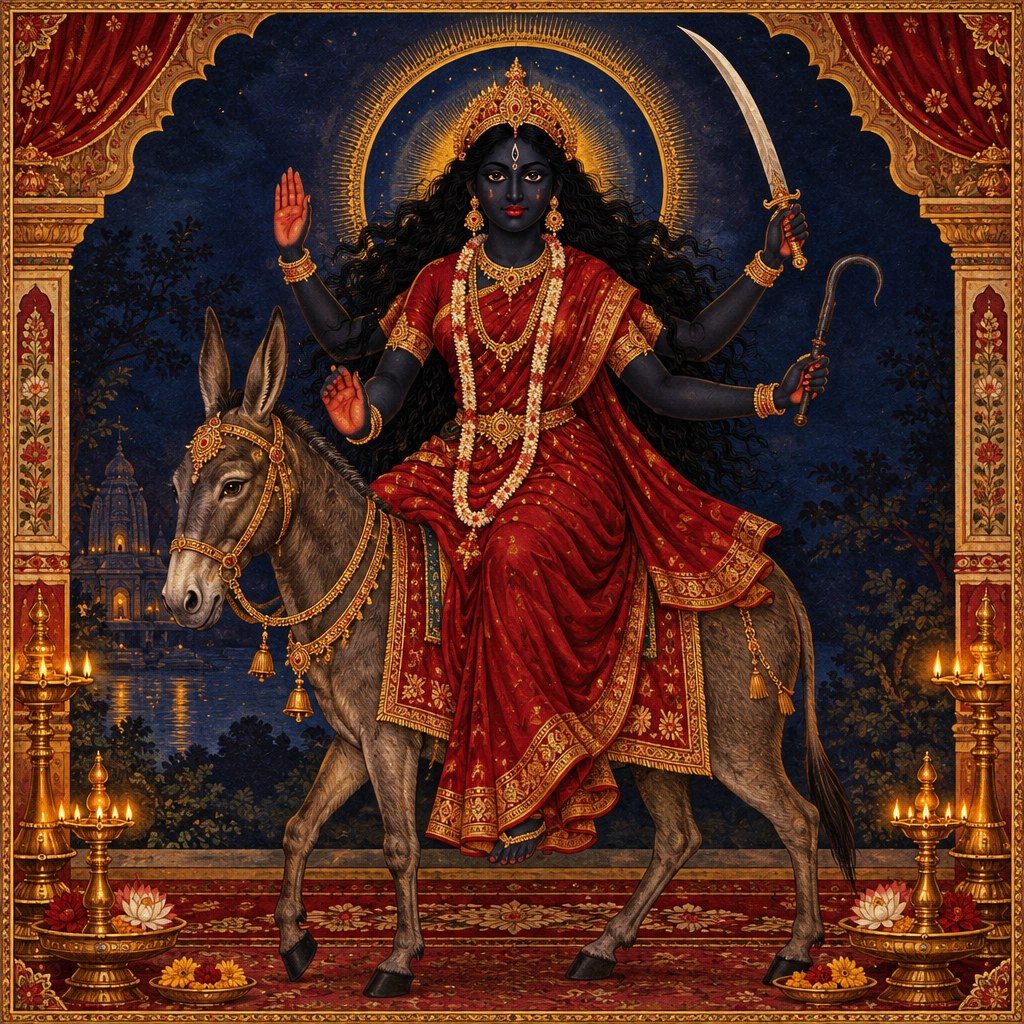
ushtraa roodhaya veeraya mangalam sri hanumathe

The meaning of the above sloka is: “Salutations to Lord Hanuman, having four arms, accompanied by His consort Suvarchala Devi, seated on a camel and exhibiting extraordinary valour.”

The text further describes Suvarchala as the daughter of Sun-God, Surya, from whom Anjaneya learnt the Vedas.

At the temple at Thailavaram, the moolavar is eight feet tall. The Lord holds the customary mace in his hand that he rests on his right shoulder. His left hand is placed on his hip. The utsava moorthi of Anjaneya is with his consort Suvarchala Devi. The Lord is depicted with four arms and is descriptively called Suvarchala Devi Sametha Chaturbhuja.
You may also like

Search the website

Like us on Facebook

Get daily updates via Email

Enter your email address:

Recent Posts

Adi Shankaracharya Jayanti 2026 — Advaita Vedanta, Om symbol, and four Amnaya Peethas

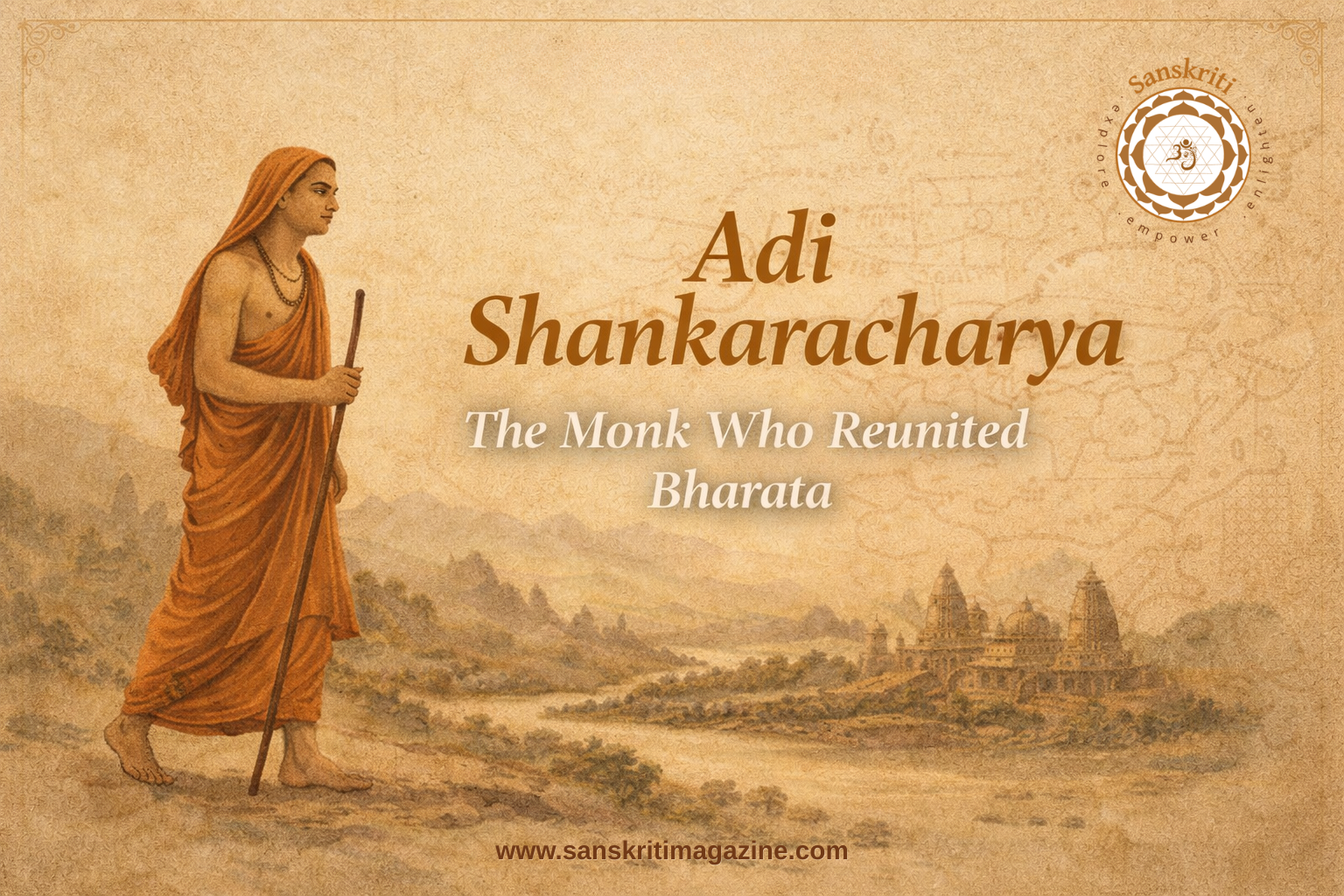
Adi Shankaracharya — The Monk Who Reunited Bharata

Shankaracharya Jayanti 2026 — the 1238th birth anniversary of Adi Shankaracharya. His extraordinary life, the Digvijaya, the debate with Mandana Mishra, Advaita Vedanta, the four Amnaya Peethas, and his timeless literary legacy.

Akshaya Tritiya 2026 — royal purple hero banner with Akshaya Patra vessel and Devanagari text

Akshaya Tritiya 2026 — The Day That Never Diminishes

Akshaya Tritiya (April 19, 2026) is one of the most auspicious days in the Vedic calendar — when any act of dharma, dana, or japa yields imperishable merit. Discover the five sacred Puranic events, complete puja vidhi, timings, mantras, and the deeper spiritual teaching beyond gold-buying.

Baisakhi 2026 — Mesha Sankranti Hindu Solar New Year hero banner with rising sun, Om symbol and wheat harvest

Baisakhi 2026 — Harvest, Hope, and the Hindu Solar New Year

Baisakhi 2026 falls on Tuesday, April 14 — the day Bhagavan Surya enters Mesha Rashi at 9:39 AM, marking the Hindu Solar New Year. Discover the sacred science of Mesha Sankranti, the Punya Kaal rituals, and how this one cosmic moment is celebrated across Bharata as Vishu, Puthandu, Pohela Boishakh, Bohag Bihu, and Pana Sankranti.

Varuthini Ekadashi 2026 — sacred vrat guide hero banner with Vishnu Chakra mandala

Varuthini Ekadashi 2026 — The Sacred Vrat That Shields from Sin

Varuthini Ekadashi (April 13, 2026) is one of the most powerful Ekadashi vrats — dedicated to Lord Vamana, it dissolves lifetimes of karmic burden and shields the devoted soul with Bhagavan Vishnu’s protective grace. Complete vrat vidhi, timings, mantra, and the sacred Vrat Katha from the Bhavishya Purana.

css.php