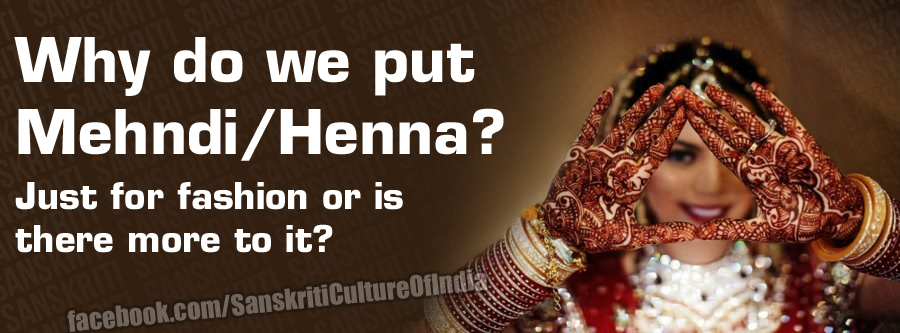
Mehndi holds a lot of cultural significance in Indian traditions. Be it weddings, Karva Chauth or other occasions, mehndi plays an important role in all the ceremonies and festivals of India. In todays era of modernization, the new styles and designs of mehndi are coming up, adding glamour and fun to it.Weddings being the most important day in ones life, mehndi has become an ornament for the soon to be brides. There is, in fact, one whole ceremony dedicated to its celebration popularly known as Mehndi Ceremony or Mehndi Ki Raat. Besides this, the phrase Haath Peele Karna as often heard from elders of the family is a rasam of mehndi directly synonymous to marriage. This significance maybe attributed to symbolic meaning of mehndi i.e. fertility.Mehndi Ceremony is among the pre wedding rituals in Indian weddings performed a day prior to the marriage. Just as Haldi ceremony symbolizes cleanliness, mehndi signifies beautification. Mehndi-Ki-Raat is usually a private affair with close relatives, friends and family members, celebrated amidst lot of dancing and feasting. This ritual is often combined with Sangeet ceremony and so is primarily a womens function. The atmosphere is imbued with dholak beats and singing of traditional songs while mehndi is applied on brides hands and legs by mehndi experts. The brides mehndi interweaves the name of her would be husband and he is expected to find his name in the pattern.
The female relatives of the family also apply mehndi on their palms to take part in the celebrations. This ceremony is performed by families of both the Indian bride and the Indian groom.Even the color of mehndi is given high importance in Indian culture as the darkness of the color signifies the degree of husbands and mother-in-laws love. It depicts love and affection between the couple as it is believed that the longer it retains, the more auspicious it is. The bride is traditionally not allowed to work in her husbands home until her mehndis color fades away completely.Mehndi is applied on all the important occasions, festivals and vrats(fasts) in Hindu culture. It is important in festivals such as Karwa Chauth, Rakhi, Diwali etc. It is also considered as a shagun mostly denoted by the pattern of large dot in the centre of the hand with four smaller dots at the sides.
In order to make this conventional trend of henna application more exciting, fashionable and fun filled, there is a vast variety of mehndi designs available today. Arabic Mehndi, Rajasthani Mehndi, Crystal Mehndi, Tattoo Mehndi, etc along with the traditional Indian Mehndi are among the most popular styles of mehndi currently. Mehndi designs majorly consist of floral patterns, religious symbols, etc. while adding beauty and uniqueness to each design applied.
Henna or Mehndi is also known worldwide for its medicinal properties. It was, in fact, used as a cosmetic in earlier times due to its therapeutic features. Mehndi is widely adopted around the world as a conditioner and dye for hair by both men and women. It is a natural dye that renders a beautiful color on hair and creates a lustrous look. Also, mehndi is popular for its cooling effects, thus, used in hot climates in India and other countries. It can also help in lowering body temperature and soothe headaches, fevers, burning feet and even hysteria or a violent temper. It can increase the luster of nails, is effective in muscular rigidity and even in Jaundice.
Henna is in vogue these days with much experimentation happening on ways of its application. It is now prominently used, especially in the West, to make tattoos on different parts of the body. Tattoos are made on arms, wrists, around the navel, the shoulder or the back. Henna is now being used for body art as well.