IndianSanskriti
Why Lord Shiva did not recognize his own son

Why Lord Shiva did not recognize his own son

The stories in the Puranas contain many incredible and hard-to-believe occurrences. But they should not be interpreted as a nursery rhyme. Their language is Shakespearean and laden with great depth and meaning. We need to interpret these stories with a very refined state of mind.

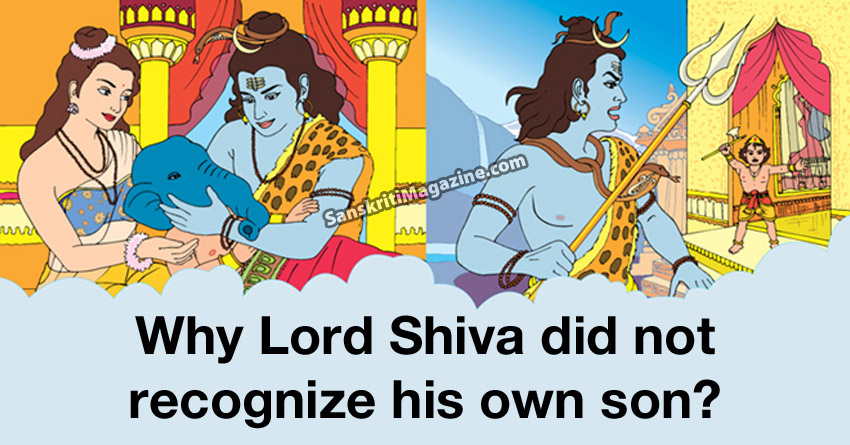
The story goes that Parvati created a boy out of dirt from her body and appointed him to guard the doorstep. The first question that comes is how could Parvati, the Goddess Herself, have so much dirt? Parvati symbolizes the triguna – sattva, rajas and tamas. The entire creation is made up of trigunas. The dosha or imperfections that originate out of the triguna is an obstruction for the functioning of Prakriti. That was the boy that Parvati created to stand guard at the door. 

Shiva is Shuddha Chaitanya, pure consciousness. Like the sun does not recognize darkness and cuts through it, Shiva does not recognize dosha and slays the impurity. But Prakriti cannot stay without impurity. So Shiva replaces the dosha with the head of an elephant, which symbolizes knowledge. Through knowledge, all the doshas or obstructions of Prakriti can be taken care of. This is the spiritual and metaphysical meaning of Ganpati being slain. So worshipping Ganpati as the remover of obstacles and the giver of gyana, knowledge is the most amazing depiction of the nature of consciousness. 

Going a step further, even this difference between Prakriti and Purusha is done away with. That is why, the Ganpati Upanishad says,

ajam nirvikalpam niraakaaram-ekam
niraanandam aanandam advaita poornam
param nirgunam nirvishesham nireeham
para brahma roopam ganesham bhajema

Ganesha is the only One unborn unmanifest Reality. He is nirvikalpa and advaita – the formless, undivided One. This is the play and display of consciousness within itself. 

While Ganpati is certainly the nirakara Parabrahman, he is invoked and worshipped in the mud idol for a period of time for the joy of the devotees. Then the Ganpati is asked to merge back into our heart and the idol is immersed in water. This ritual is observed for the sake of devotees, not for the sake of Ganpati. He who is without form is invoked in a form and then his spirit is invoked back into one’s heart as the idol is immersed.

~ Sri Sri Ravi Shankar

You may also like

Search the website

Like us on Facebook

Get daily updates via Email

Enter your email address:

Recent Posts

Jamai Shashthi 2026 — The Story of Maa Shashthi, the Cat, and the Wife Who Was Forgiven

Jamai Shashthi 2026 — The Story of Maa Shashthi, the Cat, and the Wife Who Was Forgiven

On Saturday, June 20, 2026, Bengali households across Bharata will welcome their married daughters and sons-in-law home for the legendary jamai-aador feast and perform the Shashthi Vrata. But behind the warmth lies a story most Bengalis know by heart and most non-Bengalis have never heard — the wife who stole the hilsa, blamed the cat, lost six sons to Maa Shashthi’s wrath, and was finally forgiven. The Vrat Katha, the vidhi, the mantras, and the deeper teaching.

Vat Purnima 2026 — The Wife Who Argued Yama Into Returning Her Husband’s Life

On Monday, June 29, 2026, women across Maharashtra, Gujarat, and southern Bharata will tie red thread around banyan trees and hear the story of Savitri — the wife who walked behind Yamaraja Himself when He came for her husband, and out-argued the Lord of Dharma into returning Satyavan’s life. The Mahabharata’s Pativrata Mahatmya Parva, the vrat vidhi, and why the banyan witnessed everything.

Purushottam Maas — The Month No Deity Would Claim, and the Lord Who Made It Supreme

Every month of the Hindu calendar has a lord — except the rare thirteenth, the Adhika Maas, born an orphan and shunned as the “impure month.” The Puranas tell how this rejected month went in grief to Bhagavan Vishnu, who claimed it, gave it His own name — Purushottam — and made it the most fruitful month of all. The origin story, the teaching, and what it means for Purushottam Maas 2026 (May 17 – June 14).

Padmini Ekadashi 2026 — The Ekadashi Even the Devas Descend to Keep

Padmini Ekadashi 2026 — The Ekadashi Even the Devas Descend to Keep

The rarest Ekadashi of the entire Hindu calendar is three days away. The Padma Purana preserves a conversation between Bhagavan Krishna and Yudhishthira about a single Ekadashi the great Rishis spend lifetimes waiting for — Padmini. The Vrat Katha of Queen Padmini of Mahishmati, the lotus teaching, and why May 27, 2026 is the morning Vaishnavas across Bharata are preparing for.

Varada Chaturthi 2026 — The Rare Ganesha Day of Purushottam Maas

Varada Chaturthi 2026 — The Rare Ganesha Day of Purushottam Maas

Once every 2.5–3 years — when the rare 13th month of Adhika Maas opens — a thirteenth Vinayaka Chaturthi appears. The Mudgala Purana calls it Varada Chaturthi, the “boon-giving” Chaturthi, and holds it as the most fruit-bearing Ganesha day of the entire calendar. Today, Wednesday May 20, 2026, is that day.

css.php