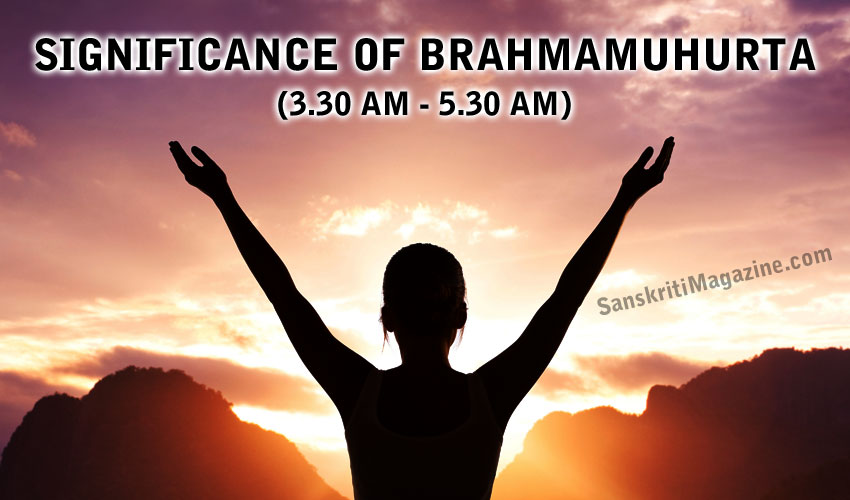
Brahmamuhurta is the morning period between 3.30 a.m. and 5.30 a.m. It is suitable for meditation. After a good night’s sleep, the mind is refreshed, calm and serene. There is the preponderance of sattva or purity in the mind at this time, as well as in the atmosphere.
The mind is like a blank sheet of paper, free from worldly samskaras or impressions. Raga-dvesha currents have not yet deeply entered the mind. The mind can be moulded easily. You can infuse it with divine thoughts.
Yogis, Paramahamsas, Sannyasins, aspirants and Rishis start their meditation during the Brahma muhurta; sending their vibrations throughout the world, benefiting all. Meditation will come by itself without any effort.
In the winter it is not necessary that you should take a cold bath. A mental bath will suffice. Imagine and feel, “I am taking a bath now in the sacred Triveni at Prayag or Manikarnika at Benares.” Remember the pure Atman. Repeat the formula, “I am the ever pure Soul.” This is the most powerful wisdom-bath in Jnana-Ganga. This is highly purifying. It burns all sins. Answer the calls of nature quickly. Clean your teeth. Do not waste much time in morning ablutions. The Brahma muhurta will pass away quickly. You must utilise this precious time in Japa and meditation. Sit in Siddha, Padma or Sukha Asana. Try to climb the supreme height of Brahmn, the peak of divine glory and splendour.
If you are not in the habit of getting up early, use an alarm timepiece. Once the habit is established, there will be no difficulty. The subconscious mind will become your willing and obedient servant to wake you up at the particular time.
Cultivate the habit of answering the calls of nature as soon as you get up from bed. If you suffer from constipation do meditation as soon as you get up. You can answer the calls of nature after finishing your morning meditation with the help of a cup of hot milk.
As soon as you get up from bed, do Japa and meditation. This is important. After finishing your Japa and meditation you can take to the practice of Asana, Pranayama and study of Gita and other religious books.
Every Sandhya time, or dusk, is also favourable for meditation. During Brahma muhurta and dusk, the Sushumna Nadi flows readily. You will enter into deep meditation and Samadhi without much effort when Sushumna Nadi flows. That is the reason why rishis, yogis and scriptures speak very highly of these two periods of time. When the breath flows through both nostrils, know that the Sushumna is working. Whenever the Sushumna functions, sit for meditation and enjoy the inner peace of Atman or soul.
Repeat some divine stotras, hymns or guru stotras or chant OM 12 times, or do kirtan for five minutes before you start your Japa and meditation. This will quickly elevate you mind and drive off laziness and sleepiness. Do sirshasana or Sarvangasana or any other asana for five minutes. Do pranayama for five minutes. This also will make you quite fit for the practice of meditation and remove laziness and sleepy condition.
It is Brahma muhurta now! Do not snore. Do not roll in the bed. Throw away the blanket. Get up, start your meditation vigorously, and enjoy the eternal bliss of the Inner Self.
~ Swami Sivananda