IndianSanskriti
karvachauth

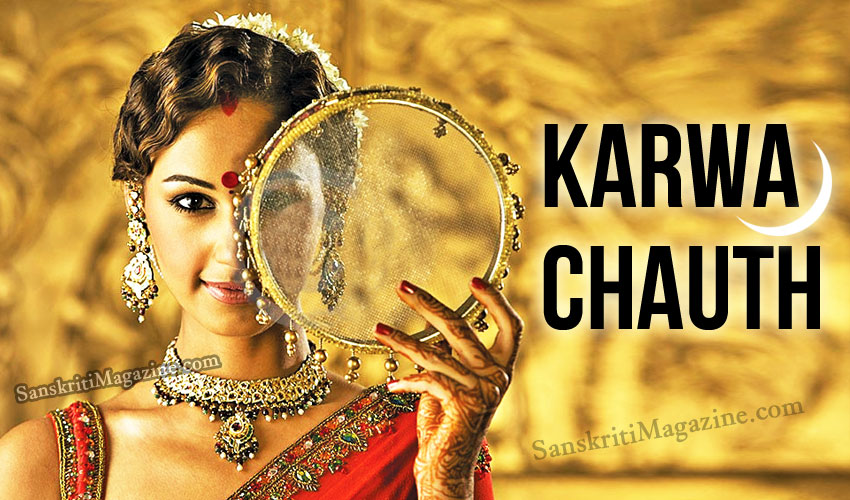
Karwa Chauth

‘Karwa Chauth’ is a ritual of fasting observed by married Hindu women seeking the longevity, well-being and prosperity of their husbands. It is popular amongst married women in the northern and western parts of India, especially, Haryana, Punjab, Rajasthan, Uttar Pradesh and Gujarat.

The Time:

This festival comes 9 days before Diwali on ‘kartik ki chauth’, i.e., on the fourth day of the new moon immediately after Dusshera, in the month of ‘Karthik’ (October-November).

The Meaning:

The term ‘Chauth’ means the ‘fourth day’ and ‘Karwa’ is an earthen pot with a spout – a symbol of peace and prosperity – that is necessary for the rituals. Hence the name ‘Karwa Chauth’.

The Ritual:

Married women keep a strict fast and do not take even a drop of water. They get up early in the morning, perform their ablutions, and wear new and festive raiment. Shiva, Parvati and their son Kartikeya are worshiped on this day along with the 10 ‘karwas’ (earthen pots) filled with sweets. The Karwas are given to daughters and sisters along with gifts.

The Fast:

It is the most important and difficult fast observed by married Hindu women. (Unmarried women, widows, and spinsters are barred from observing this fast.) It begins before sunrise and ends only after offering prayers and worshiping the moon at night. No food or water can be taken after sunrise. The fast is broken once the moon is sighted and rituals of the day have been performed. At night when the moon appears, women break their fast after offering water to the moon.

The Custom:

In the evening, women dress up in special clothes, usually a red or pink sari or ‘lehenga-choli’ with gold woven ‘zari’ patterns. New brides often wear their bridal costume. All deck up in jewelry and wear ‘mehendi’ or henna patterns especially on the hands. Decorative ‘bindis’ on the forehead are a must for all women taking part in this celebration. Fasting women from all over the neighborhood gather in a group and narrate mythological stories that underscore the significance of Karwa Chauth. And, of course, all wives expect lavish gifts from their husbands!

The fast of Karwa Chawth truly sets the merry tone of the fun and frolic, festivity and feasting that come in good measure during Diwali — the biggest festival of the Hindus.

~By Subhamoy Das
You may also like

Search the website

Like us on Facebook

Get daily updates via Email

Enter your email address:

Recent Posts

Purushottam Maas — The Month No Deity Would Claim, and the Lord Who Made It Supreme

Every month of the Hindu calendar has a lord — except the rare thirteenth, the Adhika Maas, born an orphan and shunned as the “impure month.” The Puranas tell how this rejected month went in grief to Bhagavan Vishnu, who claimed it, gave it His own name — Purushottam — and made it the most fruitful month of all. The origin story, the teaching, and what it means for Purushottam Maas 2026 (May 17 – June 14).

Padmini Ekadashi 2026 — The Ekadashi Even the Devas Descend to Keep

Padmini Ekadashi 2026 — The Ekadashi Even the Devas Descend to Keep

The rarest Ekadashi of the entire Hindu calendar is three days away. The Padma Purana preserves a conversation between Bhagavan Krishna and Yudhishthira about a single Ekadashi the great Rishis spend lifetimes waiting for — Padmini. The Vrat Katha of Queen Padmini of Mahishmati, the lotus teaching, and why May 27, 2026 is the morning Vaishnavas across Bharata are preparing for.

Varada Chaturthi 2026 — The Rare Ganesha Day of Purushottam Maas

Varada Chaturthi 2026 — The Rare Ganesha Day of Purushottam Maas

Once every 2.5–3 years — when the rare 13th month of Adhika Maas opens — a thirteenth Vinayaka Chaturthi appears. The Mudgala Purana calls it Varada Chaturthi, the “boon-giving” Chaturthi, and holds it as the most fruit-bearing Ganesha day of the entire calendar. Today, Wednesday May 20, 2026, is that day.

Padmini Ekadashi 2026 — The Rare Ekadashi That Comes Only in Purushottam Maas

Padmini Ekadashi 2026 — The Rare Ekadashi That Comes Only in Purushottam Maas

Padmini Ekadashi 2026 falls on Wednesday, May 27 — the Shukla Paksha Ekadashi of Adhika Maas, the rarest Ekadashi in the entire Hindu calendar (it appears only every 2.5–3 years). The Padma Purana conversation between Bhagavan Krishna and Yudhishthira, the Vrat Katha of Queen Padmini, complete vrat vidhi with jagrana, mantras, and the lotus symbolism that gives the Ekadashi its name.

Ganga Dussehra 2026 — The Day Maa Ganga Came Down to Bhagiratha

Ganga Dussehra falls on Monday, May 25, 2026 — commemorating the day Maa Ganga descended from Vaikuntha to the earth through the millennia-long tapasya of King Bhagiratha. The full account from the Valmiki Ramayana, snan vidhi, dana traditions, mantras, and the teaching of sustained sincerity.

css.php