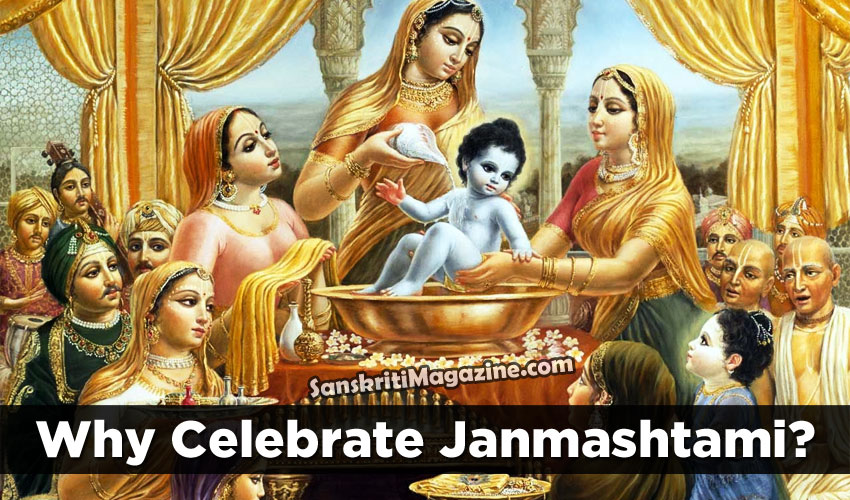
Janmashtami celebrates the birth of Krishna. Ashtami, the half-moon, indicates a perfect balance between the seen and unseen aspects of reality; the visible material world and invisible spiritual realm. Krishna’s birth on ashtami signifies his mastery of both spiritual and material worlds. His teachings are most relevant to our times in the sense that they neither let you get lost in material pursuits nor make you completely withdrawn. To celebrate Gokulashtami is to imbibe extremely opposite yet compatible qualities and manifest them in your own life.
Krishna simply means the most attractive — the Self or the Being. Radheshyam represents infinity. Radhe is individual life and Shyam is infinite life. Krishna is the Self of every being and when our true natural Self shines through our personality, skills and abundance follow.
It is said that Krishna used to steal butter. What does this signify? Butter is the final product of a process: the milk is first made into curd and then the curd that is well churned becomes butter. And like milk or curd, life is the process of churning through so many events, happenings and instances. Finally butter comes out, which is the saintliness in you.
The whole essence of it is to maintain that balance, to be joyful, happy and centred. You can have a big smile when everything is smooth in your life; if you can smile even in adversity then you have achieved something in life. It is like how Krishna stands with one foot firmly on the ground, the other is raised, poised; this is how dance can happen. This depicts the way to live life in perfect balance. When you are buried in the mind, dance cannot happen. Witnessing the disturbances of the mind helps us to rise above them. So whenever you are disturbed, instead of thinking that this should never have happened, simply surrender.
In the Bhagwad Gita Krishna says, “Why is it that so many are not able to know me? The reason is that they are constantly stuck between their cravings and aversions.” One who intensely craves for someone or has too much hatred for someone, falls into the trap of moha, attachment. When such a person has a problem in his life, be it regarding money or relationships, for example, then his mind is completely engrossed with the problem and he spends his days and nights, even years, worrying over it, but he is not able to overcome it.
For this, Krishna says, ‘Those whose punyas, meritorious deeds, begin to bear fruit are freed of all their sorrow, and they begin to get drawn towards me. Those whose sins are not cleansed remain stuck in ignorance and delusion”. If you walk towards the light, the darkness of ignorance automatically starts to disappear. But sin is that which does not let you move towards the light. And this is what causes misery, pain and suffering. When a person completely understands that I am not the body, I am pure Consciousness, then such strength dawns in him. Once you have faith in the Divine, then that is it. Then you should not doubt it one bit. This is what knowing the Divine truly means.
Krishna is the symbol of all possibilities, the total blossoming of all aspects of the human, and the Divine. Janmashtami is the day when you enliven that virat swaroop, the cosmic nature of Krishna in your own consciousness once again. Letting your true nature manifest in your day-to-day life is the real secret of Krishna’s birth.
~Sri Sri Ravi Shankar