IndianSanskriti
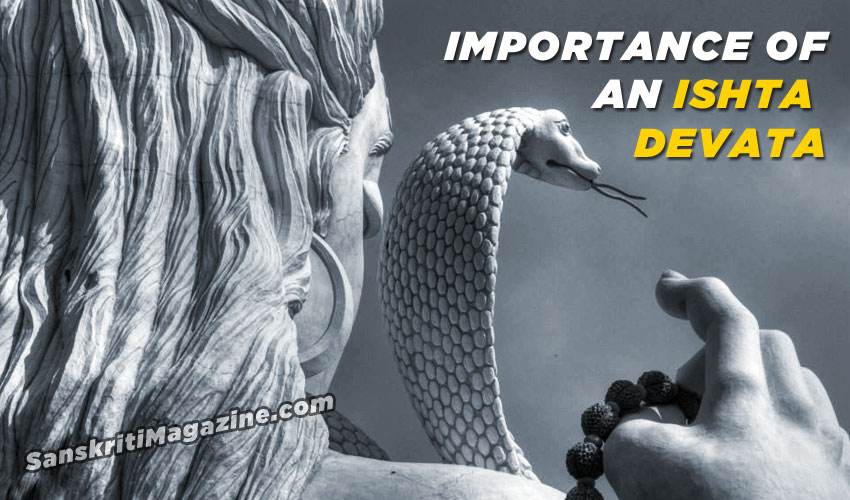
Importance of Ishta Devata

Importance of an Ishta Devata

There is nothing on earth which is everlasting unless you see it in cosmic terms. No love, feeling or desire is permanent; everything is temporary on the material level. Fortunately life changes from day to day, giving us a chance to evolve according to our karmas and samskaras. Eventually this movement will take us off the wheel of birth and death and enable us to see life in its real dimension, not determined by our experiences or impressions.

In this life we see friends coming and going, we are successful and we fail. We love and we are loved. We dream and we see the sparks of other worlds. We travel with our thoughts everywhere, but though we understand many things, still we do not know what we should know. We have seen life and we love it for being such a good teacher, but still there is one aspect which is unknown to us. And this is the sweetest and most beautiful lesson which we can learn from life.

Within us we can really feel that there is something beyond experiences of good and bad, something that will never end. Relating to that gives us inspiration and a higher aim for our growing soul. Thus we come to know that we are not just our hands moving, our heart beating, or our legs walking; we begin to realize that we are something far more than this body of ours. Still we clearly understand that the body is the instrument to express this inner being.

The problem is now how to project that soul which we find in us, what to do with it? We need help, but who can guide us in this matter? At this time we must search inside for the ishta devata, the inner deity. Then we must learn to hold the image steadily or else communication will not be natural.

At first most of us try one ishta and then another until we come to understand that the only ishta we can really hold the image of is our guru.

The only thing that can give us light and peace when we close our eyes is the guru’s presence in our eyebrow centre. He is the only one we can talk to. We may become angry with him, play with him, consult him. He is always inside, in the place where we meditate. There we can often hear him, chat with him. Sometimes he guides us, scolds us, gives us a hint, or tells us to leave him alone. Then again we just open our eyes, move our body and go on with our duties. Now we know to whom we can ask anything at anytime. We know to whom we can give our awakening soul. And it doesn’t matter whether we are good or bad, a success or failure, an intellectual or idiot, if we remember our ishta devata we will always have a guide in life, we will always have a way.

~ Swami Gyanshakti Saraswati
You may also like

Search the website

Like us on Facebook

Get daily updates via Email

Enter your email address:

Recent Posts

Jamai Shashthi 2026 — The Story of Maa Shashthi, the Cat, and the Wife Who Was Forgiven

Jamai Shashthi 2026 — The Story of Maa Shashthi, the Cat, and the Wife Who Was Forgiven

On Saturday, June 20, 2026, Bengali households across Bharata will welcome their married daughters and sons-in-law home for the legendary jamai-aador feast and perform the Shashthi Vrata. But behind the warmth lies a story most Bengalis know by heart and most non-Bengalis have never heard — the wife who stole the hilsa, blamed the cat, lost six sons to Maa Shashthi’s wrath, and was finally forgiven. The Vrat Katha, the vidhi, the mantras, and the deeper teaching.

Vat Purnima 2026 — The Wife Who Argued Yama Into Returning Her Husband’s Life

On Monday, June 29, 2026, women across Maharashtra, Gujarat, and southern Bharata will tie red thread around banyan trees and hear the story of Savitri — the wife who walked behind Yamaraja Himself when He came for her husband, and out-argued the Lord of Dharma into returning Satyavan’s life. The Mahabharata’s Pativrata Mahatmya Parva, the vrat vidhi, and why the banyan witnessed everything.

Purushottam Maas — The Month No Deity Would Claim, and the Lord Who Made It Supreme

Every month of the Hindu calendar has a lord — except the rare thirteenth, the Adhika Maas, born an orphan and shunned as the “impure month.” The Puranas tell how this rejected month went in grief to Bhagavan Vishnu, who claimed it, gave it His own name — Purushottam — and made it the most fruitful month of all. The origin story, the teaching, and what it means for Purushottam Maas 2026 (May 17 – June 14).

Padmini Ekadashi 2026 — The Ekadashi Even the Devas Descend to Keep

Padmini Ekadashi 2026 — The Ekadashi Even the Devas Descend to Keep

The rarest Ekadashi of the entire Hindu calendar is three days away. The Padma Purana preserves a conversation between Bhagavan Krishna and Yudhishthira about a single Ekadashi the great Rishis spend lifetimes waiting for — Padmini. The Vrat Katha of Queen Padmini of Mahishmati, the lotus teaching, and why May 27, 2026 is the morning Vaishnavas across Bharata are preparing for.

Varada Chaturthi 2026 — The Rare Ganesha Day of Purushottam Maas

Varada Chaturthi 2026 — The Rare Ganesha Day of Purushottam Maas

Once every 2.5–3 years — when the rare 13th month of Adhika Maas opens — a thirteenth Vinayaka Chaturthi appears. The Mudgala Purana calls it Varada Chaturthi, the “boon-giving” Chaturthi, and holds it as the most fruit-bearing Ganesha day of the entire calendar. Today, Wednesday May 20, 2026, is that day.

css.php