IndianSanskriti
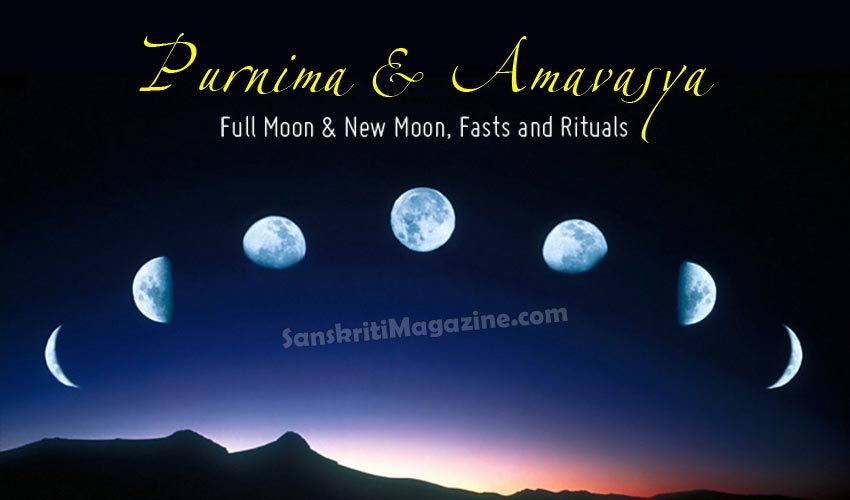
Purnima & Amavasya: Fasts and Rituals

Purnima & Amavasya: Fasts and Rituals

Since time immemorial, Hindus have believed that the fortnightly cycle of the moon exerts a great influence on the human anatomy just as it affects the water bodies on earth resulting in tides and ebbs. A person may tends to become restless, irritable and ill-tempered showing signs of ‘lunacy.’ Curiously enough, this word stems from the word ‘luna’ or ‘moon’ in Latin. Hence there are specific rituals for the new moon and full moon days.

Fasting On Purnima / Full Moon

Purnima, the full moon day, is considered auspicious in the Hindus Calendar and most devotees observe fast throughout the day and pray to the presiding deity Lord Vishnu. Only after a whole day of fasting, prayers and a dip in the river do they take light food at dusk.

It is ideal to fast or take light food on full moon and new moon days as it is said to reduce the acidic content in our system, slows down the metabolic rates, increases endurance. This restores the body and mind balance. Praying too helps in subduing the emotions and controls the outburst of temper.

Fasting on Amavasya / New Moon

The Hindu calendar follows the lunar month and Amavasya, the new moon night, falls at the beginning of new lunar month which lasts for about 30 days. Most Hindus observe a fast on that day and offer food to their ancestors.

According to Garuda Purana (Preta Khanda), Lord Vishnu is believed to have said that the ancestors come to their descendents on Amavasya to partake of their food and if nothing is offered to them they are displeased. So, Hindus prepare ‘shraddha’ (food) and await their ancestors.

Many festivals like Diwali are observed on this day too. Amavasya marks a new beginning. Devotees vow to accept the new with optimism as new moon ushers in the hope of a new dawn.

How to Observe a Purnima Vrat / Full Moon Fast

Usually, the Purnima fast lasts for 12 hours – from sunrise to sunset. People on fast do not consume rice, wheat, pulses, grains and salt during the duration this time. Some devotees take fruits and milk but some observe it rigidly and go even without water depending on their capability of endurance. They spend time praying to Lord Vishnu and conducting the sacred Shree Satya Narayana Vrata Puja. In the evening, after sighting the moon they partake of the ‘prasad’ or divine food along with some light food.

How to Perform a Mritunjaya Havan on Purnima

Hindus perform a ‘yagna’ or ‘havan’ on purnima called the Maha Mritunjaya havan. It is a significant and powerful ritual very simply undertaken. The devotee first takes a bath, cleanses his body and wears clean clothes. He then prepares a bowl of sweet rice and adds to it black sesame seeds, diced ‘kush’ grass, some vegetables and butter. Then he lays the ‘havan kund’ to strike the holy fire. On a designated area, a layer of sand is spread and then a tent-like structure of wooden logs is erected and smeared with ‘ghee’ or clarified butter.

The devotee then takes three sips of the Gangajaal or holy water from the river Ganga while chanting “Om Vishnu” and lights the sacrificial fire by placing camphor on the wood. Lord Vishnu along with other Gods and Goddesses are invoked followed by the chanting of the Mritunjaya mantra in honor of Lord Shiva:

Om trayambakam, yajaamahe
Sugandhim pushti vardhanam,
Urvaarookam-Iva bandhanaan,
Mrityor mukshiya maamritaat.

The mantra is ended with “Om Swaahaa.” While uttering “Om swaaha”, a little helping of the sweet rice offering is placed on the fire. This is repeated 108 times. After completion of the ‘havan’ the devotee must ask for forgiveness for any mistakes he has unknowingly committed during the ritual. Finally, another ‘maha mantra’ is chanted 21 times:

Hare Krishna, Hare Krishna,
Krishna, Krishna Hare Hare,
Hare Rama, Hare Rama,
Rama Rama, Hare Hare.

At the end, just as the gods and the goddess were invoked at the onset of the havan, similarly after its completion they are requested to return to their abodes.

~ by Subhamoy Das
You may also like

Search the website

Like us on Facebook

Get daily updates via Email

Enter your email address:

Recent Posts

Purushottam Maas — The Month No Deity Would Claim, and the Lord Who Made It Supreme

Every month of the Hindu calendar has a lord — except the rare thirteenth, the Adhika Maas, born an orphan and shunned as the “impure month.” The Puranas tell how this rejected month went in grief to Bhagavan Vishnu, who claimed it, gave it His own name — Purushottam — and made it the most fruitful month of all. The origin story, the teaching, and what it means for Purushottam Maas 2026 (May 17 – June 14).

Padmini Ekadashi 2026 — The Ekadashi Even the Devas Descend to Keep

Padmini Ekadashi 2026 — The Ekadashi Even the Devas Descend to Keep

The rarest Ekadashi of the entire Hindu calendar is three days away. The Padma Purana preserves a conversation between Bhagavan Krishna and Yudhishthira about a single Ekadashi the great Rishis spend lifetimes waiting for — Padmini. The Vrat Katha of Queen Padmini of Mahishmati, the lotus teaching, and why May 27, 2026 is the morning Vaishnavas across Bharata are preparing for.

Varada Chaturthi 2026 — The Rare Ganesha Day of Purushottam Maas

Varada Chaturthi 2026 — The Rare Ganesha Day of Purushottam Maas

Once every 2.5–3 years — when the rare 13th month of Adhika Maas opens — a thirteenth Vinayaka Chaturthi appears. The Mudgala Purana calls it Varada Chaturthi, the “boon-giving” Chaturthi, and holds it as the most fruit-bearing Ganesha day of the entire calendar. Today, Wednesday May 20, 2026, is that day.

Padmini Ekadashi 2026 — The Rare Ekadashi That Comes Only in Purushottam Maas

Padmini Ekadashi 2026 — The Rare Ekadashi That Comes Only in Purushottam Maas

Padmini Ekadashi 2026 falls on Wednesday, May 27 — the Shukla Paksha Ekadashi of Adhika Maas, the rarest Ekadashi in the entire Hindu calendar (it appears only every 2.5–3 years). The Padma Purana conversation between Bhagavan Krishna and Yudhishthira, the Vrat Katha of Queen Padmini, complete vrat vidhi with jagrana, mantras, and the lotus symbolism that gives the Ekadashi its name.

Ganga Dussehra 2026 — The Day Maa Ganga Came Down to Bhagiratha

Ganga Dussehra falls on Monday, May 25, 2026 — commemorating the day Maa Ganga descended from Vaikuntha to the earth through the millennia-long tapasya of King Bhagiratha. The full account from the Valmiki Ramayana, snan vidhi, dana traditions, mantras, and the teaching of sustained sincerity.

css.php